It's Raining on the Greenland Ice. In the Winter. | Lamont-Doherty Earth Observatory


We're no longer talking about a situation where global warming is something in the future. It's here. It's now." NASA scientists confirmed in a report Wednesday that 2018 was one of the hottest years on record, continuing what the New York Times called “an unmistakable warming trend.” Last year was the fourth-warmest on record since scientists began recording such data 140 years ago, according to NASA’s Goddard Institute for Space Studies (GISS). This finding makes the last five years the five hottest years ever, scientists said, slapping down any question that the planet is growing warmer. “2018 is yet again an extremely warm year on top of a long-term global warming trend,” said GISS director Gavin Schmidt in a statement. “The five warmest years have, in fact, been the last five years,” he told the Times. “We’re no longer talking about a situation where global warming is something in the future. It’s here. It’s now.” Read More
"We're no longer talking about a situation where global warming is something in the future. It's here. It's now."
|


Standard Chartered Plc in partnership with the World Bank, has launched the world’s first sovereign blue bond for the Republic of Seychelles.
The bond raised US$15 million from international investors, which would help expand and protect marine areas, improve governance of priority fisheries and develop the Seychelles’ blue economy.
The World Bank assisted in developing the blue bond and reaching out to the three investors: Calvert Impact Capital, Nuveen, and Prudential. Standard Chartered acted as placement agent for the bond.
Speaking about the landmark placement, the Chief Executive, Corporate, Commercial and Institutional Banking at Standard Chartered, Simon Cooper, was quoted in a statement to have said: “The world’s first sovereign blue bond is a landmark transaction and one in which Standard Chartered is proud to have played a role, in partnership with the World Bank and the Republic of Seychelles.

“The first step toward taking climate action is creating an emissions inventory,”
The city-level leaders overseeing this task won’t have the same tools available to their national peers. Most of them won’t have an Environmental Protection Agency (or its equivalent), a meteorological bureau, a team of military engineers, or nasa. So where will they start? Never mind how to reduce their city’s greenhouse-gas emissions; how will they know what’s spewing carbon dioxide in the first place?
Maybe Google will do it for them. Or, at least, do it with them. Read More

One only need look outside the window to understand that human-caused climate disruption is in overdrive.
Record warm temperatures, floods, droughts, wildfires and increasing incidents of extreme weather events have run rampant across the Northern Hemisphere this summer. These events, at least in part, stem from a global temperature increase of “only” 1 degree Celsius (1°C) above preindustrial baseline temperatures.
Harvard and MIT biogeochemist and climate and coral reef expert Dr. Thomas Goreau put this in stark perspective.
“Today’s carbon dioxide levels at 400 parts per million (ppm) [are] akin to bringing about a steady state temperature of 7°C higher and sea levels 23 meters higher than they are today,” Goreau, who is also president of the Global Coral Reef Alliance and coordinator of the Soil Carbon Alliance, told Truthout. In other words, the last time there was this much carbon dioxide in the atmosphere, it increased the Earth’s temperature to a point 7°C higher than it is today, and increased sea levels 23 meters above their current level. Hence, we are now only waiting for the planet to catch up to what we’ve done to the atmosphere.
Read More

In the 1980s, oil companies like Exxon and Shell carried out internal assessments of the carbon dioxide released by fossil fuels, and forecast the planetary consequences of these emissions. In 1982, for example, Exxon predicted that by about 2060, CO2 levels would double relative to the 1800s, and that this, according to the best science at the time, would push the planet’s average temperatures up by about 3°C.
Later that decade, in 1988, an internal report by Shell projected similar effects, but also found that CO2 could double even earlier, by 2030. Privately, these companies did not dispute the links between their products, global warming, and ecological calamity. On the contrary, their research confirmed the connections.
Shell’s assessment foresaw a 60-70 cm rise in sea level, and noted that warming could also fuel the disintegration of the West Antarctic Ice Sheet, resulting in a worldwide rise in sea level of “five to six meters.” That would be enough to inundate entire low-lying countries.
Shell’s analysts also warned of the “disappearance of specific ecosystems or habitat destruction,” predicted an increase in “runoff, destructive floods, and inundation of low-lying farmland,” and said that “new sources of freshwater would be required” to compensate for changes in precipitation. Global changes in air temperature would also “drastically change the way people live and work.” All told, Shell concluded, “the changes may be the greatest in recorded history.”
For its part, Exxon warned of “potentially catastrophic events that must be considered.” Like Shell’s experts, Exxon’s scientists predicted devastating sea-level rise, and warned that the American Midwest and other parts of the world could become desert-like. Looking on the bright side, the company expressed its confidence that “this problem is not as significant to mankind as a nuclear holocaust or world famine.”
The documents make for frightening reading. And the effect is all the more chilling in view of the oil giants’ refusal to warn the public about the damage that their own researchers predicted. Shell’s report, marked “confidential,” was first disclosed by a Dutch news organization earlier this year. Exxon’s study was not intended for external distribution, either; it was leaked in 2015. Read More

Five wealthy investors asked Douglas how to survive environmental collapse. But what they really wanted to know was how to transcend the human world they look down upon.
Douglas realized that these one-percenters just shy of the .01 percent really sought an escape — and reliable protection from — human beings. To these billionaires, regular humans are the enemy: inferior, particularly in their unpredictability and insubordination, to robots and machines. So naturally, Douglas’s advice to focus on a humanist approach to apocalypse fell on deaf ears. These investors don’t want to invest in community and environment; they want to invest in themselves — in their own power and domination. This begs the question: Will the apocalypse happen to them, or have they already started it for all of us? http://bit.ly/2QaaWdO

I would argue that under the premise of the Geneva Conventions, and with the threat of global heating and climate change, a Planetary Emergency, no Nation State can be bar anyone from entering their country.

Samoan Prime Minister Tuilaepa Sailele has lashed out at climate sceptics and urged Australia to make deeper cuts to carbon emissions to help save Pacific Island nations from the "disaster" of climate change.
Mr Sailele told the Lowy Institute in Sydney that climate change posed an "existential challenge" to low lying islands in the Pacific, and developed countries needed to reduce pollution in order to curb rising temperatures and sea levels.
"We all know the problem, we all know the solutions, and all that is left would be some political courage, some political guts, to tell people of your country there is a certainty of disaster," Mr Sailele said.
"So any leader of any country who believes that there is no climate change, I think he ought to be taken to mental confinement. He is utterly stupid. And I say the same thing to any leader here."
The Prime Minister's intervention came as some Coalition MPs press the new Prime Minister Scott Morrison to abandon Australia's promise to cut carbon emissions under the Paris agreement.
New Foreign Minister Marise Payne is also expected to face questions about Australia's climate change policies at the Pacific Islands Forum leader's meeting in Nauru next week.
Senator Payne and Pacific leaders are set to sign the "Biketawa Plus" security agreement, which declares that climate change remains the "single greatest threat to the livelihoods, security and wellbeing of the peoples of the Pacific".
Several other leaders — including Fiji's President Frank Bainimarama and the Marshall Island's President Hilda Heine — have also called on Australia to do more to cut emissions.
Mr Sailele told the audience that "greater ambition" was needed to stop the destructive impact of climate change. Read More

Without Visionary Leadership and a Global Effort Homo Sapiens future looks exceedingly bleak
At a basic level, this pattern holds up, well, everywhere. Every country except the United States supports the Paris Agreement on climate change. But no major developed country is on track to meet its Paris climate goals, according to the Climate Action Tracker, an independent analysis produced by three European research organizations. Even Germany, Japan, and the United Kingdom—where right-wing governments have made combatting climate change a national priority—seem likely to miss their goals.
Simply put: This kind of failure, writ large, would devastate Earth in the century to come. The world would blow its stated goal of limiting atmospheric temperature rise. Heatwaves might regularly last for six punishing weeks, sea levels could soar by feet in a few short decades, and certain fragile ecosystems—like the delicate Arctic permafrost or the kaleidoscopic plenty of coral reefs—would disappear from the planet entirely. Read More

======
BP, in a splurge of unadulterated capitalism, continues to invest in US shale assets as higher oil prices makes new and highly polluting extraction techniques more attractive again, which will boost its dividend to shareholders.
This goes to prove that the petroleum multi-nationals care more for profits than for the lives of our children and future generations. Editor
======
British oil and gas giant BP is buying $10.5bn (£8bn) of US shale assets as the higher oil price makes new extraction techniques more attractive again.
BP's purchase is its largest acquisition since the Deepwater Horizon accident in the Gulf of Mexico, which it is still paying for in the US.
The assets are being sold by Australian mining firm BHP Billiton. BP's boss, Bob Dudley, called the deal "a transformational acquisition". "This is... a major step in delivering our upstream strategy and a world-class addition to BP's distinctive portfolio," he said in a statement.
The deal marks a turning point for BP, which has had to rebuild its reputation in the US and is still paying the $65bn bill in clean-up and penalty costs resulting from the Gulf of Mexico rig disaster in 2010.
BP said it was confident of the deal's positive impact on its fortunes, and as a result would increase the dividend it pays to its shareholders for the first time in four years and would buy back $6bn worth of shares. Read More

Nice sunny days can grow into heat waves – and wildfires: summer weather is stalling
20/08/2018 - Be it heavy downpours or super-hot spells, summer weather becomes more persistent in North America, Europe and parts of Asia. When those conditions stall for several days or weeks, they can turn into extremes: heatwaves resulting in droughts, health risks and wildfires; or relentless rainfall resulting in floods. A team of scientists now presents the first comprehensive review of research on summer weather stalling focusing on the influence of the disproportionally strong warming of the Arctic as caused by greenhouse-gas emissions from burning fossil fuels. Evidence is mounting, they show, that we likely meddle with circulation patterns high up in the sky. These are affecting, in turn, regional and local weather patterns – with sometimes disastrous effects on the ground. This has been the case with the 2016 wildfire in Canada, another team of scientists show in a second study.
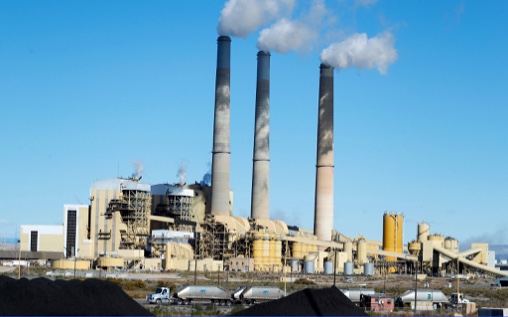
CNN)As his Environmental Protection Agency delivers its latest blow to environmental regulations aimed at reducing carbon emissions, President Donald Trump is heading into the heart of coal country to deliver the good news.
Trump will join supporters in Charleston, West Virginia, for a political rally on Tuesday to celebrate his administration's proposal to allow states to set their own emissions standards for coal-fueled power plants.
The move would reverse Obama administration efforts to combat climate change and marks the fulfilment of a campaign promise at the heart of his appeal in coal-producing states like West Virginia.
The EPA Tuesday morning formally unveiled the details of its new plan to devolve regulation of coal-fired power plants back to the states, one that is expected to give a boost to the coal industry and increase carbon emissions nationwide.
The move is just the latest effort by the Trump administration to revive an ailing coal industry and strip climate change-fighting regulations established by the Obama administration. He previously announced plans to withdraw from the Paris climate accords, calling it an unfair deal for Americans. Read More

Though oil and gas companies have known about global climate change for decades, they've deferred reducing crude and gas production until the second half of this century. But with global weather patterns in flux, activists have been demanding that energy companies set and commit to more rapid action on curbing oil and gas production in line with the Paris climate agreement.
New calls for action come amidst forecasts by the International Energy Agency (IEA) that, by 2014, demand for oil and gas could fall by almost 50 percent - but only if carbon emissions reduction targets are met. With this threat to profits, many ask if big oil companies are serious about addressing global climate change.
Facing an eventual drop in demand, energy companies delay caps on the production of carbon-emitting products.
Oil majors like Royal Dutch Shell has acknowledged that climate change will be a major challenge for years to come, but Total and others are still expecting strong demand for fossil fuels over the next few decades – and Exxon Mobil is under investigation over financial disclosures for climate change.
Anthony Hobley, CEO for the financial think-tank Carbon Tracker, told Counting the Cost that when it comes to profits and compliance with international carbon reduction agreements, big energy companies are sending mixed messages:
"I think they've been a bit schizophrenic. They are looking at climate risk and we're now being deluged with disclosure and scenario analysis from the companies that are, effectively, stress testing their business models against a Paris compliant two degrees pathway. But then when they talk to investors they're still talking up demand." Read More

BY SHIFTING to a “wartime footing” to drive a rapid shift toward renewable energy and electrification, humanity can still avoid the
future laid out in the much-discussed “hothouse earth” paper, a lead author of the paper told The Intercept. One of the biggest barriers to averting catastrophe, he said, has more to do with economics than science.
When journal papers about climate change make headlines, the news usually isn’t good. Last week was no exception, when the so-called hothouse earth paper, in which a team of interdisciplinary Earth systems scientists warned that the problem of climate change may be even worse than we thought, made its news cycle orbit. (The actual title of the paper, a commentary published in the Proceedings of the Natural Academy of Sciences, is “Trajectories of the Earth System in the Anthropocene.”)
Coverage of the paper tended to focus on one of its more alarming claims, albeit one that isn’t new to climate researchers: that a series of interlocking dynamics on Earth — from melting sea ice to deforestation — can feed upon one another to accelerate warming and climate impacts once we pass a certain threshold of warming, even after humans have stopped pouring greenhouse gases into the atmosphere. The best chance we have for staying below that catastrophic threshold is to cap warming at around 2 degrees Celsius, the target enshrined in the Paris Agreement.
That’s all correct and plenty daunting. Yet embedded within the paper is a finding that’s just as stunning: that none of this is inevitable, and one of the main barriers between us and a stable planet — one that isn’t actively hostile to human civilization over the long term — is our economic system. Read More

State of the Climate 2017
An international, peer-reviewed publication released each summer, the State of the Climate is the authoritative annual summary of the global climate published as a supplement to the Bulletin of the American Meteorological Society.
The report, compiled by NOAA’s Center for Weather and Climate at the National Centers for Environmental Information is based on contributions from scientists from around the world. It provides a detailed update on global climate indicators, notable weather events, and other data collected by environmental monitoring stations and instruments located on land, water, ice, and in space.

A new study partly-sponsored by Nasa's Goddard Space Flight Center has highlighted the prospect that global industrial civilisation could collapse in coming decades due to unsustainable resource exploitation and increasingly unequal wealth distribution.
Noting that warnings of 'collapse' are often seen to be fringe or controversial, the study attempts to make sense of compelling historical data showing that "the process of rise-and-collapse is actually a recurrent cycle found throughout history." Cases of severe civilisational disruption due to "precipitous collapse - often lasting centuries - have been quite common."


Note from David Milarch: “The gut feeling I had about our forests when I started Champion Tree Project all those years ago, and then Archangel Ancient Tree Archive more recently was that we needed to move fast to save our forests. Man-made threats are placing tremendous pressure on the survival of not just the trees, but on people, too. This new photo essay from BuzzFeed is an example of why Archangel is so vital to the survival of California’s trees. I wanted to share this with you so you can see what keeps us motivated to act. Please join the fight.“
John Muir, naturalist and cofounder of the Sierra Club, wrote of the forests in the Sierra Nevada, “Going to the woods is going home.” Unfortunately, since 2014 that home has seen unprecedented levels of tree mortality with as many as 129 million trees across 8.9 million acres lost. Where once stood a lush, green forest, there are now trees turning yellow and brown. The alarmingly accelerated pace of their death has been linked to the stress caused by climate change, more specifically increased temperatures, years of severe drought, and an unhealthy overgrowth due to years of fire suppression, which led to a significant spike in bark beetle infestations.
Photographer Mette Lampcov spent three days in November 2017 in California documenting the Sierra National Forest’s dead trees, as well as the homeowners forced to reckon with their dying surroundings. According to the US Forest Service’s 2017 Tree Mortality Aerial Detection Survey results, the Sierra National Forest has seen the largest number of tree deaths in California national forests, with nearly 32 million since 2010. The change in landscape was immediately noticeable, said Lampcov: “As you drive up a steep road heading into the Sierras, you start seeing the dead trees. It’s overwhelming and hard to explain what endless views over mountains look like with a sea of brown and yellowing trees. The area is so affected by dead trees; you smell fires and hear chainsaws all day long. Everywhere you look there are dead trees.”
(https://www.ancienttreearchive.org/californias-trees-are-dying-at-catastrophic-rate/