Showing posts with label Environment. Show all posts

Thursday, August 30, 2018

Samoan Prime Minister Tuilaepa Sailele hits out at climate change sceptics during fiery speech


Samoan Prime Minister Tuilaepa Sailele has lashed out at climate sceptics and urged Australia to make deeper cuts to carbon emissions to help save Pacific Island nations from the "disaster" of climate change.

Mr Sailele told the Lowy Institute in Sydney that climate change posed an "existential challenge" to low lying islands in the Pacific, and developed countries needed to reduce pollution in order to curb rising temperatures and sea levels.
"We all know the problem, we all know the solutions, and all that is left would be some political courage, some political guts, to tell people of your country there is a certainty of disaster," Mr Sailele said.
"So any leader of any country who believes that there is no climate change, I think he ought to be taken to mental confinement. He is utterly stupid. And I say the same thing to any leader here."
The Prime Minister's intervention came as some Coalition MPs press the new Prime Minister Scott Morrison to abandon Australia's promise to cut carbon emissions under the Paris agreement.

New Foreign Minister Marise Payne is also expected to face questions about Australia's climate change policies at the Pacific Islands Forum leader's meeting in Nauru next week.
Senator Payne and Pacific leaders are set to sign the "Biketawa Plus" security agreement, which declares that climate change remains the "single greatest threat to the livelihoods, security and wellbeing of the peoples of the Pacific".
Several other leaders — including Fiji's President Frank Bainimarama and the Marshall Island's President Hilda Heine — have also called on Australia to do more to cut emissions.
Mr Sailele told the audience that "greater ambition" was needed to stop the destructive impact of climate change. Read More

Wednesday, August 29, 2018

Trump Nudges Global Climate-Change Politics to the Right - The Atlantic

Without Visionary Leadership and a Global Effort Homo Sapiens future looks exceedingly bleak


At a basic level, this pattern holds up, well, everywhere. Every country except the United States supports the Paris Agreement on climate change. But no major developed country is on track to meet its Paris climate goals, according to the Climate Action Tracker, an independent analysis produced by three European research organizations. Even Germany, Japan, and the United Kingdom—where right-wing governments have made combatting climate change a national priority—seem likely to miss their goals.

Simply put: This kind of failure, writ large, would devastate Earth in the century to come. The world would blow its stated goal of limiting atmospheric temperature rise. Heatwaves might regularly last for six punishing weeks, sea levels could soar by feet in a few short decades, and certain fragile ecosystems—like the delicate Arctic permafrost or the kaleidoscopic plenty of coral reefs—would disappear from the planet entirely. Read More

Monday, June 18, 2018

Climate Mobilization in Inside Philanthropy


Margaret Klein Salamon States: I am absolutely thrilled by an article that recently appeared in Inside Philanthropy, and wanted to share it with you. It is a deep dive into what “climate mobilization” means, our City by City project, and the $100,000 grant that Climate Mobilization Project recently won from the Unitarian Universalist Congregation on Shelter Rock.

The first and last paragraphs are below. Please read the entire article and share it widely, especially with anyone you know in the philanthropic world.

Many thanks,
Margaret


An Unusual Grant Fuels a Push to Start Treating Climate Change as a Real Emergency
By Tate Williams

A major challenge to organizing and advocacy around climate change is how even to approach a problem so large, complex, and gradually advancing (although it feels less gradual with every year, to be honest).

An advocacy group that launched in 2014 has one answer—we respond like we’re at war.

For the Climate Mobilization Project, the climate crisis demands not incremental changes or gradual reductions in emissions, but an emergency response led by government that is on the scale of the response to World War II after the attack on Pearl Harbor. The group just picked up a grant from the Unitarian Universalist Congregation of Shelter Rock of $100,000, an amount they say is the “country’s single largest philanthropic investment in emergency climate action.”

...

The compelling thing about the Climate Mobilization Project is that, while arguably unrealistic in its goals—since there's no political consensus on this issue, as Rockoff's paper notes—it is unflinching in its diagnosis of the level of response that climate change warrants. Much of its goal is to build a movement around how we should collectively think about climate change—mainly that the status quo of the approach to date is unacceptable. And from the standpoint of a funder like UUCSR, it’s a status quo that’s certainly unjust.

Read the Full Article


The Climate Mobilization

Thursday, December 21, 2017

Hurricane-hit Caribbean states target future safe from from climate harm


TEPIC, Mexico, Dec 13 (Thomson Reuters Foundation) - A group of Caribbean nations, many devastated by recent hurricanes, will work with companies, development banks and other organisations to curb damage from climate change and grow cleanly, under an action plan launched this week.

The countries aim to restructure up to $1 billion in debt to free up cash for coastal defences, switch from costly imported fuels to cheaper green energy, and buffer their communities and economies against the effects of global warming, including rising sea levels and heavier storms and floods.

Angus Friday, Grenada's ambassador to the United States, said the idea was to "inject a new DNA", breaking away from business-as-usual and bureaucratic measures so as to be able to act faster.

"Given the next hurricane season is just seven months around the corner, it's really important we move with the speed of climate change now," he told the Thomson Reuters Foundation by phone.

Hurricanes Maria and Irma left a trail of destruction as they crashed through the Caribbean earlier this year, and many low-lying nations fear their infrastructure and economies will be devastated by more powerful storms and encroaching seas.

With many economies in the region plagued by high levels of debt, Caribbean nations have been pushing for rich countries to help bolster their defences and in turn, protect livelihoods.

Eleven nations, including Jamaica, Grenada, Dominica and the British Virgin Islands, signed up to the plan to create a "climate-smart zone", unveiled at the "One Planet" summit in Paris on Tuesday.

The plan's backers include the World Bank, the Nature Conservancy, the Green Climate Fund, Microsoft co-founder Bill Gates and British businessman Richard Branson, whose Caribbean island Necker was hit by Hurricane Irma.

Branson has pushed for a scheme to help vulnerable islands, centred on replacing outdated fossil-fuel power grids with renewable energy systems that can better withstand extreme weather and boost economic development.

The Caribbean region needs $8 billion to roll out national plans to tackle climate change under the 2015 Paris Agreement.

Around $1.3 billion has been pledged to help islands rebuild in the wake of the recent hurricanes, while a further $2.8 billion has been committed through longer-term investment and debt restructuring plans.

The Nature Conservancy, a U.S.-based environmental charity, wants to work with lenders and governments to find ways to restructure $1 billion in sovereign debt and free up funds to invest in the "blue economy", a statement said. More

Friday, November 24, 2017

Should a healthy environment be a human right? These Norwegians think so


Greenpeace and the environmental group Youth and Nature are suing the Norwegian Government for granting Arctic oil drilling licenses.

Their argument is based on an article in the Norwegian constitution protecting the right to an environment that’s healthy and that long-term consideration be given to digging up natural resources.

Greenpeace Norway head Truls Gulowsen told Hack it all comes down to climate change and oil licenses.

"We had challenged the Norwegian state for handing out new licenses for drilling in the arctic in spite of the fact that they have signed the Paris Agreement," he said on his way to court.

"They acknowledge climate change is a problem, and they know that the world has already found more carbon, fossil carbon, than we can ever afford to burn."

He said Norway's constitution gives future generations the right to a healthy environment.

"[That] puts duties on the state to guarantee and safeguard those rights."

Brendan Sydes, lawyer and CEO of Environmental Justice Australia, says the strategy used by Greenpeace goes to a country’s legal foundation, instead of working with a country's environmental regulations. https://goo.gl/j9Ys27

Monday, November 20, 2017

Ex-Minister Wayne Panton raises alarm on Environment

CNS): Wayne Panton said he was “disappointed” that Cayman now has an environment minister who appears to be “against the environment rather than for it”, as he raised the alarm about watering down the National Conservation Law. The former Cabinet member, who lost his seat in the May election by just a handful of votes, told CNS he had never seen such an “about-face in politics”. Just a few years ago the historic law had the unanimous backing of members, but now the example of truly “pro-Caymanian legislation” was facing an unwarranted backlash based on “fake facts”.

The former environment minister, one of the first politicians appointed to the post who was knowledgeable about conservation issues and became a true champion for the environment, said he was enormously disappointed with the recent turn of events. He said there has been a complete distortion by politicians of the legislation, which had been through significant consultation and enjoyed wide public support.

Panton said that the Legislative Assembly had voted unanimously for the law, which for the first time put the environment on a par with other considerations, such as social and economic, when it came to development but, he stressed, did not elevate it over them. He said it paved the way for conservation to be given equal weight to other factors and was designed to help balance competing interests and to ensure that the natural resources, which are fundamental to “what makes us Caymanian”, are not ignored in future planning decisions.

“But suddenly, people who voted in favour seem completely intent on repealing it or substantially watering it down,” he said, noting that the arguments to justify this rejection of the law were illogical and based on misinterpretation of the powers of the National Conservation Council and a misunderstanding of the law. https://goo.gl/SzjrVS

Saturday, November 18, 2017

Neoliberalism has conned us into fighting climate change as individuals

Neoliberalism has conned us into fighting climate change as individuals | Martin Lukacs | Environment | The Guardian

Would you advise someone to flap towels in a burning house? To bring a flyswatter to a gunfight? Yet the counsel we hear on climate change could scarcely be more out of sync with the nature of the crisis.

The email in my inbox last week offered thirty suggestions to green my office space: use reusable pens, redecorate with light colours, stop using the elevator.

Back at home, done huffing stairs, I could get on with other options: change my lightbulbs, buy local veggies, purchase eco-appliances, put a solar panel on my roof.

And a study released on Thursday claimed it had figured out the single best way to fight climate change: I could swear off ever having a child.

These pervasive exhortations to individual action — in corporate ads, school textbooks, and the campaigns of mainstream environmental groups, especially in the west — seem as natural as the air we breathe. But we could hardly be worse-served


(https://www.theguardian.com/environment/true-north/2017/jul/17/neoliberalism-has-conned-us-into-fighting-climate-change-as-individuals

Friday, August 18, 2017

A rich person's profession? Young conservationists struggle to make it


fter two years of looking for paid work as a conservationist around Europe and four months doing unpaid work in East Africa, Levikov moved to the island of Malta to work at Greenhouse Malta. Levikov, who owes over $100,000 in student loans, described her work at the small environment NGO as “casual” and “freelancing” — some hours are paid, others are volunteer — while the group looks to secure more funding.

“The reality many of us face is that we will have to babysit, clean toilets, and serve drinks as we try to gain the experience we need in conservation to finally get that dream job,” said Levikov, a former intern at Mongabay, who just turned 30.

“I’m not blaming anyone for my current situation in which I am utterly broke and still crossing my fingers that in the near future my career will finally take off,” she told Mongabay. “Indeed I was wrong in thinking that all my hard, unpaid work would lead to something or that having a degree from a…highly-respected university would give me a leg-up.”
https://goo.gl/NdDfiF

Friday, June 9, 2017

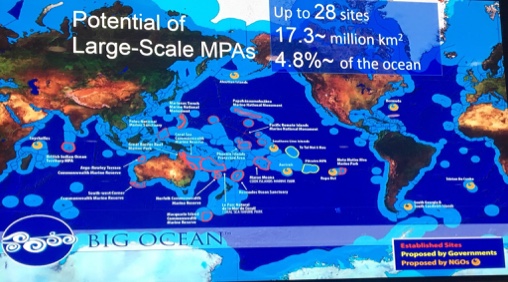
Ocean Conference commitments show world on track to protect over 10% of globe's Marine Areas by 2020

Ocean Conference commitments show world on track to protect over 10% of globe's #MarineAreas by 2020. #SaveOurOcean oceanconference.un.org/prjune9

The Cayman Islands must join this initiative as we are a maritime nation More
#caymancentreofexcellence

Wednesday, May 24, 2017

British territories' environment 'at risk'

Wildlife and the environment in far-flung British territories are under threat, says a report.

Environment ministers from Britain's overseas territories say the government has cut funds and been distracted by Brexit. They say there is huge confusion among government departments about responsibility for the territories.

The government calls the criticism unfair and points to its creation of large marine protection areas.

The UK holds jurisdiction over 19 British Overseas Territories and Crown Dependencies - parts of the British Empire that have not been granted independence or have voted to remain British territories.

Therefore, I would argue that it is time for the colonies to take more responsability and control of their environments. Editor

https://goo.gl/nCvcwz

Sunday, March 5, 2017

Climate Ecoforestry

In 2008 we asked Frank Michael a tough question. Frank is a physicist, formerly with the Ames Research Center group that created the first Flying Solar Laboratory to study the sun and its “weather” and prevent astronauts from being fried by solar storms. We asked him what would happen to atmospheric carbon if everyone on earth planted a tree each day.

It was an interesting question, and one that was not easy to answer. Frank explained some of the variables to us. You would want to know what kind of trees are planted; what their lifespan will be; what happens to their carbon store when they die; the net photosynthetic productivity of the forest, by hectare, based on soils, rainfall, latitude and expected climate change; the effect of all the stored carbon in the ocean that would “leak back” into the atmosphere in response — trying to re-balance the distribution of carbon dioxide — and much more.

Nonetheless, he agreed to give it a go. Thus began a system model that Frank Michael will be presenting at the 7th World Congress on Ecological Restoration later this year in Foz do Iguassu, Brazil.

The question changed to “what amount of trees, land and biochar would be needed to return the atmosphere to ‘normal’ and how long would it take?” We know much less about paleoclimate drawdowns and feedbacks than we know about epochs of carbonization. As his calculations and his global model became more elaborate, he began to be drawn to the complexity of the social dimension. What are the potentials for unplanned reversals like deforestation, population pressure, energy demand and urban sprawl? How many of those trees would survive one year? 5 years? 100 years? Who would care for them and how would those people be compensated? How would you pay for the biochar conversion?

Frank came up with a model that we can only describe as pure genius, worthy some day of a Nobel Prize should he ever be recognized. His “step harvest” system, which we first described in The Biochar Solution, sets out a practical methodology for employing hundreds of millions of forest stewards to regenerate and revitalize neglected and abandoned “wastelands,” working with principles of ecological regeneration and patch management to stack yields while optimizing ecological functions. Rather than rely on charity, it relies on capitalism – a healthy return of investment in semi-autonomous but coordinated microenterprises. More

Saturday, January 28, 2017

What if we gave universal income to people in biodiversity hotpots?

What if we gave universal income to people in biodiversity hotpots?

Writer and professor, Ashley Dawson, argues in his new book that capitalism is behind our current mass extinction crisis. But installing universal guaranteed income in biodiversity hotspots may be one remedy.

Around five hundred years ago, Europeans brought about the invention of modern day capitalism, a system that was rooted in colonialism, slavery and environmental destruction, according to Dawson.

“Capitalism is an economic system founded on ceaseless expansion,” Dawson, who specializes in Postcolonial studies, said. “It must grow at a compound rate or it will experience convulsive economic and social crises. The contradictions of this system are patently self-evident: an economic system based on infinite expansion must inevitably crash into the natural limits of finite ecosystems.”

Although capitalism has spread over the world in the last half millennium, Dawson argues it didn’t have to be this way.

“The global expansion of capitalism was not a deepening of some inherent human drive to environmental destruction, but a complete transformation in the foundation of human societies, the substitution of an ecocidal and genocidal system for the relatively sustainable social forms that preceded it.” More

Sunday, April 3, 2016

Climate Change & Biodiversity (A Pakistan case study): Impact of Climate Change on biodiversity of Butterflies in Northern coniferous forests of Punjab,Pakistan

Climate change is an established fact but the way and the intensity in which the climate has been changing since 1975 has created an alarming situation in Pakistan .

The last decade was the warmest since instrumental records have been kept in the nineteenth century. Climate change is a major threat to biodiversity by causing changes in plant phonologies and a poleward shifts in birds and butterflies. In terrestrial ecosystem 28,586 significant biological changes are related with climate change. With a relatively short life-cycle and host-plant reliance, butterfly communities show quick response to climate change. Punjab has few coniferous forests which are home to many exotic species. Twenty two years climate analysis shows reduction in precipitation and an increase in extreme weather events. In short span of just twenty years 14 butterfly species have disappeared from very rich forests of Murree. The species which are present are also on the verge of extinction as with climate change the number of invasive species is coming upwards.

by Hassaan Bin Saadat (Author)

http://www.amazon.com/Climate-Change-Biodiversity-Pakistan-study/dp/3659244716


Monday, December 7, 2015

Save Our Oceans: COP21 Climate Negotiators put Ocean Protection back in the COP 21 Climate Agreement!

Demand Ocean Protection is included within the COP21 Climate Agreement

Ocean Protection has been removed from the COP 21 Climate Agreement, its protection is fundamental in mitigating climate change and global biodiversity loss. Allowing removal of Oceans from the Agreement provides nations that don't care "a charter" to continue raping and destroying vital ocean biodiversity globally. We must fight to save what is left; if your care then NOW is your time to ACT. Support this campaign and within seconds of clicking SEND your message will be delivered to the COP21 negotiators in Paris.


Message to all CLIMATE NEGOTIATORS at COP21 Paris

Subject: SAVE OUR OCEANS: COP21 Climate Negotiators put Ocean Protectionback in the COP 21 Climate Agreement!


It is staggering that Ocean protection is to be removed from the COP21 Climate Agreement.

Oceans and their biodiversity are fundamental to managing climate change, stabilising planetary climate systems and providing a sustainable future food supply for mankind. There is no greater cause than to protect our Oceans; simply because they transcend political geographic boundaries does not mean you should not care and leave to somebody else, there is nobody else, please think again and fight for their and our survival by including them in the Agreement.

Thank you.


Yours sincerely, [Your Name]


Please go to Gaia: Defenders of Biodirversity to sign the letter


Monday, November 16, 2015

The Arctic: Indicator of Global Change By Patricia Cochran

The Arctic may be seen as geographically isolated from the rest of the world, yet the Inuit hunter who falls through the thinning sea ice is connected to melting glaciers in the Andes and the Himalayas and to the flooding of low-lying and small island states.

Patricia Cochran

What happens in foreign capitals and in temperate and tropical countries affects us dramatically in the North. Many of the economic and environmental challenges we face result from activities well to the south of our homelands; and what is happening in the far North will affect what is happening in the South.

Inuit are experiencing firsthand the adverse effects of global environmental changes. But we are not powerless victims. We are determined to remain connected to the land, and sufficiently resilient to adapt to changing natural forces as we have for centuries.

Discussion of climate change frequently tends to focus on political, economic and technical issues rather than human impacts and consequences. We need to be aware of the dramatic social and cultural impacts indigenous peoples face in coming years.

Eroded Lives

For generations Inuit have observed the environment and have accurately predicted weather and sea-ice conditions, enabling us to travel safely on the sea ice to hunt seals, whales, walrus and polar bears. Talk to hunters across the North, and they will tell you the same story: the weather is increasingly unpredictable. The look and feel of the land is different. The sea ice is changing. Hunters are having difficulty navigating and traveling safely. We have even lost experienced hunters through the ice in areas that, traditionally, were safe. As a result of melting glaciers it is now difficult, sometimes even dangerous, for us to travel to many of our traditional hunting and harvesting sites.

A young woman from Cape Dorset, Nunavut

Several Inuit villages have already been so damaged by global warming that relocation, at the cost of hundreds of millions of dollars, is now their only option. Melting sea ice and thawing permafrost have caused damage to houses, roads, airports and pipelines; erosion, slope instability and landslides; contamination of drinking water; coastal losses to erosion of up to 30 meters per year; and melting of natural ice cellars for food storage.

For instance, residents of Sachs Harbour, a tiny community in the Canadian Beaufort Sea region, report melting permafrost causing beach slumping and increased erosion; increased snowfall; longer sea-ice-free seasons; new species of birds and owls, robins, pin-tailed ducks and salmon invading the region; and an onslaught of mosquitoes and black flies.

Plans are well under way to relocate certain Arctic communities. Climate change is not just a theory to us in the Arctic; it is a stark and dangerous reality. Climate change is undermining the ecosystem upon which Inuit depend for their physical and cultural survival.

The Arctic is of vital importance in the global debate on how to deal with climate change because the Arctic is the barometer of the globe’s environmental health. We are indeed the canary in the global coal mine.

The Arctic Climate Impact Assessment projects dramatic and drastic depletion of sea ice. In the next few decades year-round sea ice may be limited to a small portion of the Arctic Ocean around the North Pole. The rest of the Arctic will be ice-free in summer.

Polar bears, walrus, ringed seals and likely other species of seals are projected to virtually disappear. This is not to mention the millions of Arctic seabirds and fish. Our ecosystem will be transformed, with tragic results. Climate change in the Arctic is not just an environmental issue with unwelcome economic consequences. It is a matter of livelihood, food and individual and cultural survival. It is a human issue.

What can Inuit—only 155,000 of us—do about this global situation? First, we refuse to play the role of powerless victim. Responding to climate change has split the nations of the world. Our plight and the Arctic Assessment show the compelling case for global unity and clarity of purpose to forestall a future that is not preordained.

Our rights, our human rights, to live as we do and to enjoy our unique culture as part of the globe’s cultural heritage, are at issue.

Short-term business interests must change, and people must take stock of whether or not a way of life based on consumption is ultimately sustainable. What is happening now to Inuit will happen soon to people in the South. The experience of Inuit in the Arctic is shared by residents of small island states in the Pacific, many people in the Caribbean and elsewhere.

We are working on many fronts to convince the world to take long-term action. Climate change is not about scoring political points. It is about families, parents, children and the lives we lead in our communities throughout the world. More


Sunday, October 11, 2015

The International Summit on Indigenous Environmental Philosophy

The International Summit on Indigenous Environmental Philosophy

THE PURPOSE OF THE SUMMIT

APRIL 26 – MAY 1, 2010

Indigenous communities are perhaps the most impacted by Climate Change and the least responsible for causing it. Indigenous elders and environmental specialists have also been the first to warn of changes and offer viable suggestions for response strategies yet their critical messages have usually gone unheeded by dominant societies. The International Summit on Indigenous Environmental Philosophy provided a forum for Indigenous thinkers from around the world to gather in a retreat setting to discuss how Indigenous Environmental Philosophy is distinct from Western Environmental Philosophy. Following much discussion and compromise, the following consensus statement was unanimously approved:

Redstone Statement, 1 May 2010

"Leave Us A Future!"

We are Indigenous environmental philosophers who have come from the four corners of the earth to Redstone, Oklahoma, to discuss the future of the planet.

Indigenous environmental philosophy respects a mutually supportive network of interconnected physical and spiritual entities that is sustainably maintained, and which connects the ancestral past with the distant future. The vision of our Indigenous peoples is to reach spiritual and material well-being through conscious action. Mother Earth is a living, dynamic being with inherent value, and her principles must be actively embodied in order to remain in harmony and balance.

Today, we are at a tipping point at which humanity is in danger of being removed from the cycles of Mother Earth. We bring this urgent message in response to Indigenous women, youth and children from around the world who have consistently asked us to leave them a more balanced planet.

We come as individuals from cultures whose authority originates from our unique relationships with nature and the environment. Our ways of living, and very existence, are threatened by the resistance of nation-states to include our institutions as part of the solutions that can save our planet. Consequently, we issue this call to the world.

Environmental, social, economic, and political conflicts over natural resources and access rights, climate change concerns, and other significant issues threatening international and local communities did not suddenly erupt on the global landscape. Rather, they are an outcome of the historical process that today affects every area of creation. Spiritual, cultural, social, economic, and political structures and values lost their connections to the communities and now focus exclusively on the individual. The world shifted from the circle of community to the ascendancy of the individual, resulting in a dangerous environmental imbalance with significant spiritual and health consequences. Balance must be restored in order to heal the earth, and it must include the participation of all ages, races, genders and cultures.

Effective mechanisms necessary for restoring balance include implementing the following:

1. Recognition of the interdependence of all things;

2. Indigenous self-determination;

3. Indigenous land, air, water, territory, and natural resource management;

4. Protection and preservation of Indigenous traditional knowledge, lifeways and languages, cultures, sacred sites, and folklores/oral traditions;

5. Indigenous authority over all actions impacting Indigenous communities;

6. Respect for, and protection of, traditional agricultures and genetic resources;

7. Seed sovereignty and food security;

8. Rights of movement, rights of access, rights of participation and communication in the exchange of environmental knowledge and culture.

We must assure the well-being of both humanity and nature. This requires a unification of diverse people who are open to ideas; people who are wise, clear, and profoundly human; and people who can transcend the self-imposed limits of their minds, reaching deep into their conscience and spirit for solutions.

All governments, communities, leaders, individuals, industries, and corporations must immediately act together to restore the balance that is essential for continued existence.

We call for a review of existing commercial practices and an end to any further non-sustainable exploitation and degradation of natural resources- for all generations to come. We also call for a portion of profits to be invested in the development of renewable energy resources.

We as Indigenous environmental philosophers breathe life into this statement and commit to implementing the provisions contained in it. More


Friday, August 28, 2015

Methane Leaks in Natural-Gas Supply Chain Far Exceed Estimates, Study Says

A little-noted portion of the chain of pipelines and equipment that brings natural gas from the field into power plants and homes is responsible for a surprising amount of methane emissions, according to a study published on Tuesday.

Natural-gas gathering facilities, which collect from multiple wells, lose about 100 billion cubic feet of natural gas a year, about eight times as much as estimates used by the Environmental Protection Agency, according to the study, which appeared in the journal Environmental Science & Technology.

The newly discovered leaks, if counted in the E.P.A. inventory, would increase its entire systemwide estimate by about 25 percent, said the Environmental Defense Fund, which sponsored the research as part of methane emissions studies it organized.

“The gathering and processing sector, a piece of the supply chain that most people don’t even know exists, may be the biggest single fraction of emissions coming from natural gas,” said Mark Brownstein, who leads the Environmental Defense Fund’s work on methane emissions.

Methane is the main component of natural gas and has a more potent short-term effect on climate change than carbon dioxide. The effect that the newfound emissions would have on climate change over 20 years, the Environmental Defense Fund said, would be similar to that of 37 coal-fired power plants.

The new study, led by researchers at Colorado State University, involves measurements of 114 natural-gas gathering facilities and 16 processing plants in 13 states.

Many gathering facilities use puffs of natural gas in valves that open and close to regulate gas or liquid flow, releasing a bit of methane into the air with every cycle. Anthony J. Marchese, a professor of mechanical engineering at Colorado State and the lead author of the new study, said that this practice surprised him. “I was: ‘Really? That’s what they do?’ ” he said.

Companies can substitute other relatively inexpensive technologies for the methane-leaking systems, he said, but “they’re so used to using gas pneumatic, and they think it’s so reliable, they are reluctant to change.”

The recognition of gathering facilities as a major source of methane leaks is an opportunity to look harder and fix them, and to upgrade to equipment that does not emit natural gas, Mr. Brownstein said. “None of this is rocket science,” he said. “Most of it is auto mechanics.”

The Obama administration, while promoting a boom in natural gas, has pushed for businesses to reduce leaks. The E.P.A. proposed new standards on methane emissions on Tuesday. Those rules, however, would apply only to new and modified equipment. “That clearly doesn’t begin to address the majority of the problem — the stuff that is already in the field and operating,” Mr. Brownstein said.

The agency has not closely tracked emissions from gathering facilities before. A statement by the agency in response to questions about the study said that the “E.P.A. looks forward to reviewing the upcoming E.D.F. study on methane emissions from natural gas systems.”

Citing the administration’s methane strategy and noting that “substantial new amounts of information” were becoming available, the statement said that the “E.P.A. will continue to refine its emission estimates to reflect the most robust and up-to-date information available.”

Professor Marchese said that the amount of gas that escapes from gathering facilities each year could heat 3.2 million homes. Wasting a potentially valuable resource, not to mention harming the environment, he said, mystified him. “Why would you ever vent it when you can use it to generate electricity?” he added.

A spokesman for one of the gas industry companies that participated in the study said that the research would be helpful. “This ultimately helps us perform better,” said John Christiansen, a spokesman for Anadarko Petroleum. The research would help the company “get that methane back in the sales line,” he added, “which is ultimately in our best interest — and everybody’s best interest.” More


Wednesday, June 17, 2015

World Day to Combat Desertification (June 17, 2015)

Environment – Climate – World Day to Combat Desertification (June 17, 2015)

On World Day to Combat Desertification, dedicated this year to the theme “Attainment of food security for all through sustainable food systems,” France reaffirms its commitment to sustainable land management.

The challenge is twofold: feeding humanity while preserving the environment. France allocates €200 million per year to concrete projects to combat desertification and land degradation, mainly through the French Development Agency. The International Civil Society Forum, “Désertif'Action 2015,” recently brought together in Montpelier 300 participants from 60 countries.

Combating desertification will help to improve capacity to absorb carbon, adapt to climate change and stabilize populations in areas that remain habitable. It’s key to the success of COP21 and the reason behind the “4 pour 1000” (4 per thousand) initiative backed by France, which combines the restoration of degraded land, food production and the fight against climate disruption and is aimed at increasing soil organic matter levels by 4 parts per thousand per year.


Climate - European Climate Diplomacy Day (June 17, 2015)


On the occasion of the second edition of European Climate Diplomacy Day, Laurent Fabius will receive, at the Quai d’Orsay, more than 50 European ambassadors and diplomats, who will travel there from the Champs Élysées by bicycle. By doing so, they will demonstrate their commitment to ensuring the success of the 2015 Paris Climate Conference and their support for Laurent Fabius, COP21 President.

In almost 60 countries on five continents, French diplomats will participate together with their British, German and EU colleagues in events aimed at raising awareness among the general public and policymakers.

Televised interviews, round tables, exhibitions, screenings, training workshops for journalists, the awarding of climate scholarships and even stage plays will facilitate exchanges with the public and highlight the practical measures already undertaken to reduce carbon emissions.


Excerpts from the daily press briefing by Romain Nadal, French Ministry of Foreign Affairs and international Development' spokesman (Paris, june 17th 2015)


www.consulfrance-miami.org

Facebook/Consulat general de France Miami

Twitter: @FranceinMiami