Showing posts with label United States. Show all posts

Tuesday, August 21, 2018

EPA rolls back Obama-era coal pollution rules as Trump heads to West Virginia


CNN)As his Environmental Protection Agency delivers its latest blow to environmental regulations aimed at reducing carbon emissions, President Donald Trump is heading into the heart of coal country to deliver the good news.

Trump will join supporters in Charleston, West Virginia, for a political rally on Tuesday to celebrate his administration's proposal to allow states to set their own emissions standards for coal-fueled power plants.
The move would reverse Obama administration efforts to combat climate change and marks the fulfilment of a campaign promise at the heart of his appeal in coal-producing states like West Virginia.
The EPA Tuesday morning formally unveiled the details of its new plan to devolve regulation of coal-fired power plants back to the states, one that is expected to give a boost to the coal industry and increase carbon emissions nationwide.
The move is just the latest effort by the Trump administration to revive an ailing coal industry and strip climate change-fighting regulations established by the Obama administration. He previously announced plans to withdraw from the Paris climate accords, calling it an unfair deal for Americans. Read More

Thursday, June 14, 2018

Berkeley Unanimously Declares Climate Emergency!


On Tuesday night, Bay Area mobilizers made history.


As a result of local organizers’ tireless work, the Berkeley City Council faced the truth of the climate and ecological crises and committed to protecting its residents and all life on Earth by unanimously declaring a climate emergency and endorsing a just citywide climate mobilization effort to end greenhouse gas emissions emissions as quickly as possible!
The resolution called for Berkeley to become a carbon sink by 2030, which the energy commission will study. It also called on all other governments to address the crisis at the speed and scale required, setting in motion a nine-county Bay Area climate emergency town hall this summer aimed at catalyzing local, regional, state, national and global mass mobilizations to restore a safe climate and a collaborative regional mobilization effort. You can read the full text of the resolution here.

In the same hearing, the council took a critical first step in realizing the mobilization by voting to refer a Fossil Free Fast resolution to the city’s energy commission. Under this resolution, Berkeley would actively oppose new fossil fuel infrastructure, making it the first municipality in California and the second in the nation to move forward such a sweeping block. You can read the full text of the resolution here.

http://bit.ly/2l9QBXP

Wednesday, December 13, 2017

Donald Trump’s highly abnormal presidency


French President Emmanuel Macron benched the White House Monday by awarding 13 U.S. climate scientists millions of euros in grants and a chance to continue their research in France for the remainder of Donald Trump’s term.

The “Make Our Planet Great Again” grants, first announced in June, are designed specifically to help offset the damage caused by the climate-change denying administration in Washington, which announced its withdrawal from the landmark 2015 Paris accord earlier this year.

More than 5,000 scientists from around the world applied for the funding; of the eighteen winners, the majority hailed from the United States. Macron has set aside €30 million ($35 million) for the grants, with a similar amount coming from French universities.

France will “be there” to replace American funding for climate science projects, Macron told the winners at an event in Paris.

“France and Europe will be the place where we will decide how to make our planet great again,” he added.

World leaders are scheduled to gather in the French capital Tuesday for the One Planet Summit, held on the second anniversary of the signing of the Paris accord, which pledged to keep global temperatures below a 2 degrees celsius increase this century.

READ: The most extreme effects of climate change are being seen in the Arctic

Fifty global leaders are expected to attend, as well as representatives from the World Bank and the United Nations.

Trump, who once called climate change a hoax perpetrated by the Chinese, was reportedly left off the invite list. More

Saturday, December 9, 2017

The House of the Future Is Elevated


Three months after Hurricane Harvey churned through Texas, dumping 51 inches of rain and damaging an estimated 150,000 homes, the state’s most populous county took a bureaucratic step that has huge implications for how it will deal with the risk of future flooding.

On December 5, Harris County, which surrounds the City of Houston, approved an overhaul of its flood rules, expanding them from 100-year floodplains—which have a 1 percent change of flooding in a given year—to 500-year floodplains. The new rules (which don’t apply inside Houston city limits) will compel people building houses in some areas to elevate them up to eight feet higher than before.

“We had 30,000 houses that flooded” from Harvey, said John Blount, the county engineer, who put forward the rule changes. Before the floodwaters even subsided, hundreds of county employees fanned out to survey the damage. “We went to every one of those houses and figured out how much water got in them, and then we did a statistical analysis,” Blount said.

The data was geocoded, factoring in location and neighborhood conditions, and one result was the increased elevation rule. (The county is also buying out 200 of the most vulnerable homes and hopes to buy out thousands more, but those represent a small fraction of the homes inside the floodplain.)

Harris County’s new rules are the most stringent flood-related development restrictions anywhere in the United States, according to Blount. If a future Harvey-sized deluge comes, almost all the homes in the area will be safe, he said: “Had that same event happened, at the same location but [with houses] built to the new standard, 95 percent or more would not have flooded.”

For a structure, standing water is a fearsome enemy. Even a small amount of flooding in a home can exile its inhabitants for weeks and require costly repairs. After Harvey, tens of thousands of evacuees lived in hotels or with friends as workers in their homes tore out drywall to prevent the spread of mold, which can sicken residents. And more Harveys are coming: As my colleague Robinson Meyer reported, a new MIT study concludes that Harvey-scale flooding in Texas is six times as likely now as it was in the late 20th century, and will only get more likely as this century wears on. More

Friday, November 24, 2017

How Climate Change Will Mess With Water ‘Recharge’ in Western USA


This map shows the surface area of major aquifers in the continental U.S. and Hawaii. The biggest, Ogallala in the High Plains (green), covers nearly 175,000 square miles. Photo credit: Katie Peek

As the climate warms, the dry southern regions of the Western United States will have less groundwater recharge while the northern regions will have more, researchers report.

“Our study asked what will be the effect of climate change on groundwater recharge in the Western US in the near future, 2021-2050, and the far future, 2070-2100,” says first author Rewati Niraula, who worked on the research as part of his doctoral work in the University of Arizona hydrology and atmospheric sciences department.

The new study covers the entire US West, from the High Plains states to the Pacific coast, and provides the first detailed look at how groundwater recharge may change as the climate changes, says senior author Thomas Meixner, professor of hydrology and atmospheric sciences at the University of Arizona.

“For the southern region of the Western US there will be a reduction in groundwater recharge, and in the northern region of the Western US we will have an increase,” says Niraula, now a senior research associate at the Texas Institute of Applied Environmental Research at Tarleton State University.

Groundwater is an important source of freshwater, particularly in the West, and is often used to make up for the lack of surface water during droughts, the authors note. In many areas of the West, groundwater pumping currently exceeds the amount of groundwater recharge. https://goo.gl/w6uhvv

Friday, August 28, 2015

Methane Leaks in Natural-Gas Supply Chain Far Exceed Estimates, Study Says

A little-noted portion of the chain of pipelines and equipment that brings natural gas from the field into power plants and homes is responsible for a surprising amount of methane emissions, according to a study published on Tuesday.

Natural-gas gathering facilities, which collect from multiple wells, lose about 100 billion cubic feet of natural gas a year, about eight times as much as estimates used by the Environmental Protection Agency, according to the study, which appeared in the journal Environmental Science & Technology.

The newly discovered leaks, if counted in the E.P.A. inventory, would increase its entire systemwide estimate by about 25 percent, said the Environmental Defense Fund, which sponsored the research as part of methane emissions studies it organized.

“The gathering and processing sector, a piece of the supply chain that most people don’t even know exists, may be the biggest single fraction of emissions coming from natural gas,” said Mark Brownstein, who leads the Environmental Defense Fund’s work on methane emissions.

Methane is the main component of natural gas and has a more potent short-term effect on climate change than carbon dioxide. The effect that the newfound emissions would have on climate change over 20 years, the Environmental Defense Fund said, would be similar to that of 37 coal-fired power plants.

The new study, led by researchers at Colorado State University, involves measurements of 114 natural-gas gathering facilities and 16 processing plants in 13 states.

Many gathering facilities use puffs of natural gas in valves that open and close to regulate gas or liquid flow, releasing a bit of methane into the air with every cycle. Anthony J. Marchese, a professor of mechanical engineering at Colorado State and the lead author of the new study, said that this practice surprised him. “I was: ‘Really? That’s what they do?’ ” he said.

Companies can substitute other relatively inexpensive technologies for the methane-leaking systems, he said, but “they’re so used to using gas pneumatic, and they think it’s so reliable, they are reluctant to change.”

The recognition of gathering facilities as a major source of methane leaks is an opportunity to look harder and fix them, and to upgrade to equipment that does not emit natural gas, Mr. Brownstein said. “None of this is rocket science,” he said. “Most of it is auto mechanics.”

The Obama administration, while promoting a boom in natural gas, has pushed for businesses to reduce leaks. The E.P.A. proposed new standards on methane emissions on Tuesday. Those rules, however, would apply only to new and modified equipment. “That clearly doesn’t begin to address the majority of the problem — the stuff that is already in the field and operating,” Mr. Brownstein said.

The agency has not closely tracked emissions from gathering facilities before. A statement by the agency in response to questions about the study said that the “E.P.A. looks forward to reviewing the upcoming E.D.F. study on methane emissions from natural gas systems.”

Citing the administration’s methane strategy and noting that “substantial new amounts of information” were becoming available, the statement said that the “E.P.A. will continue to refine its emission estimates to reflect the most robust and up-to-date information available.”

Professor Marchese said that the amount of gas that escapes from gathering facilities each year could heat 3.2 million homes. Wasting a potentially valuable resource, not to mention harming the environment, he said, mystified him. “Why would you ever vent it when you can use it to generate electricity?” he added.

A spokesman for one of the gas industry companies that participated in the study said that the research would be helpful. “This ultimately helps us perform better,” said John Christiansen, a spokesman for Anadarko Petroleum. The research would help the company “get that methane back in the sales line,” he added, “which is ultimately in our best interest — and everybody’s best interest.” More


Thursday, August 20, 2015

Rapidly Mobilizing American Politics On Climate

CHANNELING THE POWER OF THE POPE’S ENCYCLICAL THROUGH THE PLEDGE TO MOBILIZE CLIMATE STRATEGY

The Pope calls on each of us to undertake an "ecological conversion" to protect humanity and the natural world — Creation — from climate catastrophe. He also calls for the "ecological conversion" of civilization.

The Pledge to Mobilize is a tool to achieve this ecological conversion — on the individual and national level.

The Pledge to Mobilize calls on the federal government to convert the American economy to net zero greenhouse gas emissions by 2025 through an emergency, WWII-scale mobilization.

When Individuals take the Pledge, they commit their time, money, and vote to achieving this goal. Most importantly, they commit to spreading the Pledge to others—to spreading the ecological conversion. More


Sunday, August 2, 2015

Obama to Unveil Tougher Climate Plan With His Legacy in Mind

WASHINGTON — In the strongest action ever taken in the United States to combat climate change, President Obama will unveil on Monday a set of environmental regulations devised to sharply cut planet-warming greenhouse gas emissions from the nation’s power plants and ultimately transform America’s electricity industry.

The rules are the final, tougher versions of proposed regulations that the Environmental Protection Agency announced in 2012 and 2014. If they withstand the expected legal challenges, the regulations will set in motion sweeping policy changes that could shut down hundreds of coal-fired power plants, freeze construction of new coal plants and create a boom in the production of wind and solar power and other renewable energy sources.

As the president came to see the fight against climate change as central to his legacy, as important as the Affordable Care Act, he moved to strengthen the energy proposals, advisers said. The health law became the dominant political issue of the 2010 congressional elections and faced dozens of legislative assaults before surviving two Supreme Court challenges largely intact.

"Climate change is not a problem for another generation, not anymore," Mr. Obama said in a video posted on Facebook at midnight Saturday. He called the new rules "the biggest, most important step we’ve ever taken to combat climate change."

The most aggressive of the regulations requires the nation’s existing power plants to cut emissions 32 percent from 2005 levels by 2030, an increase from the 30 percent target proposed in the draft regulation.

That new rule also demands that power plants use more renewable sources of energy like wind and solar power. While the proposed rule would have allowed states to lower emissions by transitioning from plants fired by coal to plants fired by natural gas, which produces about half the carbon pollution of coal, the final rule is intended to push electric utilities to invest more quickly in renewable sources, raising to 28 percent from 22 percent the share of generating capacity that would come from such sources.

In its final version, the rule retains the same basic structure as the draft proposal: It assigns each state a target for reducing its carbon pollution from power plants, but allows states to create their own custom plans for doing so. States have to submit an initial version of their plans by 2016 and final versions by 2018.

But over all, the final rule is even stronger than earlier drafts and can be seen as an effort by Mr. Obama to stake out an uncompromising position on the issue during his final months in office.

The anticipated final climate change regulations have already set off what is expected to be broad legal, legislative and political backlash as dozens of states, major corporations and industry groups prepare to file lawsuits challenging them.

Senator Mitch McConnell of Kentucky, the Republican majority leader, has started an unusual pre-emptive campaign against the rules, asking governors to refuse to comply. Attorneys general from more than a dozen states are preparing legal challenges against the plan. Experts estimate that as many as 25 states will join in a suit against the rules and that the disputes will end up before the Supreme Court.

Leading the legal charge are states like Wyoming and West Virginia with economies that depend heavily on coal mining or cheap coal-fired electricity. Emissions from coal-fired power plants are the nation’s single largest source of carbon pollution, and lawmakers who oppose the rules have denounced them as a "war on coal."

"Once the E.P.A. finalizes this regulation, West Virginia will go to court, and we will challenge it," Patrick Morrisey, the attorney general of West Virginia, said in an interview with a radio station in the state on Friday. "We think this regulation is terrible for the consumers of the state of West Virginia. It’s going to lead to reduced jobs, higher electricity rates, and really will put stress on the reliability of the power grid. The worst part of this proposal is that it’s flatly illegal under the Clean Air Act and the Constitution, and we intend to challenge it vigorously."

Although Obama administration officials have repeatedly said states will have flexibility to design their own plans, the final rules are explicitly meant to encourage the use of interstate cap-and-trade systems, in which states place a cap on carbon pollution and then create a market for buying permits or credits to pollute. The idea is that forcing companies to pay to pollute will drive them to cleaner sources of energy.

That new rule also demands that power plants use more renewable sources of energy like wind and solar power

Mr. Obama tried but failed to push through a cap-and-trade bill in his first term, and since then, the term has become politically toxic: Republicans have attacked the idea as "cap and tax."

But if the climate change regulations withstand legal challenges, many states could still end up putting cap-and-trade systems into effect. Officials familiar with the final rules said that in many cases, the easiest and cheapest way for states to comply would be by adopting cap-and-trade systems.

The rules take into account the fact that some states may refuse to submit plans, and on Monday, the administration will also unveil a template for a plan to be imposed on such states. That plan will include the option of allowing a state to join an interstate cap-and-trade system.

The rules will also offer financial benefits for states that choose to take part in cap-and-trade systems. The final rules will extend until 2022 the timeline for states and electric utilities to comply, two years later than originally proposed. But states that begin to take actions to cut carbon pollution as early as 2020 will be rewarded with carbon reduction credits — essentially, pollution permits that can be sold for cash in a cap-and-trade market.

Climate scientists warn that rising greenhouse gas emissions are rapidly moving the planet toward a global atmospheric temperature increase of 3.6 degrees Fahrenheit, the point past which the world will be locked into a future of rising sea levels, more devastating storms and droughts, and shortages of food and water. Mr. Obama’s new rules alone will not be enough to stave off that future. But experts say that if the rules are combined with similar action from the world’s other major economies, as well as additional action by the next American president, emissions could level off enough to prevent the worst effects of climate change.

Mr. Obama intends to use the new rules to push other countries to commit to deep reductions in their own carbon emissions before a United Nations summit meeting in Paris in December, when a global accord to fight climate change is expected to be signed.

Mr. Obama’s pledge that the United States would enact the climate change rules was at the heart of a pact that he made last year with President Xi Jinping of China, committing their nations, the world’s two largest carbon polluters, to substantially cut emissions.

"It’s the linchpin of the administration’s domestic effort and international effort on climate change," said Durwood Zaelke, president of the Institute for Governance and Sustainable Development, a research organization. "It raises the diplomatic stakes in the run-up to Paris. He can take it on the road and use it as leverage with other big economies — China, India, Brazil, South Africa, Indonesia."

While opponents of the rules have estimated that compliance will cost billions of dollars, raise residential electricity rates and slow the American economy, the administration argues that the rules will save the average American family $85 annually in electricity costs and bring additional health benefits by reducing emissions of pollutants that cause asthma and lung disease.

The rules will be announced at a White House ceremony on Monday and signed by Gina McCarthy, the Environmental Protection Agency administrator. While the ceremony is scheduled to take place on the White House’s South Lawn, officials said it might be moved indoors to the East Room after forecasters predicted that the weather would be too hot.


Friday, July 24, 2015

Is the Iran deal about staving off the coming oil shock - By Nafeez Ahmed

The Iran nuclear deal signals a major shift in the geopolitics of the Middle East. Integral to the equation is oil, economics, terror – and US hegemony.

The Bush administration had initiated a long-term covert strategy to undermine Iranian influence in the Middle East and Central Asia, combined with overt pressure through diplomatic initiatives and economic sanctions.

Under Obama, this strategy accelerated, largely in concert with other Gulf powers like Saudi Arabia, Qatar and the UAE, who have long sought to roll-back Iranian influence.

Yet even as the strategy accelerated, unlike its predecessors which openly declared their warmongering hostility to Iran, the Obama administration had used the pressure to forge an unprecedented deal with the country.

Averting regional war

The reasons for the shift are, of course, pragmatic. For years, US intelligence agencies have told the White House that there is simply no evidence Iran is trying to build a nuclear bomb.

And the International Atomic Energy Agency (IAEA) has repeatedly certified that uranium is not being enriched to levels necessary for weaponisation, nor is it being diverted to a secret weapons programme.

Meanwhile, senior US military officials have long warned that the sort of US-Iran military confrontation which frothing neoconservatives have been pining for would likely fail and destabilise the entire region.

What about an Israel-Iran confrontation? A classified Pentagon war simulation held in 2012 found that an Israeli attack on Iran would also lead to a wider regional war.

Unlike the neocons, for the military pragmatists in successive US administrations, war with Iran could never be a preferred option.

The added bonus is that Iran might notch down its involvement in Iraq and Syria.

Earlier this year, the US assured its allies at the Camp David summit that under the nuclear deal, Iran’s growing geopolitical influence in the region would be curtailed. Simultaneously, the US gave Saudi Arabia, Qatar, the UAE and others the green light to accelerate support to the Islamist militants of their choice in Syria.

George Friedman, founder and CEO of private US intelligence firm Stratfor – which operates closely with the Pentagon and State Department – forecasted the US-Iran détente four years ago.

His prescient assessment of its strategic rationale is worth noting. Friedman explained that by reaching “a temporary understanding with Iran,” the US would give itself room to withdraw while playing off Iran against the Sunni regimes, limiting Iran’s “direct controls” in the region, “while putting the Saudis, among others, at an enormous disadvantage”.

“This strategy would confront the reality of Iranian power and try to shape it,” wrote Friedman.

Ultimately, though, the US is betting on the rise of Turkey – hence the latter’s pivotal role in the new anti-IS rebel training strategy, despite Turkey’s military and financial sponsorship of IS. More


Monday, February 2, 2015

Caribbean Energy Security Summit Commits to Energy Transition

Twenty-six countries, together with seven regional and international organizations, have released a joint statement in support of the transformation of the energy systems of Caribbean countries. The signatories of the statement, signed during the Caribbean Energy Security Summit, commit to pursuing comprehensive approaches to an energy transition toward "clean sustainable energy for all" and reforms that support the creation of favourable policy and regulatory environments for sustainable energy.

The Summit, which was co-hosted by the US Department of State, the Council of the Americas and the Atlantic Council, brought together finance and private sector leaders from the US and the Caribbean, and representatives of the international community. The event showcased the initiatives under the Caribbean Energy Security Initiative (CESI) in the areas of improved governance, access to finance and donor coordination, and featured discussions by partner countries on comprehensive energy diversification strategies.

During the event, the US Government announced enhanced support for technical assistance and capacity-building programs in the Caribbean, through the Energy and Climate Partnership of the Americas (ECPA) initiative, among others, with the aim of promoting a cleaner and more secure energy future in the region. Caribbean leaders agreed to pursue comprehensive energy diversification programs and facilitate the deployment of clean energy.

Furthermore, presentations and updates were provided by, inter alia: Caribbean leaders on energy sector goals; the World Bank on a proposed Caribbean Energy Investment Network for improved coordination and communication among partners; and the US Overseas Private Investment Corporation (OPIC) on a new focus on clean energy project development in the Caribbean, which includes US$43 million in financing for a 34 MW wind energy project in Jamaica.

Highlighting the role of the Organization of American States (OAS) in supporting the transition to sustainable energy in the Caribbean, OAS Secretary General José Miguel Insulza said the past five years had seen an "unprecedented push" in the Caribbean toward the development of the region’s renewable energy sources, noting this was "doubly impressive" "in a time of low oil prices."

The Summit, which took place on 26 January 2015, in Washington, DC, US, is part of CESI, launched by US Vice President Joseph Biden in June 2014. The regional and international organizations signing the statement were the Caribbean Community (CARICOM) Secretariat, the Caribbean Development Bank, the EU, the Inter-American Development Bank (IADB), the International Renewable Energy Agency (IRENA), the OAS and the World Bank.

The joint statement was also signed by the Governments of Antigua and Barbuda, Aruba, Bahamas, Barbados, Belize, Canada, Colombia, Curacao, Dominica, Dominican Republic, France, Germany, Grenada, Guyana, Haiti, Jamaica, Mexico, New Zealand, Spain, St. Kitts and Nevis, St. Lucia, St. Vincent and the Grenadines, Suriname, Trinidad and Tobago, United Kingdom, and the United States. More

Credit: SIDS Policy & Practice IISD


Sunday, January 18, 2015

Dr. Vandana Shiva on corporate personhood

Watch an excerpt of a very powerful speech from Vandana Shiva. She explains the insanity behind the idea of corporations as people and what that notion is doing to our society. Watch her full speech today at 5pmPT/ 8pmET.

Monday, June 2, 2014

The [US] House Committee Declares The IPCC Report Is Not Science

The Intergovernmental Panel on Climate Change (IPCC) report warned that more intense droughts and heat waves will cause famine and water shortages. But, don't worry! Yesterday, the GOP held a hearing to tell us the IPCC is, in fact, a global conspiracy to control our lives and "redistribute wealth among nations."

The hearing, titled "Examining the UN Intergovernmental Panel on Climate Change Process," was convened by the House Committee on Science, Space and Technology—the same folks who recently demonstrated their inability to grasp the idea that the world's climate varies across different regions and who informed us that warmer weather didn't bother the dinosaurs, so what's all the fuss about?

In principle, there's nothing wrong with assessing the methodology of such an important and influential report. But, in one of those quintessential moments of Washington double-think, Chairman Lamar Smith (R-TX)—who accuses the IPCC of creating data to serve a predetermined political agenda—summarized the hearing's conclusions a day before it even began. "The IPCC does not perform science itself and doesn't monitor the climate," Smith told a reporter, "but only reviews carefully selected scientific literature."

So, small wonder that Rep. Eddie Bernice Johnson (D-TX), the ranking Democrat on the committee, offered the opinion:

While the topic of today's hearing is a legitimate one, namely, how the IPCC process can be improved, I am concerned that the real objective of this hearing is to try to undercut the IPCC and to cast doubt on the validity of climate change research.

We aren't going to get very far if we spend our time continually revisiting a scientific debate that has already been settled. Nor will we get far if we continue a recent practice on this Committee of seeming to question the trustworthiness and integrity of this nation's scientific researchers.

Fair and Balanced

Another source of Johnson's skepticism might have been that three of the four expert witnesses testifying at the hearing either deny that humans are responsible for global warming or believe that the potential impact of climate change is grossly overstated.

The witnesses for the prosecution were:

(1) Roger Pielke,Sr.

Who is he?

Senior Research Scientist, Cooperative Institute for Research in Environmental Sciences, and Professor Emeritus of Atmospheric Science, Colorado State University

What's he known for?

Pielke says that carbon dioxide is responsible, at most, for about 28% of human-caused warming up to the present and he is among the most vocal skeptics of reports that the polar ice caps are melting and that sea levels are rising.

What did he say at the hearing?

The IPCC is "giving decision makers who face decisions at the regional and local level a false sense of certainty about the unfolding climate future."

(2) Richard Tol

Who is he?

A professor of economics at the University of Sussex

What's he known for?

He resigned his position with the IPCC team producing the working group's Summary for Policymakers, which he classified as "alarmist." Global warming creates benefits as well as harms, he believes, and in the short term, the benefits are especially pronounced. He's also expressed doubt that climate change will play any role in exacerbating conflicts.

Tol has been criticized by other scientists who have raised questions about his methodology and who have noted that he has a history of making contradictory statements. For instance, in a widely cited 2009 paper, he wrote of "considerable uncertainty about the economic impact of climate change … negative surprises are more likely than positive ones. … The policy implication is that reduction of greenhouse gas emissions should err on the ambitious side."

What did he say at the hearing?

"Academics who research climate change out of curiosity but find less than alarming things are ignored, unless they rise to prominence in which case they are harassed and smeared….The IPCC should therefore investigate the attitudes of its authors and their academic performance and make sure that, in the future, they are more representative of their peers."

(3) Daniel Botkin

Who is he?

Professor Emeritus, Department of Ecology, Evolution, and Marine Biology, University of California, Santa Barbara.

What's he known for?

He has long argued that life has had to deal with environmental change, especially climate change, since the beginning of its existence on Earth—and that we underestimate the ability of species, including humans, to find ways to adapt to the problem.

Botkin wrote a controversial editorial for the Wall Street Journal (Oct 17, 2007) arguing that global warming will not have much impact on life on Earth, and noted that: "the reality is that almost none of the millions of species have disappeared during the past 2.5 million years — with all of its various warming and cooling periods."

The editorial prompted several responses from within the scientific community, including this:

For the past 2.5 million years the climate has oscillated between interglacials which were (at most) a little warmer than today and glacials which were considerably colder than today. There is no precedent in the past 2.5 million years for so much warming so fast. The ecosystem has had 2.5 million years to adapt to glacial-interglacial swings, but we are asking it to adapt to a completely new climate in just a few centuries. The past is not a very good analog for the future in this case. And anyway, the human species can suffer quite a bit before we start talking extinction.

What did he say at the hearing?

"I want to state up front that we have been living through a warming trend driven by a variety of influences. However, it is my view that this is not unusual, and contrary to the characterizations by the IPCC….these environmental changes are not apocalyptic nor irreversible…..Yes, we have been living through a warming trend, no doubt about that. The rate of change we are experiencing is also not unprecedented, and the "mystery" of the warming "plateau" simply indicates the inherent complexity of our global biosphere. Change is normal, life on Earth is inherently risky; it always has been."

The Q & A

The lone witness for the defense was Michael Oppenheimer, the Albert G. Milbank Professor of Geosciences and International Affairs at Princeton University. He was selected by the Democrats, "because he's one of the foremost experts in the world and has been involved with the IPCC," a spokesperson for the Democratic contingent of the committee told Motherboard reporter Jason Koebler.

Koebler describes how things went down at the hearing after the experts presented their statements:

For two hours, climate change deniers interrupted, berated, and cut off Oppenheimer, while the other three other witnesses fielded softball questions from conservative lawmakers and dodged tougher ones from Democratic ones.

In fact, at one point, Rep. Larry Buchson (R-Ind.), who, seconds before had interrupted Oppenheimer and said he wasn't interested in hearing his views, wanted to "apologize on behalf of Congress" to Pielke for the aforementioned "juvenile and insulting questions trying to disparage the credibility" of witnesses who didn't take climate change seriously…..

Dana Rohrabacher [R-CA] pulled out the air quotes when he said "global warming," and took offense to Oppenheimer not being able to "capsulize" all the reasons why he believes that climate change is a big deal in 10 seconds. Smith suggested that the "only thing we know about [climate change models] is that they will be wrong" and suggested that "even if the US was completely eliminated, it's not going to have any discernible impact on global temperatures in the near or far future."

Paul Broun [R-GA] and Buchson noted their belief in the "scientific process" and suggested that they knew more about it because they are doctors (Broun is a dentist; Buchson is a surgeon).

So predictable, and such a waste of time. As I noted earlier, in principle, there is nothing wrong with assessing the methodology of such an important and influential report. But there are far better ways to do it than this. More

 

Friday, March 28, 2014

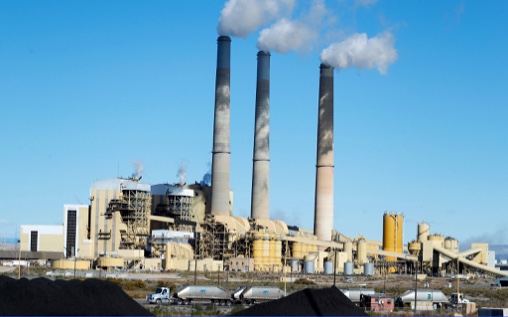
White House charts path to cut methane pollution

When President Obama first declared methane a critical issue, in his landmark speech at Georgetown University last June, he took a concern that had been percolating in the scientific and environmental communities and put it on the climate agenda.

At the time, there was still wide debate about whether methane, a highly potent greenhouse gas, was a real issue. But the last several months has brought greater clarity with both an improved scientific understanding of the problem and an awareness of the solutions. Today’s White House announcement, which lays out the Administration’s next steps and a timeline to reduce methane emissions, adds to this momentum and is a welcome display of leadership on a critical environmental and energy security issue that requires both federal and state action.

We’ve been anxiously awaiting the internal administrative task force to finish its work and the news couldn’t come at a better time, for two reasons.

First, reducing methane pollution is an urgent environmental problem. Unburned natural gas is primarily methane. Over the first twenty years after it is released into the atmosphere, methane is 84 times more potent than carbon dioxide (CO2) in trapping more heat at the Earth’s surface, according to the Intergovernmental Panel on Climate Change (IPCC). More than one third of the warming in the next couple of decades due to current emissions will be from short-lived greenhouse gases. And these emissions are on the rise. IPCC data suggests that about 30 percent of the warming we will experience over the next 20 years as a result of this year’s greenhouse gas emissions will come from methane. Oil and gas activities are the largest industrial source of U.S. methane emissions. Hence, targeting reductions here, particularly where known solutions exist, is highly effective.

Second, addressing methane pollution is also an urgent priority for national energy security. Recent events in the Ukraine remind us of this, in that access to domestic energy resources provide a measure of security to our nation and its allies. How is it possible, then, given the strategic value of the abundance of U.S. natural gas supplies, that we allow it to be wasted through unnecessary venting, flaring and leaks? This is even more perplexing when you consider that we have the technologies necessary to avoid much of this. And further, these technologies are verycost effective to deploy and maintain, and in some cases, even save companies money because the avoided loss of natural gas bears a market value (worth between $4 and $5 today).

This is the message of a recent study by ICF International which concluded that we could reduce projected losses of natural gas over the next five years by 40 percent for less than a penny per thousand cubic feet of gas produced. To put this in context, a 40 percent reduction is the equivalent of 54 LNG tankers, every year!

Can you imagine the public outcry if the United States lost 54 LNG tankers on the high seas, every year? It would be a national crisis. And yet, that is exactly what is happening in the United States today. Fifty-four tankers worth of natural gas, literally, are vanishing into thin air. Yet, this is a problem we can afford to solve for pennies on the dollar.

So, given how important it is to the environment and national energy security to put an end to the waste of natural gas and the methane pollution it creates, today’s question isn’t why the Administration is acting to announce a national policy to reduce methane, the question is what took us so long to get started? More


Wednesday, January 29, 2014

If There's Global Warming ... Why Is It So Cold?

It's that time of year, the perennial "It's snowing so it can't be warming" season - or, as scientists call it, "winter". Depends on where you're standing, actually -- I stood on a frozen lake with Dr. Jeff Masters to discuss the current planetary changes, but at the same time, in Alaska, historic warm temperatures were unfolding, and across the west, the deepest drought in decades...

Monday, July 22, 2013

How the U.S. Clean Air Act Brought the Rains Down in Africa

You know how the story goes: a hypothetical butterfly flaps its wings. The air pressure changes ever so slightly. Winds shift. Fronts collide. And the next thing you know, a hurricane kicks up halfway around the world.

We fall back on the “butterfly effect” every time we mean to say that all life is connected, or that small actions can have enormous consequences. It’s what showed George Bailey the light in It’s a Wonderful Life, and it’s what Dr. Ian Malcolm was stuttering about in Jurassic Park. But new research reminds us that the theory is far more than a Hollywood trope.

In a paper published Friday in the journal Geophysical Research Letters, a team of researchers from the University of Washington shows that decades of drought in Africa were caused, at least in part, by pollutants emitted by the United States and Europe. Throughout the 60s, 70s, and 80s, coal-burning factories spewed sulfate-laden aerosols into the atmosphere with reckless abandon. These tiny particles -- which volcanoes can also emit naturally -- reflect sunlight and produce more reflective, longer-lasting clouds. The increased cloud cover caused temperatures to drop across the Northern Hemisphere, which in turn, caused rain patterns to shift away from certain areas of Africa. These shifts, the researchers argue, contributed to droughts that choked central Africa and resulted in 100,000 deaths between the 60s and 80s.

Meanwhile, with the intention of improving air quality at home, the U.S. and Europe began to restrict coal pollution in 1970 with the Clean Air Act and other legislation. It’s only now, after decades worth of precipitation observations, that researchers have been able to tie the end of the African drought to western legislation. As our factories scaled back production of sulfate aerosols, the pollution’s cooling effect slowly reversed and rainfall in Africa returned to historic levels by the mid-1980s.

If you’re suddenly feeling all warm and fuzzy inside -- “We fixed a devastating drought!” -- the story isn’t over. Aerosols weren’t the only pollutants in the atmosphere messing with the climate. Carbon dioxide has been flapping its wings, too. In a companion study, the research team argues that climate change is affecting the Northern and Southern Hemispheres at different rates, with the Northern warming faster thanks to its greater landmass. Last century's aerosol pollution masked this warming pattern, however. According to the researchers, temperatures in the north remained steady because the aerosol-related cooling balanced out the greenhouse effect created by increased carbon dioxide.

Understanding how each piece affects the whole is crucial to combatting climate change. That’s why NASA plans to launch a fleet of aircraft and satellites this summer to take exhaustive samples of the atmosphere. Their mission is to better understand how air pollution and natural emissions (like those from forest fires) play into atmospheric composition and climate. Ultimately, such information might lead to better policy decisions both for our own country and the global community to which we’re inextricably bound. More


Saturday, July 20, 2013

Bernie Sanders: Through the looking glass

During what Sen. Bernie Sanders called an Alice in Wonderland hearing, Senate environment committee Republicans on Thursday contradicted or ignored the near-unanimous consensus by climate scientists that global warming is real and man-made.


With Vermont and most of the country in the grip of another summer heat wave, Republicans on the Senate environment committee repeatedly tried to cast doubt on whether climate change is even occurring, let alone what should be done about it. They ignored a NASA report that last month was the second warmest June in recorded history. The ignored a National Oceanic and Atmospheric Administration report that 2012 was the hottest year on record in the United States.

Tuesday, July 9, 2013

We work on climate change every day By John Kerry

Everywhere I travel as secretary of state – in every meeting, here at home and across the more than 100,000 miles I’ve traveled since I raised my hand and took the oath to serve in this office – I raise the concern of climate change.

I do so not because it’s a pet issue or a personal priority, but because it’s critical to the survival of our civilization, and that means it’s a critical mission for me as our country’s top diplomat.

Is it also personal to me? Of course it is. The environment has been one of the central causes of my lifeever since I entered public life as an activist.

When I was just 26, I attended an Earth Day celebration in Massachusetts in 1970. It was an eye-opening immersion into the power of the grassroots to identify a problem, force it onto the national radar screen, and demand action — action that would come not from the goodwill and benevolence of Washington, but because citizens demanded it. The explosion of our activism on that very first Earth Day led to the creation of the EPA, the passage of the Clean Air Act and the Clean Water Act, and so much more. People demanded action and the politicians followed.

Today, people all over the world are demanding action on climate change, and those of us in positions of authority globally have a responsibility to lead the way toward progress.

So it’s personal, absolutely — but leading the way is also the right role for the United States.

We are not just the “indispensable nation” — today we must be the indispensable stewards of our shared planet. What one country does impacts the livelihoods of people elsewhere, and what we all do to address climate change now will largely determine the kind of planet we leave for our children and generations to come. From the far reaches of Antarctica’s Ross Sea to tropical wetlands in Southeast Asia, we have a responsibility to safeguard and sustainably manage our planet’s natural resources.

I am passionate about this, not based on ideology, but based on facts and based on science. It’s not just people all over the world crying out for action — it’s the very science that is screaming at us.

Twelve of the hottest 13 years on record have occurred since 2000. Glaciers are melting across the globe. Arctic sea ice volume has shrunk by 80 percent since 1979. Extreme weather events are increasing — like a massive, lethal heat wave in Moscow in 2010, enormous floods in Pakistan that same year that killed nearly 2,000 people and affected 20 million, and two “100-year droughts” in the Amazon in five years that led to the release of billions of tons of CO2, a fifth of all global CO2 emissions from energy in one year alone. In 2012, the United States endured 11 extreme climate- and weather-related events that each caused more than $1 billion in damage.

As I said in Sweden in May, climate change is truly a life-and-death challenge for all of us.

There was no mistaking President Obama’s words in his second inaugural address or in his State of the Union address this year: The United States is committed to meeting this challenge head on, working in cooperation with our partners around the world through ambitious actions to reduce emissions, transform our energy economy, and help the most vulnerable cope with the effects of climate change.

But these are not problems that can be solved by one nation alone. By definition, rescuing the planet’s climate is a global challenge that requires a global solution. So we must all demand that the biggest contributors to climate change have the most skin in the game.

That is why, shortly after I arrived at Foggy Bottom, I began working with our special envoy for climate change, Todd Stern, not just to find new ways to elevate the discussion of climate change globally, but to find new ways of cooperating with other countries right now.

Dealing responsibly with the clear and present danger of climate change was the focus of my first trip to China in April. I spoke with President Xi Jinping and Premier Li Keqiang about how we can work together to address the threat of climate change and its impact on our two nations’ economies and security. People on the streets of Beijing want a healthy climate just as much as people on the streets of Boston do.

I stood with State Councilor Yang Jiechi to announce that we would put our efforts on an accelerated path, making climate change and energy policy a priority at the upcoming U.S.-China Strategic and Economic Dialogue.

To confront this challenge head on, we created the U.S.-China Working Group. Our goal is to spur creative, cooperative new ways of addressing the climate challenge — and in its first few months, this working group has already broken new ground.

When we last met with China’s leaders in California just a couple of weekends ago, after productive and candid dialogue, President Obama and President Xi were able to announce that the United States and China have agreed to work together and with others via the Montreal Protocol to phase down the production and consumption of hydrofluorocarbons (HFCs), highly potent greenhouse gases used in refrigerators and air-conditioners. This could eliminate nearly two years’ worth of current global greenhouse gas emissions between now and 2050.

And next month, we have another opportunity to make progress when we meet for the Strategic and Economic Dialogue in Washington, where both the United States and China will present new joint initiatives to curb climate change.

Our new climate change working group is an example of how two motivated and committed countries can take strong and swift action to reduce global emissions and put the world on the path to a clean-energy economy.

By keeping the pressure on each other to take ambitious action and replicating this effort around the world, we will create a virtuous cycle to address the climate challenge the right way: together. In a more collaborative environment, I am absolutely confident we will find the solutions and push the curve of discovery. We can do it without jeopardizing our economies — in fact, we will grow them.

And the United States will be working not just with China, but around the globe. Next I will be traveling to India, where once again climate change and energy will be vital to the conversation.

I hope you will share your thoughts and ideas on new climate initiatives we could undertake. If ever there was an issue that demanded cooperation, public participation, and committed diplomacy, this is it. More

.