Showing posts with label climate reality project. Show all posts

Monday, November 9, 2015

Ever Heard “Solar Panels Are Too Unreliable”?

November 4 11:11 AM

Despite the tremendous source of energy shining in the sky, some keep debating the merits of solar power and other renewable energies, asking the same questions over and over again: How effective is solar energy? Is it more expensive? Where and how does solar fit in the larger energy grid?

Many of the arguments against solar are based on outdated or incorrect information. That’s why we’re setting the record straight on some of the most common solar energy myths. First up: solar energy and reliability.

Myth: "Solar Panels Are Too Unreliable."

Fact: Most solar panels produce electricity for over 20 years or more.

If you’ve heard solar panels are unreliable, you’re getting outdated information. In fact, the truth is the exact opposite. Most solar panels produce electricity for over 20 years or more as their parts do not wear out easily. In fact, many of the first solar systems installed over 40 years ago are still active today.

Additionally, using solar power diversifies our energy sources, making the entire grid more dependable. We have more tools available to make solar and other variable renewable technologies more reliable than ever, such as larger and more integrated grids, better resource forecasting, and more use of energy storage technologies. What will need to be replaced in the next 30 years are aging fossil fuel infrastructures like outdated coal-fired power plants.

If we make the switch and rely on renewable sources of energy like the sun, we can save billions of dollars by avoiding not only the costs of replacing these plants, but also the increasingly higher costs of climate change in areas like healthcare expenses and damage from extreme weather.

The future of solar is bright! Join Climate Reality to demand a clean energy future: http://bit.ly/1WpKIld

Posted by on Saturday, September 12, 2015

Scientists estimate that more than enough solar energy strikes the earth every hour to power our whole society for an entire year.

So next time you hear that solar panels aren’t reliable – just let them know that as long as the sun will rise, solar panels will generate clean, renewable energy.

Want to Bust More Solar Myths?

"It doesn’t work when it’s cloudy." "But it’s too expensive. "We can use clean coal instead."

If you’ve had it with these excuses, download our free Solar Myths Ebook now to learn how solar energy can not only meet our energy needs, but can even help solve climate. More


Thursday, August 13, 2015

Climate Reality Training in Miami with Al Gore

Hello!

I’m reaching out today on behalf of The Climate Reality Project, an organization started by former Vice President Al Gore focused on creating a global movement calling for action on climate. We have an upcoming training opportunity in Miami, Florida that I believe you and others who follow The Climate War Room and The Cayman Institute will be interested in.

As we are all aware, the time has come for action on climate. On September 28-30 in Miami, The Climate Reality Project and Mr. Gore will be hosting a training for new Climate Reality Leaders to help grow the movement. There has never been a better time to engage your friends and colleagues on this issue. The Miami training will not only provide attendees with cutting edge tools to most effectively communicate climate change to your community but will also enter them into a community of over 8,000 devoted individuals from 126 countries who are committed to using their voices to address the climate crisis.

Our training in Miami will highlight the unique challenges that climate change poses to the state of Florida and what some local governments are already doing to tackle them; Florida’s huge untapped solar energy generating capacity; and the role of the ever strengthening Latino voice and vote in driving climate action. At the training, Mr. Gore, and experts and influencers from across the climate sphere will present in panels, take questions, and host breakout sessions.

We encourage you to recommend outstanding leaders in your personal and professional life who would be well suited for giving presentations and helping to build strong support for action on climate change. They can apply for the Climate Leadership Corps Training here. I’ve also attached a document you can share with your network, which has a little more information about who we are and what the Miami training will cover. The deadline to apply is August 26th, 2015.

Please do not hesitate to reach out if you have any questions!

Warm regards,

Joseph Moran | Program Assistant-Climate Reality Leadership Corps

750 Ninth Street, NW, Suite 520 | Washington, DC 20001


NOTICE OF CONFIDENTIALITY & DISCLAIMER
The information contained in this e-mail and any attachments is CONFIDENTIAL and is intended only for the use of the addressee. Any unauthorized use, disclosure, distribution, dissemination, or copying is strictly prohibited and may be unlawful. If you are not the intended recipient, you are prohibited from any further viewing of the e-mail or any attachments or from making any use of the e-mail or attachments. If you believe you have received this e-mail in error, notify us immediately and permanently delete the e-mail, any attachments, and all copies thereof from any drives or storage media and destroy any printouts of the e-mail or attachments and any copies of such printouts. Although this e-mail and any attachments are believed to be free of any virus or other defect that might negatively affect any computer system into which it is received and opened, it is the responsibility of the recipient to ensure that it is virus-free and no responsibility is accepted by the sender for any loss or damage arising in any way in the event that such a virus or defect exists. Thank you for your cooperation.


Friday, August 7, 2015

ATTEND A CLIMATE REALITY TRAINING WITH AL GORE

The Climate Reality Leadership Corps training in Miami, Florida, which will be held September 28-30, will bring together a select group of individuals committed to addressing the impacts of climate change and implementing the solutions that will define us to future generations. This training is an opportunity to join a global network of leaders committed to solving the climate crisis.

Over the course of three days, you’ll have the opportunity to hear from experts who will share information about the science behind the climate crisis as well as their experiences educating and engaging diverse networks and communities. You will also have the chance to connect with a group of extraordinary leaders from a variety of sectors and countries around the world.

"Life changing," "re-affirming," and "empowering" are just some of the ways past participants have described their experience. Come as a leader, leave as a Climate Reality Leader. More


Wednesday, August 5, 2015

Climate Reality Training in Miami with Al Gore

I’m reaching out today on behalf of The Climate Reality Project, an organization started by former Vice President Al Gore focused on creating a global movement calling for action on climate. We have an upcoming training opportunity in Miami, Florida that I believe you and others who follow The Cayman Institute / The Climate War Room will be interested in.

As we are all aware, the time has come for action on climate. On September 28-30 in Miami, The Climate Reality Project and Mr. Gore will be hosting a training for new Climate Reality Leaders to help grow the movement. There has never been a better time to engage your friends and colleagues on this issue. The Miami training will not only provide attendees with cutting edge tools to most effectively communicate climate change to your community but will also enter them into a community of over 8,000 devoted individuals from 126 countries who are committed to using their voices to address the climate crisis.

Our training in Miami will highlight the unique challenges that climate change poses to the state of Florida and what some local governments are already doing to tackle them; Florida’s huge untapped solar energy generating capacity; and the role of the ever strengthening Latino voice and vote in driving climate action. At the training, Mr. Gore, and experts and influencers from across the climate sphere will present in panels, take questions, and host breakout sessions.

We encourage you to recommend outstanding leaders in your personal and professional life who would be well suited for giving presentations and helping to build strong support for action on climate change. They can apply for the Climate Leadership Corps Training here. I’ve also attached a document you can share with your network, which has a little more information about who we are and what the Miami training will cover. The deadline to apply is August 26th, 2015.

Please do not hesitate to reach out if you have any questions!

Warm regards,

Joseph Moran | Program Assistant-Climate Reality Leadership Corps

750 Ninth Street, NW, Suite 520 | Washington, DC 20001

NOTICE OF CONFIDENTIALITY & DISCLAIMER
The information contained in this e-mail and any attachments is CONFIDENTIAL and is intended only for the use of the addressee. Any unauthorized use, disclosure, distribution, dissemination, or copying is strictly prohibited and may be unlawful. If you are not the intended recipient, you are prohibited from any further viewing of the e-mail or any attachments or from making any use of the e-mail or attachments. If you believe you have received this e-mail in error, notify us immediately and permanently delete the e-mail, any attachments, and all copies thereof from any drives or storage media and destroy any printouts of the e-mail or attachments and any copies of such printouts. Although this e-mail and any attachments are believed to be free of any virus or other defect that might negatively affect any computer system into which it is received and opened, it is the responsibility of the recipient to ensure that it is virus-free and no responsibility is accepted by the sender for any loss or damage arising in any way in the event that such a virus or defect exists. Thank you for your cooperation.

Fossil Fuels: Four Big Reasons for Hope

The fossil-fuels crowd seems to have a thing for China and India. It feels like at least in the US, at least half the discussions of clean energy and climate change you see on television end with the anti-renewable voice saying, “Well what about China and India? It doesn’t matter what we do if they keep polluting.”

The rest tends to go to script as, almost without fail, a satisfied smirk the size of Texas then creeps into view as our fossil-fuels friend then leans back in his or her chair. Job done. Mission accomplished. Time to head home and light up a victory-lap Cuban.

But here’s the thing. When we think about the biggest reasons for hope that humanity is finally getting its act together to protect this precious planet of ours from climate change, what comes to mind isn’t the Gigafactory that Tesla CEO Elon Musk is building to revolutionize electric vehicles and energy storage. Or how Costa Rica is committed to going carbon-neutral by 2021. Or the fact that Norway is dropping coal investments from its sovereign wealth fund.

It’s China and India.

The world’s first and third-largest economies in 2015 (measured by purchasing power parity) are both stepping up their commitment to renewable energy and China in particular is also working to peak its carbon emissions by 2030 – and aiming to do so sooner. Maybe the most exciting part of all is the fact that this choice isn’t driven by any kind of misguided idealism. It’s a clear-eyed business decision made by leaders looking at the realities of fossil fuels and what they mean for the health of millions of citizens and their respective economies – and recognizing that clean energy is the smart long-term bet.

Admittedly, China’s further along this path than India and both have some ways to go before their power plants are no longer belching dirty coal soot and carbon pollution by the metric ton. But when nations of this size and aspiration begin shifting to new models of development increasingly powered by renewables and seeing it pay off as their economies keep growing, it sends a clear signal to other emerging countries that clean energy can work.

After highlighting some of the countries with a track record of embracing renewables and flourishing today we’re looking at how recent converts to the clean-energy cause are showing over and over that the way to economic success in the twenty-first century is powered by smart technologies like wind and solar. So the next time someone says, “Well what about China and India,” you can say, “Well let me tell you about China and India. And Brazil and Mexico too . . .” More


Sunday, August 2, 2015

Obama to Unveil Tougher Climate Plan With His Legacy in Mind

WASHINGTON — In the strongest action ever taken in the United States to combat climate change, President Obama will unveil on Monday a set of environmental regulations devised to sharply cut planet-warming greenhouse gas emissions from the nation’s power plants and ultimately transform America’s electricity industry.

The rules are the final, tougher versions of proposed regulations that the Environmental Protection Agency announced in 2012 and 2014. If they withstand the expected legal challenges, the regulations will set in motion sweeping policy changes that could shut down hundreds of coal-fired power plants, freeze construction of new coal plants and create a boom in the production of wind and solar power and other renewable energy sources.

As the president came to see the fight against climate change as central to his legacy, as important as the Affordable Care Act, he moved to strengthen the energy proposals, advisers said. The health law became the dominant political issue of the 2010 congressional elections and faced dozens of legislative assaults before surviving two Supreme Court challenges largely intact.

"Climate change is not a problem for another generation, not anymore," Mr. Obama said in a video posted on Facebook at midnight Saturday. He called the new rules "the biggest, most important step we’ve ever taken to combat climate change."

The most aggressive of the regulations requires the nation’s existing power plants to cut emissions 32 percent from 2005 levels by 2030, an increase from the 30 percent target proposed in the draft regulation.

That new rule also demands that power plants use more renewable sources of energy like wind and solar power. While the proposed rule would have allowed states to lower emissions by transitioning from plants fired by coal to plants fired by natural gas, which produces about half the carbon pollution of coal, the final rule is intended to push electric utilities to invest more quickly in renewable sources, raising to 28 percent from 22 percent the share of generating capacity that would come from such sources.

In its final version, the rule retains the same basic structure as the draft proposal: It assigns each state a target for reducing its carbon pollution from power plants, but allows states to create their own custom plans for doing so. States have to submit an initial version of their plans by 2016 and final versions by 2018.

But over all, the final rule is even stronger than earlier drafts and can be seen as an effort by Mr. Obama to stake out an uncompromising position on the issue during his final months in office.

The anticipated final climate change regulations have already set off what is expected to be broad legal, legislative and political backlash as dozens of states, major corporations and industry groups prepare to file lawsuits challenging them.

Senator Mitch McConnell of Kentucky, the Republican majority leader, has started an unusual pre-emptive campaign against the rules, asking governors to refuse to comply. Attorneys general from more than a dozen states are preparing legal challenges against the plan. Experts estimate that as many as 25 states will join in a suit against the rules and that the disputes will end up before the Supreme Court.

Leading the legal charge are states like Wyoming and West Virginia with economies that depend heavily on coal mining or cheap coal-fired electricity. Emissions from coal-fired power plants are the nation’s single largest source of carbon pollution, and lawmakers who oppose the rules have denounced them as a "war on coal."

"Once the E.P.A. finalizes this regulation, West Virginia will go to court, and we will challenge it," Patrick Morrisey, the attorney general of West Virginia, said in an interview with a radio station in the state on Friday. "We think this regulation is terrible for the consumers of the state of West Virginia. It’s going to lead to reduced jobs, higher electricity rates, and really will put stress on the reliability of the power grid. The worst part of this proposal is that it’s flatly illegal under the Clean Air Act and the Constitution, and we intend to challenge it vigorously."

Although Obama administration officials have repeatedly said states will have flexibility to design their own plans, the final rules are explicitly meant to encourage the use of interstate cap-and-trade systems, in which states place a cap on carbon pollution and then create a market for buying permits or credits to pollute. The idea is that forcing companies to pay to pollute will drive them to cleaner sources of energy.

That new rule also demands that power plants use more renewable sources of energy like wind and solar power

Mr. Obama tried but failed to push through a cap-and-trade bill in his first term, and since then, the term has become politically toxic: Republicans have attacked the idea as "cap and tax."

But if the climate change regulations withstand legal challenges, many states could still end up putting cap-and-trade systems into effect. Officials familiar with the final rules said that in many cases, the easiest and cheapest way for states to comply would be by adopting cap-and-trade systems.

The rules take into account the fact that some states may refuse to submit plans, and on Monday, the administration will also unveil a template for a plan to be imposed on such states. That plan will include the option of allowing a state to join an interstate cap-and-trade system.

The rules will also offer financial benefits for states that choose to take part in cap-and-trade systems. The final rules will extend until 2022 the timeline for states and electric utilities to comply, two years later than originally proposed. But states that begin to take actions to cut carbon pollution as early as 2020 will be rewarded with carbon reduction credits — essentially, pollution permits that can be sold for cash in a cap-and-trade market.

Climate scientists warn that rising greenhouse gas emissions are rapidly moving the planet toward a global atmospheric temperature increase of 3.6 degrees Fahrenheit, the point past which the world will be locked into a future of rising sea levels, more devastating storms and droughts, and shortages of food and water. Mr. Obama’s new rules alone will not be enough to stave off that future. But experts say that if the rules are combined with similar action from the world’s other major economies, as well as additional action by the next American president, emissions could level off enough to prevent the worst effects of climate change.

Mr. Obama intends to use the new rules to push other countries to commit to deep reductions in their own carbon emissions before a United Nations summit meeting in Paris in December, when a global accord to fight climate change is expected to be signed.

Mr. Obama’s pledge that the United States would enact the climate change rules was at the heart of a pact that he made last year with President Xi Jinping of China, committing their nations, the world’s two largest carbon polluters, to substantially cut emissions.

"It’s the linchpin of the administration’s domestic effort and international effort on climate change," said Durwood Zaelke, president of the Institute for Governance and Sustainable Development, a research organization. "It raises the diplomatic stakes in the run-up to Paris. He can take it on the road and use it as leverage with other big economies — China, India, Brazil, South Africa, Indonesia."

While opponents of the rules have estimated that compliance will cost billions of dollars, raise residential electricity rates and slow the American economy, the administration argues that the rules will save the average American family $85 annually in electricity costs and bring additional health benefits by reducing emissions of pollutants that cause asthma and lung disease.

The rules will be announced at a White House ceremony on Monday and signed by Gina McCarthy, the Environmental Protection Agency administrator. While the ceremony is scheduled to take place on the White House’s South Lawn, officials said it might be moved indoors to the East Room after forecasters predicted that the weather would be too hot.


Thursday, November 6, 2014

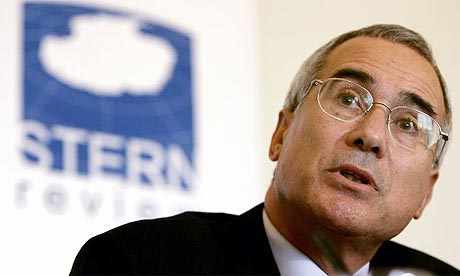
Lord Stern: global warming may create billions of climate refugees

Lord Nicholas Stern, one of the world’s most influential voices on climate economics, does not mince his words when it comes to criticising those who take a narrow view of prosperity and highlighting the devastating consequences of global warming.

Nicholas Stern

"You have to be a complete idiot to think that GDP sums up prosperity," says Stern, who believes we need to develop broader measures of success and combine this with a return to core values if we are to convince people to act to prevent runaway climate change.

Stern, who wrote the landmark 2006 Stern review of the economics of climate change, says if we fail to take heed of the danger signals, we risk temperatures rising this century to levels we haven’t seen for tens of millions of years.

"Hundreds of millions of people, perhaps billions of people would have to move," he warns. "If we’ve learned anything from history that means severe and extended conflict.

"We couldn’t just turn it off. You can’t make a peace treaty with the planet, you can’t negotiate with the laws of physics. You’re in there, you’re stuck. Those are the stakes we’re playing for and that’s why we have to make this second transformation, the climate transformation and move to low carbon economy."

Stern has co-authored the recently published New Climate Economy report, which argues that the world can head off the worst effects of climate change, and enjoy the fruits of continued economic expansion, if it moves quickly to invest in a low-carbon economy.

He says he hopes the study will influence key decision makers because it was written with the support of a coalition of respected politicians, economists, think tanks and institutions, including the World Bank, the International Monetary Fund, the OECD, the International Energy Agency and the UN.

He dismisses the arguments of more radical economists who believe that we need to stop our fixation with growth, arguing that the economy needs to keep expanding if we are to have a hope of eradicating poverty.

"To those who want to knock out growth from objectives, I find they’re close to reprehensible because for me the two defining challenges of this century are overcoming poverty and managing climate change.

"We fail on one, we fail on the other. So I think to say that we should just switch off growth is to miss big aspects of what matters about poverty. And so it worries me. It’s also politically very naive. If you turn it into a pissing contest between growth on the one hand and climate and environment on the other and say you’ve got to choose, you’re setting yourself up for failure."

Stern says investments in renewable energy must be combined with a rethinking of our understanding of prosperity, which he believes will lead to what he terms better growth.

"It means thinking differently about health, about the way we live in our cities and about the strengths of our communities," he says. "It’s not that GDP is idiotic but it’s mostly about the use of labour resources and what it produces. But there are very important parts of this story about prosperity that get missed out."

How does Stern, who is president of the British Academy, believe we can start to measure prosperity that goes beyond GDP?

He says it is vital to start from the perspective of people understanding what they mean by wellbeing and what they value, whether it is family, community, arts or sport.

"You can be reasonably empirical about what moves people and then you go and try to collect data on that," he says. "Once you understand what it is it you’re trying to capture and create indicators, you can then start to talk about policy."

The 68-year-old peer says it’s vital we go back to recognising the importance of Aristotle’s belief in the need to understand what it means to be a virtuous person and to whom we owe a duty of care.

"I’ve been an academic all my life and I look at the evidence of what works and what doesn’t work," he says. "But if you ask yourself what you’re trying to do, that’s spurred by values, by what’s important to you."

For Stern, the heart of his values lies in the importance of family. Speaking immediately after introducing his two-week old granddaughter Rosa on stage at a TEDx talk in New York, he said: "I’m 68 and I am thinking what will Rosa be like when she’s 68? We’re talking about towards the end of this century and what we do now will determine whether the next 100 years is the best of centuries or the worst of centuries."

"Are we going to look our grandchildren in the eye and tell them that we understood the issues, that we recognised the dangers and the opportunities, and still we failed to act?"

Stern believes that it is time for religious leaders, politicians and the media to act more responsibly, pointing in particular to the importance of the Pope’s statement earlier this year that if we destroy creation, creation will destroy us.

Also key to changing hearts and minds is the field of arts, with Stern pointing to Barbara Kingsolver’s book Flight Behaviour, which he says is not only wonderful in describing the human condition but also in questioning our relationship with the environment.

"It’s not just the policy wonks like me we need to try to assemble the evidence and set it out," he says. "You have to do that because emotional argument without rational evidence on cause and effect doesn’t get you all that far. But rational argument about cause and effect alone doesn’t get you there either." More


Friday, October 17, 2014

The Smithsonian Institution Announces an Official Climate Change Statement

Living in the Anthropocene: Prospects for Climate, Economics, Health, and Security

In conjunction with the one-day symposium "Living in the Anthropocene: Prospects for Climate, Economics, Health, and Security," the Smithsonian has released the following statement on climate change:

Rapid and long-lasting climate change is a topic of growing concern as the world looks to the future. Scientists, engineers and planners are seeking to understand the impact of new climate patterns, working to prepare our cities against the perils of rising storms and anticipating threats to our food, water supplies and national security. Scientific evidence has demonstrated that the global climate is warming as a result of increasing levels of atmospheric greenhouse gases generated by human activities. A pressing need exists for information that will improve our understanding of climate trends, determine the causes of the changes that are occurring and decrease the risks posed to humans and nature.

Climate change is not new to the Smithsonian—our scholars have investigated the effects of climate change on natural systems for more than 160 years. We look at processes that occurred millions of years ago alongside developments taking place in today’s climate system.

The Smithsonian responds to climate change in four ways: by increasing knowledge of the human and natural environment through research; by making our findings available to the public; by protecting the Institution’s core asset, the national collections; and by operating our facilities and programs in a sustainable manner.

Research underlies all that we do. Scholars use the Smithsonian’s unparalleled collection of more than 138 million objects and specimens, together with our global network of marine and terrestrial monitoring stations, to examine climate change through multiple lenses. Smithsonian research scientists use satellite- and place-based sensors to study the changing composition of air, water and soil. They study climate history at geological and archaeological field sites around the world. Finally, they excel at baseline studies carried out over decades, which are recognized as essential to tracking the long-term effects of climate change.

The 500 Smithsonian scientists working around the world see the impact of a warming planet each day in the course of their diverse studies. A sample of our investigations includes anthropologists learning from the Native people of Alaska, who see warming as a threat to their 4,000-year-old culture; marine biologists tracking the impacts of climate change on delicate corals in tropical waters; and coastal ecologists investigating the many ways climate change is affecting the Chesapeake Bay.

The dissemination of knowledge gained through research is a public responsibility of the Smithsonian. Our scientists continually communicate with the scholarly community through publications and academic interactions. At the same time, the Smithsonian’s unique combination of museums and interconnected array of traveling exhibitions, publications, media and Web-based tools provide platforms to reach hundreds of millions of people each year across the world. Our goal is to explain in clear and objective terms the causes and effects of climate change as documented in our research and the research of our colleagues.

The Smithsonian has assembled collections of scientific specimens unsurpassed anywhere else in the world. These collections provide invaluable documentation of cultures and global biodiversity for scientists, scholars and the public. Extreme weather, rising sea levels and storm surges pose significant threats to the museums and research centers that house these collections, many of them located on low-lying land. Our charge is to protect, now and far into the future, this irreplaceable resource from the impacts of climate change and other hazards.

We are always striving to operate in ways that minimize the Smithsonian’s environmental footprint, meeting Institutional goals to decrease the use of potable water and fossil fuels, reduce direct and indirect greenhouse gas emissions and increase use of renewable energy. The National Museum of African American History and Culture is set to be the "greenest" Smithsonian museum yet, designed to achieve a LEED Gold rating, and the new Mathias Laboratory building at the Smithsonian Environmental Research Center is on track to receive LEED Platinum certification.

The Smithsonian will continue, as it has for more than a century and a half, to produce basic scientific information about climate change and to explore the cultural and historical significance of these changes. The urgency of climate change requires that we boost and expand our efforts to increase public knowledge and that we inspire others through education and by example. We live in what has come to be called the Anthropocene, or "The Age of Humans." The Smithsonian is committed to helping our society make the wise choices needed to ensure that future generations inherit a diverse world that sustains our natural environments and our cultures for centuries to come. More


Sunday, October 12, 2014

Iowa Roots: Speaking Truth to Power

James Hansen writes: I was lucky to be born in Iowa. The nature of my childhood and later education at the State University of Iowa, odd as it seems, have relevance to fundamental political matters that I hope Iowans will think about. I will argue that Iowa could alter our nation’s course on energy and climate, matters of monumental importance to our children and indeed to all life on Earth.

James Hansen

I was born in 1941 in a small farmhouse in western Iowa, the fifth of seven children. My father was an itinerant tenant farmer, moving from one farm to another, sharing crops with the owner.

By 1945 small farms were disappearing. My father took a job as bartender and we moved a small house to a lot in Denison Iowa. Our life then seems hard by today’s standards. There were three bedrooms for nine of us. Even after we got a septic system the toilet was in the cellar, which required going outdoors. The only sink was in the kitchen, which was also the dining room. Washing up was done in turn, quickly. Our parents quarreled vehemently when our mother took a job as a waitress. I shrank in fear from our father’s angry voice.

Yet it was a good life to grow up in small town Iowa in a time of rising expectations. Today’s young people face a harder situation, with diminishing opportunities. That hurts deeply because, as I will explain, it is unnecessary, a result of tragic political machinations for which we adults must accept responsibility.

Politics back then was simpler. My father shouted “give ‘em Hell, Harry!” and slapped the table while listening to President Truman on the radio. My father called the Republican Party “the rich man’s party.” But shortly before my parents divorced he took me to listen to General Eisenhower speaking from the back of a train, as he came through Denison on a whistle-stop campaign trip in 1952. My father decided that he “liked Ike”, so he voted Republican.

Politicians were more honest regarding fundamental situations. Truman was blunt, with courage to remove war-hero MacArthur, thus maintaining civilian control of policy. Eisenhower warned us about the rising military-industrial complex. Below I contrast this with today’s situation.

It was easier in those days for young people to get ahead. I had a paper route from 3rd grade and by high school was the distributor of the Omaha World Herald for Denison (competing with the Des Moines Register for customers). From such a job I could save enough for college, where costs were within reach of all. Costs today have exploded. With our federal government in cahoots with banks, many college students look forward to decades of debt, not a better life.

My good fortune was to go to the University of Iowa. Professor James Van Allen was building instruments in the basement of the physics building, including the one on the first U.S. satellite, which discovered Earth’s radiation belts. In an exciting research environment Prof. Van Allen taught us how science works. The only “authority” was the rigorous objectivity of science.

Prof. Van Allen did not shirk from speaking truth to power and the public. When microwave ovens were introduced and fear of microwave radiation began to spread, Prof. Van Allen offered to sit on a microwave oven while it cooked his dinner. He helped quell irrational fear.

Prof. Van Allen told me about new data on the planet Venus. It led me to study why Venus was so hot and to propose an instrument for a mission to Venus after I joined NASA. The extreme heat on Venus turned out to be caused by the large amount of CO2 in the planet’s atmosphere.

CO2 was known to be increasing rapidly on Earth, because of our burning of fossil fuels – coal, oil and gas. What would it mean for life on our planet? I formed a small team at the NASA Goddard Institute for Space Studies to study the problem.

We showed that Earth was warming by the amount expected due to the CO2 increase. Later we showed that Earth was out of energy balance: Earth is absorbing more energy from the sun than it is radiating to space as heat. This confirms the most fundamental physics, as it is the added CO2 that reduces heat radiation to space. The conclusion is based on data, not models.

One implication: more warming is “in the pipeline”, without additional increase of atmospheric CO2. In turn, it follows that CO2 emissions must be reduced rapidly or young people in coming decades will face unacceptable consequences: continually retreating shorelines, shifting climate zones with extermination of many species, increasing occurrence of climate extremes with widespread disruption to food and water supplies, more severe droughts and heat waves, more damaging forest fires, stronger storms, and greater flooding.

Implications for energy policy are crystal clear. Most remaining fossil fuels must be left in the ground, unless the CO2 is captured and buried. There is no serious scientific debate about this.

Remarkably, scientific analysis also shows that the policies needed to achieve fossil fuel phasedown would also address problems such as underemployment and growing income disparities. Why are such policies not pursued, if they are in the best interests of the public?

I learned why when I worked for the government. I was repeatedly warned not to connect the dots in the climate problem all the way to policy implications. End steps must be left to “policy-makers” and, it turns out, to special interests. NASA did not want to annoy the powers that be.

Scientists are trained to analyze complex problems and connect all the dots. If we fail to tell the whole story clearly, if we shirk speaking truth to power, we fail our children and grandchildren.

The truth is that present energy and climate policies of the United States and the United Nations are dishonest and tragic.

Out of one side of their mouths our leaders profess to understand that we have a planet in peril and that we must rapidly phase down CO2 emissions. At the same time they encourage pursuit of almost every fossil fuel that can be found, while knowing that such policies make achievement of climate goals impossible.

The fundamental reason that fossil fuel emissions continue to increase is that they appear to the consumer to provide the cheapest energy. This apparent cheapness is a mirage. Why? (1) We subsidize fossil fuels directly, and indirectly by protecting supply lines. (2) Impacts of air and water pollution are borne by the public; e.g., if your child gets asthma, you pay the costs, not the fossil fuel company. (3) Costs of climate catastrophes are borne by the victims and taxpayers.

We should make the price of fossil fuels honest by collecting a gradually rising carbon fee from fossil fuel companies. It is easy to collect, at domestic mines and ports of entry. 100% of the collected money should be given to the public, an equal amount to each legal resident, distributed electronically to bank accounts or debit cards. Not one dime to the government.

The person doing better than average in limiting his “carbon footprint” will make money. He will have an incentive to reduce fossil fuel use via future purchases. Entrepreneurs will have an incentive to develop no-carbon products. Businesses will be able to plan energy investments.

Detailed economic studies show that a carbon fee of $10 per ton of CO2, increasing $10 each year, will reduce U.S. CO2 emissions 33% in 10 years. That is 12 times more than the amount of carbon in the oil that would be carried by the Keystone XL pipeline.

While a tax would depress the economy, a fee with 100% of the money distributed to the public spurs the economy. After 10 years national employment increases 2.1 million jobs! The simple explanation is that honest pricing of energy makes the economy more efficient.

I should explain why I say that our governments’ policies are “dishonest and tragic.” They are dishonest because they pretend that policies that try to “cap” emissions could actually phase down emissions rapidly, for example the “cap-and-trade” of the Kyoto Protocol or Democratic bills in Congress. These amount to tax increases, they depress the economy, and they reduce emissions very little. And what “cap” would India accept – three times that of the U.S.? This is why governments allow all fossil fuel development, fracking, deep-ocean and Arctic drilling, mountaintop removal – because they know that their carbon policies are ineffectual.

Why tragic? Because policies that would actually work, fee-and-dividend in particular, do not cost the economy anything. They would spur the economy, create jobs, and modernize our infrastructure as we move to clean energies and energy efficiency.

Is it possible that Iowa, perhaps in cooperation with one or more neighboring states, such as Nebraska, Minnesota or Wisconsin, could help avert the tragedy? I believe it is conceivable that Midwest common sense could affect national and international policies by providing an example. A regional carbon fee cannot rise too high without disadvantaging local industry, because states do not have the practical ability to impose border tax adjustments. However, up to a reasonable level the net effect of a carbon fee would be beneficial, if the proceeds went to the public.

There is a conservative tendency in the Midwest. But conservatives are not the enemy of the planet. Historically conservatives have been the environments best friend. Conservation and creation care should be in the blood of conservatives.

A political divide has developed because conservatives fear that liberals will use the climate issue to increase taxes and government intrusion into their lives. These concerns provide fertile ground for anti-science nut-cases (global warming is a hoax!) to flourish.

Most conservatives I know are thoughtful. They do not want to go down in history as being responsible for blocking effective action to stabilize climate. Gaining their support for a rising revenue-neutral carbon fee, which is in fact a conservative approach, is possible.

A rigorously nonpartisan organization, Citizens Climate Lobby, has grown rapidly in the past several years. Their objective is to promote fee-and-dividend. They are unfailingly polite and respectful, but also knowledgeable and determined. They have met with legislators in almost all states. They could be a valuable resource in helping to organize a Midwest climate initiative.

Finally, I point out that, although a gradually rising carbon fee is the essential foundation for a successful policy to rapidly phase down our fossil fuel addiction, there are other requirements. The crucial technical need is abundant affordable carbon-free electricity generation.

Today, except for limited hydroelectric and biomass power plants, there are two options for baseload electricity: fossil fuels and nuclear power. We will not be able to phase out fossil fuel power plants without major contributions from nuclear power.

Most nuclear power plants in operation today are of a 40-50 year-old technology, yet they have saved millions of lives by displacing fossil fuel power plants. Fossil fuel air pollution kills more than 3.7 million people per year globally. Pollution is much less in the U.S. than in China or India, yet thousands of people are killed by it every year in the U.S. In contrast the one major nuclear accident in the U.S., at Three Mile Island, Pennsylvania, may result in the death of 1-2 people, which is undetectable among the 40,000 cancer deaths that will occur from other causes among the Pennsylvania residents exposed to radiation.

Modern nuclear technology has major improvements including passive shutdown in case of emergency and an ability to cool the nuclear fuel without external power. It is also possible to include reactors in the nuclear fleet that “burn” nuclear waste and utilize 99% of the energy in the nuclear fuel, compared with less than 1% in the older technology. Thus the nuclear waste problem can be solved and, if we choose, we can stop mining uranium because we have shown that an inexhaustible amount of nuclear fuel can be sieved from the ocean.

There is an analogy between the nuclear and aircraft industries. At the time of the earliest airplanes, who would have imagined that we would fly huge aircraft with more than 100 people at altitudes of 10 miles without parachutes! If a window broke at that altitude, everyone could die! So we worked on the technology. Now the chance you will lose your life by flying from New York to LA is much smaller than if you drove your car. Yes, there is still danger, especially due to human error, and we must be vigilant and develop control systems to minimize danger.

President Clinton in his State-of-the-Union message in 1993 made the chilling announcement that he was eliminating unnecessary programs such as nuclear power research and development. However, nuclear technology is not disappearing from Earth, on the contrary, and if the U.S. drifts further toward technical mediocrity, leaving nuclear leadership to nations such as Russia, the world will be a more dangerous place. If the United States chooses to focus on being a petro-state, the economic well-being of our children eventually will decline further.

Fortunately, all clean energy technologies would be spurred by the carbon fee-and-dividend approach, providing a broad revival of our technology leadership in many areas, especially clean energies which should all be free to compete rather than specified by politicians. The result would be greatly improved economic well-being for future generations.

It is not always easy to speak truth to power, but all citizens have the opportunity if they choose. I have one minor, easy suggestion for you to consider, and another requiring more effort. More


Tuesday, September 23, 2014

The state of the climate — and what we might do about it

Today, the UN begins its Climate Summit, enlisting the world to work together on a problem that’s too big for any one country to solve. Lord Nicholas Stern helped write the delegates’ report that outlines where we are now — and what we could do next. It’s a big vision for cooperation, with a payoff that goes far beyond averting disaster. He asks: How can we use this crisis to spur better lives for all?

Monday, September 22, 2014

Whether We Engage or Do Nothing... This Changes Everything

The following is an excerpt taken from the introduction of Naomi Klein's newly published book, This Changes Everything: Capitalism vs. the Climate, and appears at Common Dreams with permission from the book's publisher Simon & Shuster. All rights reserved.

“Most projections of climate change presume that future changes—greenhouse gas emissions, temperature increases and effects such as sea level rise—will happen incrementally. A given amount of emission will lead to a given amount of temperature increase that will lead to a given amount of smooth incremental sea level rise. However, the geological record for the climate reflects instances where a relatively small change in one element of climate led to abrupt changes in the system as a whole. In other words, pushing global temperatures past certain thresholds could trigger abrupt, unpredictable and potentially irreversible changes that have massively disruptive and large-scale impacts. At that point, even if we do not add any additional CO2 to the atmosphere, potentially unstoppable processes are set in motion. We can think of this as sudden climate brake and steering failure where the problem and its consequences are no longer something we can control.” —Report by the American Association for the Advancement of Science, the world’s largest general scientific society, 2014

“I love that smell of the emissions.” — Sarah Palin, 2011

I denied climate change for longer than I care to admit. I knew it was happening, sure. Not like Donald Trump and the Tea Partiers going on about how the continued existence of winter proves it’s all a hoax. But I stayed pretty hazy on the details and only skimmed most of the news stories, especially the really scary ones. I told myself the science was too complicated and that the environmentalists were dealing with it. And I continued to behave as if there was nothing wrong with the shiny card in my wallet attesting to my “elite” frequent flyer status

Climate change is... hard to keep it in your head for very long. We engage in this odd form of on-again-off-again ecological amnesia for perfectly rational reasons. We deny because we fear that letting in the full reality of this crisis will change everything. And we are right."

A great many of us engage in this kind of climate change denial. We look for a split second and then we look away. Or we look but then turn it into a joke (“more signs of the Apocalypse!”). Which is another way of looking away.

Or we look but tell ourselves comforting stories about how humans are clever and will come up with a technological miracle that will safely suck the carbon out of the skies or magically turn down the heat of the sun. Which, I was to discover while researching this book, is yet another way of looking away.

"Climate change is... hard to keep it in your head for very long. We engage in this odd form of on-again-off-again ecological amnesia for perfectly rational reasons. We deny because we fear that letting in the full reality of this crisis will change everything. And we are right."

Or we look but try to be hyper-rational about it (“dollar for dollar it’s more efficient to focus on economic development than climate change, since wealth is the best protection from weather extremes”)—as if having a few more dollars will make much difference when your city is underwater. Which is a way of looking away if you happen to be a policy wonk. Or we look but tell ourselves we are too busy to care about something so distant and abstract—even though we saw the water in the subways in New York City, and the people on their rooftops in New Orleans, and know that no one is safe, the most vulnerable least of all. And though perfectly understandable, this too is a way of looking away.

Or we look but tell ourselves that all we can do is focus on ourselves. Meditate and shop at farmers’ markets and stop driving—but forget trying to actually change the systems that are making the crisis inevitable because that’s too much “bad energy” and it will never work. And at first it may appear as if we are looking, because many of these lifestyle changes are indeed part of the solution, but we still have one eye tightly shut.

Or maybe we do look—really look—but then, inevitably, we seem to forget. Remember and then forget again. Climate change is like that; it’s hard to keep it in your head for very long. We engage in this odd form of on-again-off-again ecological amnesia for perfectly rational reasons. We deny because we fear that letting in the full reality of this crisis will change everything. And we are right.

We know that if we continue on our current path of allowing emissions to rise year after year, climate change will change everything about our world. Major cities will very likely drown, ancient cultures will be swallowed by the seas, and there is a very high chance that our children will spend a great deal of their lives fleeing and recovering from vicious storms and extreme droughts. And we don’t have to do anything to bring about this future. All we have to do is nothing. Just continue to do what we are doing now, whether it’s counting on a techno-fix or tending to our gardens or telling ourselves we’re unfortunately too busy to deal with it.

All we have to do is not react as if this is a full-blown crisis. All we have to do is keep on denying how frightened we actually are. And then, bit by bit, we will have arrived at the place we most fear, the thing from which we have been averting our eyes. No additional effort required.

There are ways of preventing this grim future, or at least making it a lot less dire. But the catch is that these also involve changing everything. For us high consumers, it involves changing how we live, how our economies function, even the stories we tell about our place on earth. The good news is that many of these changes are distinctly un-catastrophic. Many are downright exciting. But I didn’t discover this for a long while.

"All we have to do is not react as if this is a full-blown crisis. All we have to do is keep on denying how frightened we actually are. And then, bit by bit, we will have arrived at the place we most fear, the thing from which we have been averting our eyes. No additional effort required."

I remember the precise moment when I stopped averting my eyes to the reality of climate change, or at least when I first allowed my eyes to rest there for a good while. It was in Geneva, in April 2009, and I was meeting with Bolivia’s ambassador to the World Trade Organization (WTO), who was then a surprisingly young woman named Angélica Navarro Llanos. Bolivia being a poor country with a small international budget, Navarro Llanos had recently taken on the climate portfolio in addition to her trade responsibilities. Over lunch in an empty Chinese restaurant, she explained to me (using chopsticks as props to make a graph of the global emission trajectory) that she saw climate change both as a terrible threat to her people—but also an opportunity.

A threat for the obvious reasons: Bolivia is extraordinarily dependent on glaciers for its drinking and irrigation water and those white-capped mountains that tower over its capital were turning gray and brown at an alarming rate. The opportunity, Navarro Llanos said, was that since countries like hers had done almost nothing to send emissions soaring, they were in a position to declare themselves “climate creditors,” owed money and technology support from the large emitters to defray the hefty costs of coping with more climate-related disasters, as well as to help them develop on a green energy path.

She had recently given a speech at a United Nations climate conference in which she laid out the case for these kinds of wealth transfers, and she gave me a copy. “Millions of people,” it read, “in small islands, least developed countries, landlocked countries as well as vulnerable communities in Brazil, India and China, and all around the world—are suffering from the effects of a problem to which they did not contribute. . . . If we are to curb emissions in the next decade, we need a massive mobilization larger than any in history. We need a Marshall Plan for the Earth. This plan must mobilize financing and technology transfer on scales never seen before. It must get technology onto the ground in every country to ensure we reduce emissions while raising people’s quality of life. We have only a decade.” More