Showing posts with label anthropogenic. Show all posts

Wednesday, December 27, 2017

Three extremes in 2016 'not ... possible' without human warming

Three extremes in 2016 'not ... possible' without human warming » Yale Climate Connections

For the first time, an annual report issued by the American Meteorological Society has found that the extreme magnitudes of three weather events in 2016 “was not possible without the influence of human-caused climate change.”

Explaining Extreme Events of 2016 from a Climate Perspective, published as a supplement to the Bulletin of the American Meteorological Society (BAMS), is AMS’s sixth annual report on extreme weather events. It was officially released and presented on December 13 at the American Geophysical Union’s fall meeting in New Orleans.

The report includes 27 peer-reviewed scientific papers. Authors of those papers examined 21 different extreme weather events around the globe in 2016 – including wildfires in North America and Australia, droughts in South Africa and Brazil, cold snaps in Eastern China, and an anomalous body of warm water in the Pacific Ocean.

Two-thirds of papers found human-caused influence
Of the 27 papers presented in the AMS annual report, 18 found that anthropogenic, or human-caused, climate change influenced the event they studied. But three papers in particular concluded that the extremes of three of the events they examined would not have happened in the absence of that human-caused climate change. More

Monday, April 18, 2016

New Secretary for the Intergovernmental Panel on Climate Change (IPCC)

 
Nairobi, 13 April 2016 - Current Vice-President of the World Meteorological Organization (WMO) Mr. Abdalah Mokssit, from Morocco, has been offered and accepted the position of new Secretary of the Intergovernmental Panel on Climate Change (IPCC).    The announcement was made at the forty-third session of the IPCC, convening in Nairobi this week.   Dr. Petteri Taalas, Secretary-General of WMO said, "I have had the pleasure to collaborate with Mr. Mokssit for more than a decade as a colleague, WMO Director and as an Executive Council member. He has special organizational and diplomatic skills; these will be needed to engage more developing country experts and governments in the IPCC's work. I am convinced that he will be a very useful asset for IPCC."   UN Under-Secretary-General and Executive Director of the UN Environment Programme (UNEP) Achim Steiner said, "I welcome the selection of Mr. Mokssit as the New IPCC Secretary. He brings to the position years of experience at the national, regional and global levels and UNEP looks forward to continuing to support the vital work of the IPCC, especially through the joint efforts of the UNEP-WMO Secretariat."     Mr. Mokssit has extensive experience with the IPCC, WMO and at the national level. Under his leadership, the Meteorological Service of Morocco became one of the leading meteorological agencies in Africa, meeting high international standards.   The final selection for the position was made by WMO Secretary General, the UNEP Executive Director and the IPCC Chair, following UN procedures.   About the IPCC The Intergovernmental Panel on Climate Change (IPCC) is the world body for assessing the science related to climate change. The IPCC was set up in 1988 by the World Meteorological Organization (WMO) and United Nations Environment Programme (UNEP), endorsed by the United Nations General Assembly, to provide policymakers with regular assessments of the scientific basis of climate change, its impacts and future risks, and options for adaptation and mitigation.   The IPCC does not do its own research, conduct climate measurements or produce its own climate models; it assesses the thousands of scientific papers published each year to tell policymakers what we know and don't know about the risks related to climate change. The IPCC identifies where there is agreement in the scientific community, where there are differences of opinion, and where further research is needed.     Thus the IPCC offers policymakers a snapshot of what the scientific community understands about climate change rather than promoting a particular view. IPCC reports are policy-relevant without being policy-prescriptive. The IPCC may set out options for policymakers to choose from in pursuit of goals decided by policymakers, but it does not tell governments what to do.   To produce its reports, the IPCC mobilizes hundreds of scientists who work as volunteers. These scientists and officials are drawn from diverse backgrounds. Only fourteen permanent staff work in the IPCC's Secretariat.   The members of the IPCC, comprising the Panel, are the195 member states of the UN and WMO. They work by consensus to endorse the reports of the IPCC and set its procedures and budget in plenary meetings of the Panel. The word "Intergovernmental" in the organization's name reflects this.   IPCC reports are requested by the member governments and developed by authors drawn from the scientific community in an extensive process of repeated drafting and review. Scientists and other experts participate in this review process through a self-declaration of expertise. The Panel endorses these reports in a process of dialogue between the governments that request the reports and will work with them and the scientists that write them. In this discussion the scientists have the last word on any additions or changes, although the Panel may agree by consensus to change something in the summaries for policymakers of the reports.   The IPCC produces comprehensive assessment reports on climate change every six years or so. Among its other products it also issues special reports on particular topics requested by its members, and methodology reports and software to help members report their greenhouse gas inventories (emissions minus removals).   The IPCC completed the Fifth Assessment Report (AR5) with the release of the Synthesis Report on 2 November 2014. AR5 is the most comprehensive assessment of climate change ever undertaken. Over 830 scientists from over 80 countries were selected to form the author teams producing the report. They in turn drew on the work of over 1,000 contributing authors and over 1,000 expert reviewers. AR5 assessed over 30,000 scientific papers.  

Further Resources

For more information, please contact   Shereen Zorba, Head of News & Media, UNEP, +254788526000, unepnewsdesk@unep.org

Tuesday, March 8, 2016

A Take-No-Prisoners World of Oil

It’s evident that we’re still on a planet where oil rules. The question increasingly is: What exactly does it rule over? After all, every barrel of oil that’s burned contributes to a fast-approaching future in which the weather grows hotter and more extreme, droughts and wildfires spread, sea levels rise precipitously, ice continues to melt away in the globe's coldest reaches, and... well, you know that story well enough by now. In the meantime, Planet Earth has a glut of oil on hand and that, it turns out, doesn’t mean -- not for the major oil companies nor even for the major oil states -- that the good times are getting ready to roll.

Of all the powers struggling with that oil glut and the plunging energy prices that have gone with it, none may be more worth watching than Saudi Arabia. While exporting its own extremists and its extreme brand of Islam from Afghanistan to Syria, and lending a decades-long hand to the destabilization of the Greater Middle East, that kingdom has itself been a paragon of stability. Nothing, however, lasts forever, and so keeping an eye on the Saudis is a must. That’s especially so since the latest version of the royal family has also made what might be called the American mistake (with the backing of the Obama administration, no less) and for the first time plunged the Saudi military directly into a typically unwinnable if brutal war in neighboring Yemen.

Combine the destabilizing and blowback effects of wars that won’t end, including the Syrian one, and of oil prices that refuse to rise significantly and, despite the kingdom’s copious money reserves, you have a formula for potential domestic unrest. Already the royals are cutting their domestic subsidies to their own population, pulling billions of dollars in aid out of Lebanon, and exploring a possible $10 billion bank loan.

As TomDispatch’s invaluable energy expert Michael Klare suggests today, when oil prices began plummeting in 2015, the Saudis launched an “oil war of attrition,” imagining that others would be devastated by it (as OPEC partners Nigeria and Venezuela already have been) but that the royals themselves would emerge triumphant.

Should the unimaginable happen, however, and should the kingdom itself begin to come unglued in a Greater Middle East that is increasingly the definition of chaos -- watch out. Tom


Energy Wars of Attrition
The Irony of Oil Abundance
By Michael T. Klare

Three and a half years ago, the International Energy Agency (IEA) triggered headlines around the world by predicting that the United States would overtake Saudi Arabia to become the world’s leading oil producer by 2020 and, together with Canada, would become a net exporter of oil around 2030. Overnight, a new strain of American energy triumphalism appeared and experts began speaking of “Saudi America,” a reinvigorated U.S.A. animated by copious streams of oil and natural gas, much of it obtained through the then-pioneering technique of hydro-fracking. “This is a real energy revolution,” the Wall Street Journal crowed in an editorial heralding the IEA pronouncement.

The most immediate effect of this “revolution,” its boosters proclaimed, would be to banish any likelihood of a “peak” in world oil production and subsequent petroleum scarcity. The peak oil theorists, who flourished in the early years of the twenty-first century, warned that global output was likely to reach its maximum attainable level in the near future, possibly as early as 2012, and then commence an irreversible decline as the major reserves of energy were tapped dry. The proponents of this outlook did not, however, foresee the coming of hydro-fracking and the exploitation of previously inaccessible reserves of oil and natural gas in underground shale formations. More

Thursday, August 13, 2015

Climate Reality Training in Miami with Al Gore

Hello!

I’m reaching out today on behalf of The Climate Reality Project, an organization started by former Vice President Al Gore focused on creating a global movement calling for action on climate. We have an upcoming training opportunity in Miami, Florida that I believe you and others who follow The Climate War Room and The Cayman Institute will be interested in.

As we are all aware, the time has come for action on climate. On September 28-30 in Miami, The Climate Reality Project and Mr. Gore will be hosting a training for new Climate Reality Leaders to help grow the movement. There has never been a better time to engage your friends and colleagues on this issue. The Miami training will not only provide attendees with cutting edge tools to most effectively communicate climate change to your community but will also enter them into a community of over 8,000 devoted individuals from 126 countries who are committed to using their voices to address the climate crisis.

Our training in Miami will highlight the unique challenges that climate change poses to the state of Florida and what some local governments are already doing to tackle them; Florida’s huge untapped solar energy generating capacity; and the role of the ever strengthening Latino voice and vote in driving climate action. At the training, Mr. Gore, and experts and influencers from across the climate sphere will present in panels, take questions, and host breakout sessions.

We encourage you to recommend outstanding leaders in your personal and professional life who would be well suited for giving presentations and helping to build strong support for action on climate change. They can apply for the Climate Leadership Corps Training here. I’ve also attached a document you can share with your network, which has a little more information about who we are and what the Miami training will cover. The deadline to apply is August 26th, 2015.

Please do not hesitate to reach out if you have any questions!

Warm regards,

Joseph Moran | Program Assistant-Climate Reality Leadership Corps

750 Ninth Street, NW, Suite 520 | Washington, DC 20001


NOTICE OF CONFIDENTIALITY & DISCLAIMER
The information contained in this e-mail and any attachments is CONFIDENTIAL and is intended only for the use of the addressee. Any unauthorized use, disclosure, distribution, dissemination, or copying is strictly prohibited and may be unlawful. If you are not the intended recipient, you are prohibited from any further viewing of the e-mail or any attachments or from making any use of the e-mail or attachments. If you believe you have received this e-mail in error, notify us immediately and permanently delete the e-mail, any attachments, and all copies thereof from any drives or storage media and destroy any printouts of the e-mail or attachments and any copies of such printouts. Although this e-mail and any attachments are believed to be free of any virus or other defect that might negatively affect any computer system into which it is received and opened, it is the responsibility of the recipient to ensure that it is virus-free and no responsibility is accepted by the sender for any loss or damage arising in any way in the event that such a virus or defect exists. Thank you for your cooperation.


Sunday, August 2, 2015

Obama to Unveil Tougher Climate Plan With His Legacy in Mind

WASHINGTON — In the strongest action ever taken in the United States to combat climate change, President Obama will unveil on Monday a set of environmental regulations devised to sharply cut planet-warming greenhouse gas emissions from the nation’s power plants and ultimately transform America’s electricity industry.

The rules are the final, tougher versions of proposed regulations that the Environmental Protection Agency announced in 2012 and 2014. If they withstand the expected legal challenges, the regulations will set in motion sweeping policy changes that could shut down hundreds of coal-fired power plants, freeze construction of new coal plants and create a boom in the production of wind and solar power and other renewable energy sources.

As the president came to see the fight against climate change as central to his legacy, as important as the Affordable Care Act, he moved to strengthen the energy proposals, advisers said. The health law became the dominant political issue of the 2010 congressional elections and faced dozens of legislative assaults before surviving two Supreme Court challenges largely intact.

"Climate change is not a problem for another generation, not anymore," Mr. Obama said in a video posted on Facebook at midnight Saturday. He called the new rules "the biggest, most important step we’ve ever taken to combat climate change."

The most aggressive of the regulations requires the nation’s existing power plants to cut emissions 32 percent from 2005 levels by 2030, an increase from the 30 percent target proposed in the draft regulation.

That new rule also demands that power plants use more renewable sources of energy like wind and solar power. While the proposed rule would have allowed states to lower emissions by transitioning from plants fired by coal to plants fired by natural gas, which produces about half the carbon pollution of coal, the final rule is intended to push electric utilities to invest more quickly in renewable sources, raising to 28 percent from 22 percent the share of generating capacity that would come from such sources.

In its final version, the rule retains the same basic structure as the draft proposal: It assigns each state a target for reducing its carbon pollution from power plants, but allows states to create their own custom plans for doing so. States have to submit an initial version of their plans by 2016 and final versions by 2018.

But over all, the final rule is even stronger than earlier drafts and can be seen as an effort by Mr. Obama to stake out an uncompromising position on the issue during his final months in office.

The anticipated final climate change regulations have already set off what is expected to be broad legal, legislative and political backlash as dozens of states, major corporations and industry groups prepare to file lawsuits challenging them.

Senator Mitch McConnell of Kentucky, the Republican majority leader, has started an unusual pre-emptive campaign against the rules, asking governors to refuse to comply. Attorneys general from more than a dozen states are preparing legal challenges against the plan. Experts estimate that as many as 25 states will join in a suit against the rules and that the disputes will end up before the Supreme Court.

Leading the legal charge are states like Wyoming and West Virginia with economies that depend heavily on coal mining or cheap coal-fired electricity. Emissions from coal-fired power plants are the nation’s single largest source of carbon pollution, and lawmakers who oppose the rules have denounced them as a "war on coal."

"Once the E.P.A. finalizes this regulation, West Virginia will go to court, and we will challenge it," Patrick Morrisey, the attorney general of West Virginia, said in an interview with a radio station in the state on Friday. "We think this regulation is terrible for the consumers of the state of West Virginia. It’s going to lead to reduced jobs, higher electricity rates, and really will put stress on the reliability of the power grid. The worst part of this proposal is that it’s flatly illegal under the Clean Air Act and the Constitution, and we intend to challenge it vigorously."

Although Obama administration officials have repeatedly said states will have flexibility to design their own plans, the final rules are explicitly meant to encourage the use of interstate cap-and-trade systems, in which states place a cap on carbon pollution and then create a market for buying permits or credits to pollute. The idea is that forcing companies to pay to pollute will drive them to cleaner sources of energy.

That new rule also demands that power plants use more renewable sources of energy like wind and solar power

Mr. Obama tried but failed to push through a cap-and-trade bill in his first term, and since then, the term has become politically toxic: Republicans have attacked the idea as "cap and tax."

But if the climate change regulations withstand legal challenges, many states could still end up putting cap-and-trade systems into effect. Officials familiar with the final rules said that in many cases, the easiest and cheapest way for states to comply would be by adopting cap-and-trade systems.

The rules take into account the fact that some states may refuse to submit plans, and on Monday, the administration will also unveil a template for a plan to be imposed on such states. That plan will include the option of allowing a state to join an interstate cap-and-trade system.

The rules will also offer financial benefits for states that choose to take part in cap-and-trade systems. The final rules will extend until 2022 the timeline for states and electric utilities to comply, two years later than originally proposed. But states that begin to take actions to cut carbon pollution as early as 2020 will be rewarded with carbon reduction credits — essentially, pollution permits that can be sold for cash in a cap-and-trade market.

Climate scientists warn that rising greenhouse gas emissions are rapidly moving the planet toward a global atmospheric temperature increase of 3.6 degrees Fahrenheit, the point past which the world will be locked into a future of rising sea levels, more devastating storms and droughts, and shortages of food and water. Mr. Obama’s new rules alone will not be enough to stave off that future. But experts say that if the rules are combined with similar action from the world’s other major economies, as well as additional action by the next American president, emissions could level off enough to prevent the worst effects of climate change.

Mr. Obama intends to use the new rules to push other countries to commit to deep reductions in their own carbon emissions before a United Nations summit meeting in Paris in December, when a global accord to fight climate change is expected to be signed.

Mr. Obama’s pledge that the United States would enact the climate change rules was at the heart of a pact that he made last year with President Xi Jinping of China, committing their nations, the world’s two largest carbon polluters, to substantially cut emissions.

"It’s the linchpin of the administration’s domestic effort and international effort on climate change," said Durwood Zaelke, president of the Institute for Governance and Sustainable Development, a research organization. "It raises the diplomatic stakes in the run-up to Paris. He can take it on the road and use it as leverage with other big economies — China, India, Brazil, South Africa, Indonesia."

While opponents of the rules have estimated that compliance will cost billions of dollars, raise residential electricity rates and slow the American economy, the administration argues that the rules will save the average American family $85 annually in electricity costs and bring additional health benefits by reducing emissions of pollutants that cause asthma and lung disease.

The rules will be announced at a White House ceremony on Monday and signed by Gina McCarthy, the Environmental Protection Agency administrator. While the ceremony is scheduled to take place on the White House’s South Lawn, officials said it might be moved indoors to the East Room after forecasters predicted that the weather would be too hot.


Thursday, June 18, 2015

Pope Francis, in Sweeping Encyclical, Calls for Swift Action on Climate Change

VATICAN CITY — Pope Francis on Thursday called for a radical transformation of politics, economics and individual lifestyles to confront environmental degradation and climate change, as his much-awaited papal encyclical blended a biting critique of consumerism and irresponsible development with a plea for swift and unified global action.

The vision that Francis outlined in the 184-page encyclical is sweeping in ambition and scope: He described a relentless exploitation and destruction of the environment, which he blamed on apathy, the reckless pursuit of profits, excessive faith in technology, and political shortsightedness. The most vulnerable victims are the world’s poorest people, he declared, who are being dislocated and disregarded.

"Climate change is a global problem with grave implications: environmental, social, economic, political and for the distribution of goods," he wrote. "It represents one of the principal challenges facing humanity in our day."

The first pope from the developing world, Francis, an Argentine, used the encyclical — titled "Laudato Si’," or "Praise Be to You" — to highlight the crisis posed by climate change. He placed most of the blame on fossil fuels and human activity while warning of an "unprecedented destruction of ecosystems, with serious consequence for all of us" if swift action is not taken. Developed, industrialized countries were mostly responsible, he said, and were obligated to help poorer nations confront the crisis.

"Climate change is a global problem with grave implications: environmental, social, economic, political and for the distribution of goods," he wrote. "It represents one of the principal challenges facing humanity in our day." More


Saturday, November 15, 2014

Naomi Klein’s ‘This Changes Everything’

"Every inhabitant of this planet must contemplate the day when this planet may no longer be habitable." Thus spoke President Kennedy in a 1961 address to the United Nations.

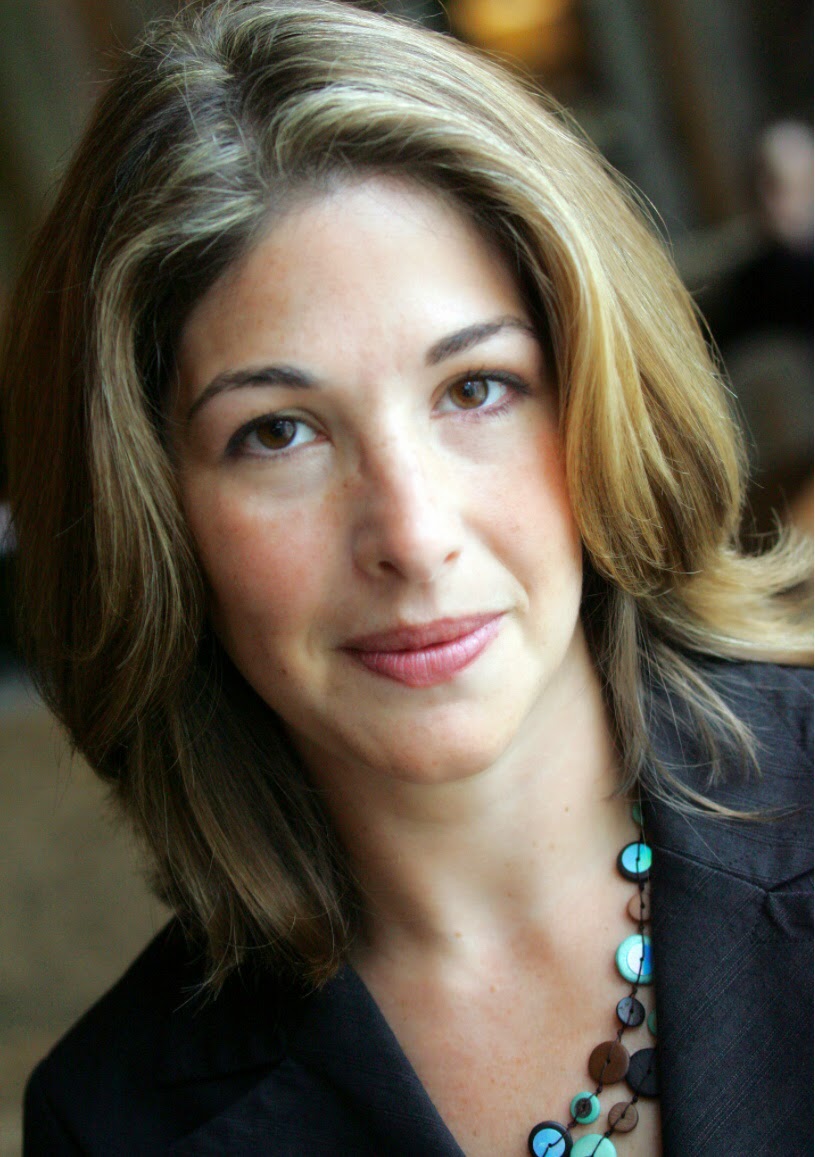
Naomi Klein

The threat he warned of was not climate chaos — barely a blip on anybody’s radar at the time — but the hydrogen bomb. The nuclear threat had a volatile urgency and visual clarity that the sprawling, hydra-headed menace of today’s climate calamity cannot match. How can we rouse citizens and governments to act for concerted change? Will it take, as Naomi Klein insists, nothing less than a Marshall Plan for Earth?

"This Changes Everything: Capitalism vs. the Climate" is a book of such ambition and consequence that it is almost unreviewable. Klein’s fans will recognize her method from her prior books, "No Logo: Taking Aim at the Brand Bullies" (1999) and "The Shock Doctrine: The Rise of Disaster Capitalism" (2007), which, with her latest, form an antiglobalization trilogy. Her strategy is to take a scourge — brand-driven hyperconsumption, corporate exploitation of disaster-struck communities, or "the fiction of perpetual growth on a finite planet" — trace its origins, then chart a course of liberation. In each book she arrives at some semihopeful place, where activists are reaffirming embattled civic values.

To call "This Changes Everything" environmental is to limit Klein’s considerable agenda. "There is still time to avoid catastrophic warming," she contends, "but not within the rules of capitalism as they are currently constructed. Which is surely the best argument there has ever been for changing those rules." On the green left, many share Klein’s sentiments. George Monbiot, a columnist for The Guardian, recently lamented that even though "the claims of market fundamentalism have been disproven as dramatically as those of state communism, somehow this zombie ideology staggers on." Klein, Monbiot and Bill McKibben all insist that we cannot avert the ecological disaster that confronts us without loosening the grip of that superannuated zombie ideology.

That philosophy — neoliberalism — promotes a high-consumption, carbon-hungry system. Neoliberalism has encouraged mega-mergers, trade agreements hostile to environmental and labor regulations, and global hypermobility, enabling a corporation like Exxon to make, as McKibben has noted, "more money last year than any company in the history of money." Their outsize power mangles the democratic process. Yet the carbon giants continue to reap $600 billion in annual subsidies from public coffers, not to speak of a greater subsidy: the right, in Klein’s words, to treat the atmosphere as a "waste dump."

So much for the invisible hand. As the science fiction writer Kim Stanley Robinson observed, when it comes to the environment, the invisible hand never picks up the check.

Klein diagnoses impressively what hasn’t worked. No more claptrap about fracked gas as a bridge to renewables. Enough already of the international summit meetings that produce sirocco-quality hot air, and nonbinding agreements that bind us all to more emissions. Klein dismantles the boondoggle that is cap and trade. She skewers grandiose command-and-control schemes to re-engineer the planet’s climate. No point, when a hubristic mind-set has gotten us into this mess, to pile on further hubris. She reserves a special scorn for the partnerships between Big Green organizations and Immense Carbon, peddled as win-win for everyone, but which haven’t slowed emissions. Such partnerships remind us that when the lamb and the lion lie down together, only one of them gets eaten.

In democracies driven by lobbyists, donors and plutocrats, the giant polluters are going to win while the rest of us, in various degrees of passivity and complicity, will watch the planet die. "Any attempt to rise to the climate challenge will be fruitless unless it is understood as part of a much broader battle of worldviews," Klein writes. "Our economic system and our planetary system are now at war."

Klein reminds us that neoliberalism was once an upstart counterrevolution. Through an epic case of bad timing, the Reagan-Thatcher revolution, the rise of the anti-regulatory World Trade Organization, and the cult of privatizing and globalizing everything coincided with the rising public authority of climate science. In 1988, James Hansen, director of NASA’s Goddard Institute, delivered historic testimony at Congressional hearings, declaring that the science was 99 percent unequivocal: The world was warming and we needed to act collectively to reduce emissions. Just one year earlier, Margaret Thatcher famously declared: "There is no such thing as society. There are individual men and women and there are families." In the battle since, between a collective strategy for forging an inhabitable long-term future and the antisocial, hyper-corporatized, hyper-carbonized pursuit of short-term growth at any cost, well, there has been only one clear winner.

But counterrevolutions are reversible. Klein devotes much of her book to propitious signs that this can happen — indeed is happening. The global climate justice movement is spreading. Since the mid-1990s, environmental protests have been growing in China at 29 percent per year. Where national leaders have faltered, local governments are forging ahead. Hundreds of German cities and towns have voted to buy back their energy grids from corporations. About two-thirds of Britons favor renationalizing energy and rail.

The divestment movement against Big Carbon is gathering force. While it will never bankrupt the mega-corporations, it can reveal unethical practices while triggering a debate about values that recognizes that such practices are nested in economic systems that encourage, inhibit or even prohibit them.

The voices Klein gathers from across the world achieve a choral force. We hear a Montana goat rancher describe how an improbable alliance against Big Coal between local Native American tribes and settler descendants awakened in the latter a different worldview of time and change and possibility. We hear participants in Idle No More, the First Nations movement that has swept across Canada and beyond, contrast the "extractivist mind-set" with systems "designed to promote more life."

One quibble: What’s with the subtitle? "Capitalism vs. the Climate" sounds like a P.R. person’s idea of a marquee cage fight, but it belies the sophistication and hopefulness of Klein’s argument. As is sometimes said, it is easier to imagine the end of the world than to imagine the end of capitalism. Klein’s adversary is neoliberalism — the extreme capitalism that has birthed our era of extreme extraction. Klein is smart and pragmatic enough to shun the never-never land of capitalism’s global overthrow. What she does, brilliantly, is provide a historically refined exposé of "capitalism’s drift toward monopoly," of "corporate interests intent on capturing and radically shrinking the public sphere," and of "the disaster capitalists who use crises to end-run around democracy."

To change economic norms and ethical perceptions in tandem is even more formidable than the technological battle to adapt to the heavy weather coming down the tubes. Yet "This Changes Everything" is, improbably, Klein’s most optimistic book. She braids together the science, psychology, geopolitics, economics, ethics and activism that shape the climate question. The result is the most momentous and contentious environmental book since "Silent Spring." More


Monday, August 25, 2014

Al Gore’s “Turning Point”

Eight years after Al Gore wrote a book and made a movie to impress upon us the "planetary emergency of global warming" (his subtitle for An Inconvenient Truth), he wrote an article with a more optimistic feel- ing in the 18 June 2014 issue of Rolling Stone. He begins "The Turning Point: New Hope for Climate" as follows:

Al Gore - Climate Reality Leadership Corp

In the struggle to solve the climate crisis, a powerful, largely unnoticed shift is taking place. The forward journey for human civilization will be difficult and dangerous, but it is now clear that we will ultimately prevail. The only question is how quickly we can accelerate and com- plete the transition to a low-carbon civilization.

The "surprising – even shocking – good news" is "our ability to convert sunshine into usable energy . . . much cheaper far more rapidly than anyone had predicted," Gore writes: the cost of photovoltaic electricity is competitive with that from other sources in at least 79 countries, and the 43% decrease in cost of wind- generated electricity since 2009 has made it cheaper than coal-generated electricity. By 2020 more than 80% of world population will live where photovoltaic electricity is competi- tive with other sources.

As evidence of this "largely unnoticed shift," he notes that Germany now generates 37% of its electricity from wind and solar, a percentage expected to reach 50% by 2020, and that nine of ten European coal and gas plants are losing money. Worldwide, capacity for 17 gi- gawatts of solar electricity was installed in 2010, for 39 in 2003, with expectations of 55 in 2014. China claims it will have a capacity of 70 solar gigawatts by 2017. (A gigawatt is the power generating capacity of a standard electric power plant.)

Gore states that in the U.S. 166 coal-fired plants have closed or announced closings in the last 4.5 years, and 183 proposed coal-fired plants have been canceled since 2005. He acknowledges that some of this shift from coal is to natural gas obtained by hydrofracturing ("fracking") but focuses on the emergence of "on-site and grid battery storage and microgrids," noting that the Edison Electric Institute (the U.S. utility trade group) has labeled this trend as the "largest near-term threat" to the present elec- tric utility system. He likens this threat to that posed by cell phones to the landline telephone system. He cites Citigroup’s recognition of the decreased cost of solar and wind electricity and battery storage (long seen as a barrier to intermittent energy from renewable). In addition, he notes a reduction of 49% in energy intensity (energy in- put per dollar output in gross domestic product) since 1980.

Gore observes that the Koch brothers have led the fight against rooftop solar electricity and for keeping the present fossil-fueled electric plants, one of their arguments being that net metering allows producers of solar electricity to benefit from the grid without paying for it. Al- though Gore neglects to mention that in net metering the utility pays the generator only the wholesale price for the surplus generation, he does note that solar electricity gen- eration has the advantage of peaking with electricity de- mand, thereby saving utilities from having to install new peak generation capacity (a point also made by keynoter Perez at the kickoff to develop the solar lessons for School Power Naturally, reported in our Winter 2003 issue).

Gore likens global warming to a fever for planet Earth and notes that the presently-gathering El Niño is expected to result in a pronounced global temperature increase. (Coverage in our Winter 2010 issue of a talk to the American Physical Society and the American Association of Physics Teachers on 15 February 2010 by Judith Lean of the Naval Research Laboratory attributes this to the phase of the 22-year solar cycle.) He correlates the de- struction from Supertyphoon Haiyan and Superstorm Sandy with greater surface water temperature (5.4oF for the former, 9oF for the latter). He notes that higher water temperatures also mean higher sea level and disruption of water supplies that depend on snowmelt. And he adds that even more severe catastrophes are in the offing, like the irreversible collapse of a portion of the West Antarc- tic ice sheet. In addition to heightened sea level, warmer climate also means an atmosphere capable of holding more water vapor and delivering more severe storms, as have been seen in Pensacola (FL), and Nashville (TN). At the same time, global warming will exacerbate the dryness of the drier parts of the Earth through greater evaporation of what little water there is in the ground. Gore also observes that climate change brings concern to the military for both the safety of its bases and the new types of world conflict it will have to deal with.

Gore concedes that these many "knock-on consequences of the climate crisis" are enough to cause anyone to despair. But, as he writes in his opening paragraph, "we will have to take care to guard against despair," lest we become deterred from the action we must pursue. Though there be light at the end of the tunnel, he points out that we are in the tunnel. Among the things he says we need are "a price on carbon in our markets" and "green banks" to finance "green" projects.

"Damage has been done, and the period of consequences will continue for some time to come, but there is still time to avoid the catastrophes that most threaten our future."

Though U.S. greenhouse gas emissions had decreased from 2008 to 2012, due to recovery from the recession, they increased 2.4% in 2013. Gore calls for the U.S. to match the European Union’s commitment to reduce carbon dioxide emissions 40% by 2030.

Gore’s concluding reasons for optimism are that "Rapid technological advancements in renewable energy are stranding carbon investments; grassroots movements are building opposition to the holding of such assets; and new legal restrictions on collateral flows of pollution . . . are further reducing the value of coal, tar sands, and oil and gas assets." "Damage has been done," he adds, "and the period of consequences will continue for some time to come, but there is still time to avoid the catastrophes that most threaten our future."


Friday, August 22, 2014

Leonardo DiCaprio Narrates Climate Change Films Urging Shift From Fossil Fuels to Renewables

Production company Tree Media, whose mission is to inspire positive social action, has just released the first of four films in the Green World Rising series focusing on solutions to the climate crisis.

The eight-minute film, CARBON, narrated by actor and dedicated environmentalist Leonardo DiCaprio, was created with support from the Leonardo DiCaprio Foundation and in collaboration with Thom Hartmann. The film’s goal is to draw attention to how some governments are already putting a price on carbon through carbon taxes and carbon trading to encourage polluters to shift from dirty energy sources to renewables prior to the UN Climate Summit in New York on Sep. 23. All four films will be released in the next month leading up to the summit.

“97% of climate scientists agree: climate change is happening now—and humans are responsible,” said DiCaprio. “We cannot sit idly by and watch the fossil fuel industry make billions at our collective expense. We must put a price on carbon—now.”

“We need serious action to address the most pressing issue of our time,” said Hartmann. “Communities across the world have taken action in the most direct and effective way possible by taxing and trading carbon. For us to beat this crisis, many more need to join.”

The film explains what a carbon tax and carbon trading are, how they can help us stop “using the atmosphere as a sewer,” as Joseph Romm of the Center for American Progress says in the film, and what ordinary people can do to push elected officials to act. More

Carbon


Published on Aug 20, 201 4 • CARBON is the first film in the Green World Rising Series, http:// www.greenworldrising.org "Carbon" is narrated by Leonardo DiCaprio, presented by Thorn Hartmann and directed by Leila Conners. Executive Producers are George DiCaprio, Earl Katz and Roee Sharon Peled. Carbon is produced by

Mathew Schmid and was written by Thorn Hartmann, Sam Sacks, Leila Conners and Mathew Schmid. Music is composed and performed by Jean-Pascal Beintus and intro drone by Francesco Lupica. Carbon is produced by Tree Media with the support of the Leonardo DiCaprio Foundation.

Monday, June 2, 2014

The [US] House Committee Declares The IPCC Report Is Not Science

The Intergovernmental Panel on Climate Change (IPCC) report warned that more intense droughts and heat waves will cause famine and water shortages. But, don't worry! Yesterday, the GOP held a hearing to tell us the IPCC is, in fact, a global conspiracy to control our lives and "redistribute wealth among nations."

The hearing, titled "Examining the UN Intergovernmental Panel on Climate Change Process," was convened by the House Committee on Science, Space and Technology—the same folks who recently demonstrated their inability to grasp the idea that the world's climate varies across different regions and who informed us that warmer weather didn't bother the dinosaurs, so what's all the fuss about?

In principle, there's nothing wrong with assessing the methodology of such an important and influential report. But, in one of those quintessential moments of Washington double-think, Chairman Lamar Smith (R-TX)—who accuses the IPCC of creating data to serve a predetermined political agenda—summarized the hearing's conclusions a day before it even began. "The IPCC does not perform science itself and doesn't monitor the climate," Smith told a reporter, "but only reviews carefully selected scientific literature."

So, small wonder that Rep. Eddie Bernice Johnson (D-TX), the ranking Democrat on the committee, offered the opinion:

While the topic of today's hearing is a legitimate one, namely, how the IPCC process can be improved, I am concerned that the real objective of this hearing is to try to undercut the IPCC and to cast doubt on the validity of climate change research.

We aren't going to get very far if we spend our time continually revisiting a scientific debate that has already been settled. Nor will we get far if we continue a recent practice on this Committee of seeming to question the trustworthiness and integrity of this nation's scientific researchers.

Fair and Balanced

Another source of Johnson's skepticism might have been that three of the four expert witnesses testifying at the hearing either deny that humans are responsible for global warming or believe that the potential impact of climate change is grossly overstated.

The witnesses for the prosecution were:

(1) Roger Pielke,Sr.

Who is he?

Senior Research Scientist, Cooperative Institute for Research in Environmental Sciences, and Professor Emeritus of Atmospheric Science, Colorado State University

What's he known for?

Pielke says that carbon dioxide is responsible, at most, for about 28% of human-caused warming up to the present and he is among the most vocal skeptics of reports that the polar ice caps are melting and that sea levels are rising.

What did he say at the hearing?

The IPCC is "giving decision makers who face decisions at the regional and local level a false sense of certainty about the unfolding climate future."

(2) Richard Tol

Who is he?

A professor of economics at the University of Sussex

What's he known for?

He resigned his position with the IPCC team producing the working group's Summary for Policymakers, which he classified as "alarmist." Global warming creates benefits as well as harms, he believes, and in the short term, the benefits are especially pronounced. He's also expressed doubt that climate change will play any role in exacerbating conflicts.

Tol has been criticized by other scientists who have raised questions about his methodology and who have noted that he has a history of making contradictory statements. For instance, in a widely cited 2009 paper, he wrote of "considerable uncertainty about the economic impact of climate change … negative surprises are more likely than positive ones. … The policy implication is that reduction of greenhouse gas emissions should err on the ambitious side."

What did he say at the hearing?

"Academics who research climate change out of curiosity but find less than alarming things are ignored, unless they rise to prominence in which case they are harassed and smeared….The IPCC should therefore investigate the attitudes of its authors and their academic performance and make sure that, in the future, they are more representative of their peers."

(3) Daniel Botkin

Who is he?

Professor Emeritus, Department of Ecology, Evolution, and Marine Biology, University of California, Santa Barbara.

What's he known for?

He has long argued that life has had to deal with environmental change, especially climate change, since the beginning of its existence on Earth—and that we underestimate the ability of species, including humans, to find ways to adapt to the problem.

Botkin wrote a controversial editorial for the Wall Street Journal (Oct 17, 2007) arguing that global warming will not have much impact on life on Earth, and noted that: "the reality is that almost none of the millions of species have disappeared during the past 2.5 million years — with all of its various warming and cooling periods."

The editorial prompted several responses from within the scientific community, including this:

For the past 2.5 million years the climate has oscillated between interglacials which were (at most) a little warmer than today and glacials which were considerably colder than today. There is no precedent in the past 2.5 million years for so much warming so fast. The ecosystem has had 2.5 million years to adapt to glacial-interglacial swings, but we are asking it to adapt to a completely new climate in just a few centuries. The past is not a very good analog for the future in this case. And anyway, the human species can suffer quite a bit before we start talking extinction.

What did he say at the hearing?

"I want to state up front that we have been living through a warming trend driven by a variety of influences. However, it is my view that this is not unusual, and contrary to the characterizations by the IPCC….these environmental changes are not apocalyptic nor irreversible…..Yes, we have been living through a warming trend, no doubt about that. The rate of change we are experiencing is also not unprecedented, and the "mystery" of the warming "plateau" simply indicates the inherent complexity of our global biosphere. Change is normal, life on Earth is inherently risky; it always has been."

The Q & A

The lone witness for the defense was Michael Oppenheimer, the Albert G. Milbank Professor of Geosciences and International Affairs at Princeton University. He was selected by the Democrats, "because he's one of the foremost experts in the world and has been involved with the IPCC," a spokesperson for the Democratic contingent of the committee told Motherboard reporter Jason Koebler.

Koebler describes how things went down at the hearing after the experts presented their statements:

For two hours, climate change deniers interrupted, berated, and cut off Oppenheimer, while the other three other witnesses fielded softball questions from conservative lawmakers and dodged tougher ones from Democratic ones.

In fact, at one point, Rep. Larry Buchson (R-Ind.), who, seconds before had interrupted Oppenheimer and said he wasn't interested in hearing his views, wanted to "apologize on behalf of Congress" to Pielke for the aforementioned "juvenile and insulting questions trying to disparage the credibility" of witnesses who didn't take climate change seriously…..

Dana Rohrabacher [R-CA] pulled out the air quotes when he said "global warming," and took offense to Oppenheimer not being able to "capsulize" all the reasons why he believes that climate change is a big deal in 10 seconds. Smith suggested that the "only thing we know about [climate change models] is that they will be wrong" and suggested that "even if the US was completely eliminated, it's not going to have any discernible impact on global temperatures in the near or far future."

Paul Broun [R-GA] and Buchson noted their belief in the "scientific process" and suggested that they knew more about it because they are doctors (Broun is a dentist; Buchson is a surgeon).

So predictable, and such a waste of time. As I noted earlier, in principle, there is nothing wrong with assessing the methodology of such an important and influential report. But there are far better ways to do it than this. More


Saturday, April 26, 2014

Next 15 years is 'crunch time' for climate change

Time is running out to avert severe global damage from climate change, says Don Fullerton, a finance professor and co-author of a chapter of the Intergovernmental Panel on Climate Change's fifth assessment report.

Time is running out to employ a mitigation strategy that would avert severe global damage from climate change, a University of Illinois energy policy expert says.

Although we still have time to stabilize future temperature levels and neutralize other potential negative outcomes created by climate change, that time is rapidly dwindling, says Don Fullerton, a finance professor and former deputy assistant secretary of the U.S. Treasury Department.

"We really have to get serious over the next decade. Otherwise, it's going to be unstoppable," said Fullerton, the associate director of the U. of I. Institute of Government and Public Affairs and a faculty associate in the Center for Business and Public Policy in the College of Business.

"People may not realize that observed increases in temperature and are nothing compared to what will happen with the existing increases in already in the atmosphere," he said.

One of the biggest risks is that we don't know exactly what will happen, and when it will happen, Fullerton says.

"We can look all we want at expected sea levels, expected temperature changes, and expected storm severity. Yes, those are all going to be costly. But the real problem is just the great unknowable nature of it all – and the possibility that something much more drastic could occur," he said.

According to Fullerton, who co-wrote a chapter on the social, ethical and economic concepts of climate change for the recently released Intergovernmental Panel on Climate Change's fifth assessment report, the next 15 years are "crunch time," but the global community really has to get moving within the next 10 years.

"International negotiations are continuing, but the problem is that they are especially difficult," he said. "Imagine trying to get more than 200 nations with differing views to signoff on anything."

The main sticking point in international negotiations is the divide between rich, industrialized nations such as the U.S. and rapidly growing and industrializing nations such as China and India.

"Even if most of the current emissions are coming from the rapidly growing nations, the major source of greenhouse gases for the past 200 years has been the rich, industrialized nations," Fullerton said. "So where does the responsibility lie? China and India have high emissions, but they cry foul because they haven't shared in the wealth that the U.S. and other industrialized nations achieved over the past 200 years."

An isolationist position for the U.S. wouldn't work very well, either.

"If the polar ice caps melt faster and sea levels submerge half of Bangladesh – a populous, low-lying country that is very poor – then that would create tens of millions of refugees," Fullerton said. "So it's just not accurate for people to think that's not going to affect us. Sure, we have a rich country and if we wanted to, we could put up higher levees around New Orleans. But it's not true that flooding in poor countries such as Bangladesh wouldn't affect us. When we see 100 million refugees with nowhere to go and nobody to help them, the U.S. is not going to sit idly by and watch all of those displaced people starve to death. It's going to be a lot cheaper if we do something now than if our hand is forced in the future."

From an ethical standpoint, another question is what our responsibility is to future generations, Fullerton said.

"On the one hand, we don't want to leave future generations with all of our pollution," he said. "On the other, economic welfare around the world is improving. So you could argue that they're going to be better off already."

But if the current projections hold, and it's thought that future generations are going to better off, then a different moral calculus might say they could bear the cost more easily than we could, Fullerton said.

"But that doesn't suggest waiting," he said. "It suggests doing something now but maybe going partially into debt to do it. We can't wait and have future generations do it all later, because it could be too late. If starting now is necessary, that doesn't mean we need to bear all of the costs now, especially if most of the benefits are going to . But there is an ethical argument for taking on some debt to do it now, in order to do it more effectively than what could be done years from now."

Even if the U.S. government does nothing, new technology is moving in the right direction, Fullerton said.

"The biggest initial step is moving from coal-fired power plants to power plants," he said. "Ironically, that's happening already, because of all the advances in fracking technology – it's a major improvement for , but we could be endangering our water supply. That is a good argument against doing things too fast. It's possible that we get better at fracking. We just don't want to build any new coal-fired plants. The new power plants we build should be natural gas plants. But at the same time, we need to continue to work on the technology for wind and solar power."

If we were to have an energy efficiency crash-program – the equivalent of this generation's Apollo program, as some critics have advocated – that could be very costly in its own right, Fullerton says.

"Reducing emissions quickly would mean shutting down coal-fired , which is wasteful because billions of dollars are already invested in those plants," he said. "For better or worse, coal-fired plants produce nearly half of the electricity produced in Illinois. So you can't just shut them down – although that would certainly be the fastest way to reduce greenhouse gas emissions. Or we could undertake extremely expensive carbon capture and sequestration, which is an untested technology. So doing it quickly makes it more expensive than, say, continuing to work on technologies and phasing in changes more slowly.

"It doesn't have to be zero emissions – solar, wind and nuclear, all of which are expensive. We would get way more than halfway there simply by switching from coal to natural gas, on the basis of carbon per kilowatt hour."

Fullerton also notes that substantial efforts are already underway to switch to low-carbon fuels and to embrace high-efficiency technology.

"We see plenty of efforts, both policy- and technology-based, to develop low-carbon fuels, biofuels, make cars more efficient, make houses and appliances more efficient," he said. "Those efforts are all having an impact and should not be discounted."

But it's not enough.

"It's necessary but it's certainly not sufficient, which is why we need a price on carbon, via a tax or cap-and-trade," Fullerton said. "Either option would provide an incentive to firms to make more energy-efficient technologies, to produce energy more efficiently and to use less carbon. And once electricity and gasoline become more expensive, that would also provide incentives for households to use less of it."

Such a price has two different effects: Reduce the carbon per unit of output, and raise the cost of those carbon-intensive products, Fullerton said.

"And both of those effects would reduce carbon emissions," he said. "But the current policymakers in the U.S. and other countries do not want to raise the cost of carbon-intensive output like electricity and gasoline; instead they prefer to hand out subsidies for energy-efficiency incentives. But we need both – to become more efficient, and to use less."

But above all else, we need a wake-up call, Fullerton said.

"Because it's only with a rude wake-up call that we'll change our habits, and that's what the IPCC's report hopes to accomplish," he said. More