Showing posts with label call for action. Show all posts

Sunday, December 21, 2014

Dystopian Fiction’s Popularity Is a Warning Sign for the Future

Dystopian fiction is hot right now, with countless books and movies featuring decadent oligarchs, brutal police states, ecological collapse, and ordinary citizens biting and clawing just to survive. For bestselling author Naomi Klein, all this gloom is a worrying sign.

“I think what these films tell us is that we’re taking a future of environmental catastrophe for granted,” Klein says in Episode 129 of the Geek’s Guide to the Galaxy podcast. “And that’s the hardest part of my work, actually convincing people that we’re capable of something other than this brutal response to disaster.”

Her new book, This Changes Everything: Capitalism vs. The Climate, argues that only dramatic policy shifts can avert climate catastrophe, and that ordinary people need to speak up and demand emissions caps, public transportation, and a transition to renewable energy. That’s a hard sell politically, which is why dubious measures like geoengineering and cap-and-trade have been proposed instead.

“It seems easier, more realistic, to dim the sun than to put up solar panels on every home in the United States,” says Klein. “And that says a lot about us, and what we think is possible, and what we think is realistic.”

But things are starting to change, with indigenous groups winning lawsuits to block drilling on their land, local communities coming together to ban fracking and establish solar energy grids, and a growing divestment campaign seeking to shame and isolate the fossil fuel industry. Many of these movements are being led by young activists like Anjali Appadurai, who gave a speech in 2010 pointing out that the United Nations has been fruitlessly debating climate change action since before she was born.

“Young people have a critical role to play because they’ll be dealing with the worst impacts of climate change,” says Klein. “And when young people find their moral voice in this crisis, it’s transformative.”

Listen to our complete interview with Naomi Klein in Episode 129 of the Geek’s Guide to the Galaxy podcast (above), and check out some highlights from the discussion below.

Naomi Klein on how the wealthy are preparing for climate change:

“There are a lot of examples of ways that companies are preparing. The most insidious is the way that oil companies—who have been funding climate change denial—are simultaneously exploring all the wonderful extraction opportunities there are because the arctic ice is melting, so they obviously know it’s happening. … After Superstorm Sandy, there was a big uptick in the way that luxury developers in New York and elsewhere started to market themselves as being ‘disaster proof’—having their own generators, having their own ‘moats’ in a way, having their own storm barriers, and basically saying, ‘When the apocalypse comes, you’ll be safe.’ … In the aftermath of Hurricane Katrina, there was a company that was launched in Florida called HelpJet. … HelpJet was a private disaster rescue operation that literally had the slogan, ‘We’ll turn your disaster into a luxury vacation.’”

Naomi Klein on geoengineering:

“In general the geoengineering world is populated by very overconfident, overwhelmingly male figures who don’t make me feel at all reassured that they have learned the lessons of large-scale technological failure. When I went to this one conference that was hosted by the Royal Society in England, the Fukushima disaster had just started, and in fact a photographer I was working with—a videographer—had just come back from Fukushima and was completely shell-shocked. And I was surprised it didn’t come up the whole time we were meeting, because it seemed relevant to me. Yeah, we humans screw up. BP had been two years earlier. I have been profoundly shaped as a journalist by covering the BP disaster, the derivatives failure, seeing what’s happened in Fukushima. I’m sorry, but I think the smartest guys in the room screw up a lot. And the kind of hubris that I’ve seen expressed from the ‘geo-clique,’ as they’ve been called, makes me not want to scale up the risks that we’re taking.”

Naomi Klein on our relationship with nature:

“If you go back and look at the way fossil fuels were marketed in the 1700s, when coal was first commercialized with the Watt steam engine, the great promise of coal was that it liberated humans from nature, that you no longer had to worry about when the wind blew to sail your ship, and you no longer had to build your factory next to a waterfall or rushing rapids in order to power your water wheel. You were in charge, that was the promise of coal. It was the promise of man transcending the natural world. And that was, it turns out, a lie. We never transcended nature, and that I think is what is so challenging about climate change, not just to capitalism but to our core civilizational myth. Because this is nature going, ‘You thought you were in charge? Actually all that coal you’ve been burning all these years has been building up in the atmosphere and trapping heat, and now comes the response.’ … Renewable energy puts us back in dialog with nature. We have to think about when the wind blows, we have to think about where the sun shines, we cannot pretend that place and space don’t matter. We are back in the world.”

Naomi Klein on science fiction:

“This boom in cli-fi literature is exciting, but I think it can become dangerous if it isn’t seen as a warning, but just seen as inevitable. I think Margaret Atwood—not to be too Canadian about it—but I think Margaret Atwood’s In the Year of the Flood and that whole trilogy, that whole climate trilogy, is an example of the kind of narrative that really does serve as clarion warning, as opposed to just sort of hopeless ‘we’re on this road, we can’t get off.’ And it’s hard to define what makes something more of a warning than just affirming that sense of the inevitable. I loved Ursula Le Guin‘s acceptance speech at the Booker awards this year. I’m a huge Ursula Le Guin fan, and I think she’s one of the few science fiction writers that has pulled off utopian fiction well. She’s done both. But when she accepted the award she sort of accepted on behalf of the genre, and talked about how important it is to have and nurture voices from people who can imagine different worlds.”


Saturday, November 15, 2014

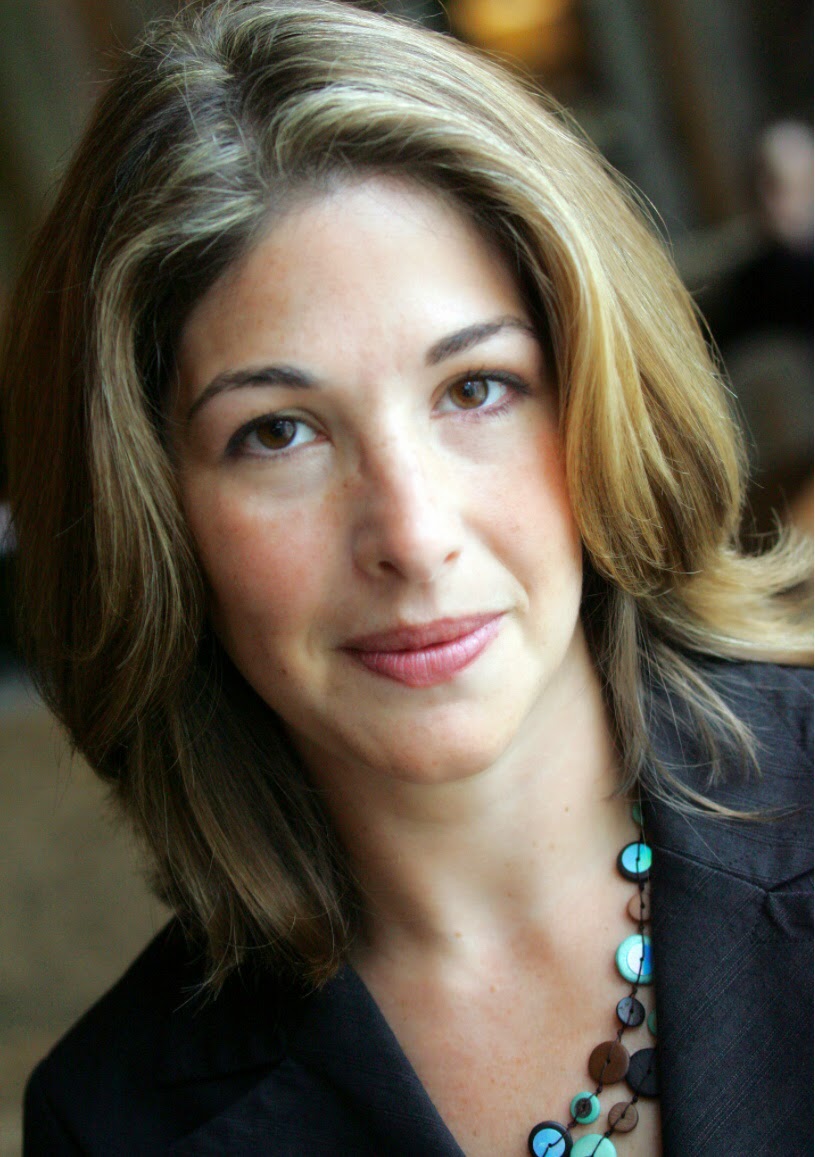
Naomi Klein’s ‘This Changes Everything’

"Every inhabitant of this planet must contemplate the day when this planet may no longer be habitable." Thus spoke President Kennedy in a 1961 address to the United Nations.

Naomi Klein

The threat he warned of was not climate chaos — barely a blip on anybody’s radar at the time — but the hydrogen bomb. The nuclear threat had a volatile urgency and visual clarity that the sprawling, hydra-headed menace of today’s climate calamity cannot match. How can we rouse citizens and governments to act for concerted change? Will it take, as Naomi Klein insists, nothing less than a Marshall Plan for Earth?

"This Changes Everything: Capitalism vs. the Climate" is a book of such ambition and consequence that it is almost unreviewable. Klein’s fans will recognize her method from her prior books, "No Logo: Taking Aim at the Brand Bullies" (1999) and "The Shock Doctrine: The Rise of Disaster Capitalism" (2007), which, with her latest, form an antiglobalization trilogy. Her strategy is to take a scourge — brand-driven hyperconsumption, corporate exploitation of disaster-struck communities, or "the fiction of perpetual growth on a finite planet" — trace its origins, then chart a course of liberation. In each book she arrives at some semihopeful place, where activists are reaffirming embattled civic values.

To call "This Changes Everything" environmental is to limit Klein’s considerable agenda. "There is still time to avoid catastrophic warming," she contends, "but not within the rules of capitalism as they are currently constructed. Which is surely the best argument there has ever been for changing those rules." On the green left, many share Klein’s sentiments. George Monbiot, a columnist for The Guardian, recently lamented that even though "the claims of market fundamentalism have been disproven as dramatically as those of state communism, somehow this zombie ideology staggers on." Klein, Monbiot and Bill McKibben all insist that we cannot avert the ecological disaster that confronts us without loosening the grip of that superannuated zombie ideology.

That philosophy — neoliberalism — promotes a high-consumption, carbon-hungry system. Neoliberalism has encouraged mega-mergers, trade agreements hostile to environmental and labor regulations, and global hypermobility, enabling a corporation like Exxon to make, as McKibben has noted, "more money last year than any company in the history of money." Their outsize power mangles the democratic process. Yet the carbon giants continue to reap $600 billion in annual subsidies from public coffers, not to speak of a greater subsidy: the right, in Klein’s words, to treat the atmosphere as a "waste dump."

So much for the invisible hand. As the science fiction writer Kim Stanley Robinson observed, when it comes to the environment, the invisible hand never picks up the check.

Klein diagnoses impressively what hasn’t worked. No more claptrap about fracked gas as a bridge to renewables. Enough already of the international summit meetings that produce sirocco-quality hot air, and nonbinding agreements that bind us all to more emissions. Klein dismantles the boondoggle that is cap and trade. She skewers grandiose command-and-control schemes to re-engineer the planet’s climate. No point, when a hubristic mind-set has gotten us into this mess, to pile on further hubris. She reserves a special scorn for the partnerships between Big Green organizations and Immense Carbon, peddled as win-win for everyone, but which haven’t slowed emissions. Such partnerships remind us that when the lamb and the lion lie down together, only one of them gets eaten.

In democracies driven by lobbyists, donors and plutocrats, the giant polluters are going to win while the rest of us, in various degrees of passivity and complicity, will watch the planet die. "Any attempt to rise to the climate challenge will be fruitless unless it is understood as part of a much broader battle of worldviews," Klein writes. "Our economic system and our planetary system are now at war."

Klein reminds us that neoliberalism was once an upstart counterrevolution. Through an epic case of bad timing, the Reagan-Thatcher revolution, the rise of the anti-regulatory World Trade Organization, and the cult of privatizing and globalizing everything coincided with the rising public authority of climate science. In 1988, James Hansen, director of NASA’s Goddard Institute, delivered historic testimony at Congressional hearings, declaring that the science was 99 percent unequivocal: The world was warming and we needed to act collectively to reduce emissions. Just one year earlier, Margaret Thatcher famously declared: "There is no such thing as society. There are individual men and women and there are families." In the battle since, between a collective strategy for forging an inhabitable long-term future and the antisocial, hyper-corporatized, hyper-carbonized pursuit of short-term growth at any cost, well, there has been only one clear winner.

But counterrevolutions are reversible. Klein devotes much of her book to propitious signs that this can happen — indeed is happening. The global climate justice movement is spreading. Since the mid-1990s, environmental protests have been growing in China at 29 percent per year. Where national leaders have faltered, local governments are forging ahead. Hundreds of German cities and towns have voted to buy back their energy grids from corporations. About two-thirds of Britons favor renationalizing energy and rail.

The divestment movement against Big Carbon is gathering force. While it will never bankrupt the mega-corporations, it can reveal unethical practices while triggering a debate about values that recognizes that such practices are nested in economic systems that encourage, inhibit or even prohibit them.

The voices Klein gathers from across the world achieve a choral force. We hear a Montana goat rancher describe how an improbable alliance against Big Coal between local Native American tribes and settler descendants awakened in the latter a different worldview of time and change and possibility. We hear participants in Idle No More, the First Nations movement that has swept across Canada and beyond, contrast the "extractivist mind-set" with systems "designed to promote more life."

One quibble: What’s with the subtitle? "Capitalism vs. the Climate" sounds like a P.R. person’s idea of a marquee cage fight, but it belies the sophistication and hopefulness of Klein’s argument. As is sometimes said, it is easier to imagine the end of the world than to imagine the end of capitalism. Klein’s adversary is neoliberalism — the extreme capitalism that has birthed our era of extreme extraction. Klein is smart and pragmatic enough to shun the never-never land of capitalism’s global overthrow. What she does, brilliantly, is provide a historically refined exposé of "capitalism’s drift toward monopoly," of "corporate interests intent on capturing and radically shrinking the public sphere," and of "the disaster capitalists who use crises to end-run around democracy."

To change economic norms and ethical perceptions in tandem is even more formidable than the technological battle to adapt to the heavy weather coming down the tubes. Yet "This Changes Everything" is, improbably, Klein’s most optimistic book. She braids together the science, psychology, geopolitics, economics, ethics and activism that shape the climate question. The result is the most momentous and contentious environmental book since "Silent Spring." More


Thursday, November 6, 2014

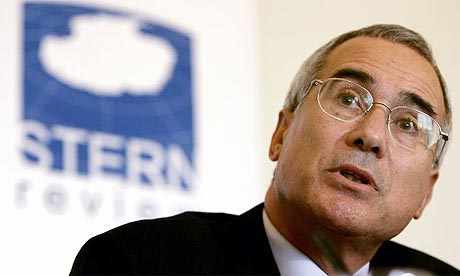
Lord Stern: global warming may create billions of climate refugees

Lord Nicholas Stern, one of the world’s most influential voices on climate economics, does not mince his words when it comes to criticising those who take a narrow view of prosperity and highlighting the devastating consequences of global warming.

Nicholas Stern

"You have to be a complete idiot to think that GDP sums up prosperity," says Stern, who believes we need to develop broader measures of success and combine this with a return to core values if we are to convince people to act to prevent runaway climate change.

Stern, who wrote the landmark 2006 Stern review of the economics of climate change, says if we fail to take heed of the danger signals, we risk temperatures rising this century to levels we haven’t seen for tens of millions of years.

"Hundreds of millions of people, perhaps billions of people would have to move," he warns. "If we’ve learned anything from history that means severe and extended conflict.

"We couldn’t just turn it off. You can’t make a peace treaty with the planet, you can’t negotiate with the laws of physics. You’re in there, you’re stuck. Those are the stakes we’re playing for and that’s why we have to make this second transformation, the climate transformation and move to low carbon economy."

Stern has co-authored the recently published New Climate Economy report, which argues that the world can head off the worst effects of climate change, and enjoy the fruits of continued economic expansion, if it moves quickly to invest in a low-carbon economy.

He says he hopes the study will influence key decision makers because it was written with the support of a coalition of respected politicians, economists, think tanks and institutions, including the World Bank, the International Monetary Fund, the OECD, the International Energy Agency and the UN.

He dismisses the arguments of more radical economists who believe that we need to stop our fixation with growth, arguing that the economy needs to keep expanding if we are to have a hope of eradicating poverty.

"To those who want to knock out growth from objectives, I find they’re close to reprehensible because for me the two defining challenges of this century are overcoming poverty and managing climate change.

"We fail on one, we fail on the other. So I think to say that we should just switch off growth is to miss big aspects of what matters about poverty. And so it worries me. It’s also politically very naive. If you turn it into a pissing contest between growth on the one hand and climate and environment on the other and say you’ve got to choose, you’re setting yourself up for failure."

Stern says investments in renewable energy must be combined with a rethinking of our understanding of prosperity, which he believes will lead to what he terms better growth.

"It means thinking differently about health, about the way we live in our cities and about the strengths of our communities," he says. "It’s not that GDP is idiotic but it’s mostly about the use of labour resources and what it produces. But there are very important parts of this story about prosperity that get missed out."

How does Stern, who is president of the British Academy, believe we can start to measure prosperity that goes beyond GDP?

He says it is vital to start from the perspective of people understanding what they mean by wellbeing and what they value, whether it is family, community, arts or sport.

"You can be reasonably empirical about what moves people and then you go and try to collect data on that," he says. "Once you understand what it is it you’re trying to capture and create indicators, you can then start to talk about policy."

The 68-year-old peer says it’s vital we go back to recognising the importance of Aristotle’s belief in the need to understand what it means to be a virtuous person and to whom we owe a duty of care.

"I’ve been an academic all my life and I look at the evidence of what works and what doesn’t work," he says. "But if you ask yourself what you’re trying to do, that’s spurred by values, by what’s important to you."

For Stern, the heart of his values lies in the importance of family. Speaking immediately after introducing his two-week old granddaughter Rosa on stage at a TEDx talk in New York, he said: "I’m 68 and I am thinking what will Rosa be like when she’s 68? We’re talking about towards the end of this century and what we do now will determine whether the next 100 years is the best of centuries or the worst of centuries."

"Are we going to look our grandchildren in the eye and tell them that we understood the issues, that we recognised the dangers and the opportunities, and still we failed to act?"

Stern believes that it is time for religious leaders, politicians and the media to act more responsibly, pointing in particular to the importance of the Pope’s statement earlier this year that if we destroy creation, creation will destroy us.

Also key to changing hearts and minds is the field of arts, with Stern pointing to Barbara Kingsolver’s book Flight Behaviour, which he says is not only wonderful in describing the human condition but also in questioning our relationship with the environment.

"It’s not just the policy wonks like me we need to try to assemble the evidence and set it out," he says. "You have to do that because emotional argument without rational evidence on cause and effect doesn’t get you all that far. But rational argument about cause and effect alone doesn’t get you there either." More


Sunday, September 21, 2014

At Climate March in New York, a Clarion Call for Action

After months of planning, the People’s Climate March began rolling through a large swath of Midtown Manhattan on Sunday, taking public frustration over stalled efforts to curb carbon emissions to the streets in a noisy, vivid display of unity.

At 11:30 a.m., the march began moving east along 59th Street from Columbus Circle, proceeding along a circuitous, two-mile route, and drawing labor and immigrant groups, students and politicians, scientists and religious leaders. The march will turn south on Avenue of the Americas, head west on 42nd Street to 11th Avenue and finish at 34th Street.

The protest comes two days before a climate summit at the United Nations, which will be attended by President Obama. The meeting is expected to create a framework for a potential global agreement on emissions late next year in Paris.

The timing of the march is significant in another regard. Last week, meteorologists at the National Oceanic and Atmospheric Administration announced that this summer — the months of June, July and August — was the hottest on record for the globe, and that 2014 was on track to break the record for the hottest year, set in 2010.

“Climate change is no longer an environmental issue; it’s an everybody issue,” Sam Barratt, a campaign director for the online advocacy group Avaaz, which helped plan the march, said on Friday.

“The number of natural disasters has increased and the science is so much more clear,” he added. “This march has many messages, but the one that we’re seeing and hearing is the call for a renewable revolution.”

Mayor Bill de Blasio of New York, whose administration announced this weekend a sweeping plan to overhaul energy efficiency standards in all city-owned buildings, is among the high-profile participants expected to join the march, including the United Nations secretary general, Ban Ki-moon; former Vice President Al Gore; the actors Leonardo DiCaprio and Mark Ruffalo; at least two United States senators; and one-third of the New York City Council.

Additionally, nearly 2,700 climate events are planned in more than 150 countries to coincide with the march, considered the centerpiece of the international protest. They range from a small rally in Tanzania, to major demonstrations from Berlin to Bogata.

On Sunday morning, participants from across the country began to arrive at the staging area near the American Museum of Natural History. Rosemary Snow, 75, stretched her legs after a nearly 14-hour bus drive from Georgia.

“I thought we’d have a lot of younger people on the bus,” said Ms. Snow, who made the trip with her grandson. “There’s a really great mix of people.”

Ms. Snow had traveled with dozens of others who came from different parts of the state, including Valdosta, Savannah and Atlanta.

A professor at the University of Georgia, Chris Cuomo, from Decatur, Ga., said the group was organized by the Georgia Climate Change Coalition.

She said she hoped their presence at the rally would “let the rest of the world know that people from small-town America, urban America, rural America care about climate change.”

Nearby, Ahni Rocheleau of Santa Fe, N.M., was seated while eating a breakfast of organic yogurt and buckwheat pancakes. She is a member of the Great March for Climate Action, a cross-country walk to raise awareness for alternative and sustainable energy practices.

“We hope the heart and mind of the people will be awakened,” she said. “Coal is not the way to go.”

The march was expected to tie up traffic across a broad area of Manhattan, from the Upper West Side through Midtown. In a traffic advisory, the police braced the public for the closing of dozens of streets along the route. A lane for emergency vehicles, however, was kept open.

Nearly 500 buses have been bringing marchers from South Carolina, Kansas, Minnesota and Canada, while a “climate train” transported participants from California.

Marchers assembled before 11:30 a.m. north of Columbus Circle, specifically along Central Park West between 65th and 86th Streets, which the police planned to use as a staging area. A number of pre-march events were planned in the vicinity of Columbus Circle, including a labor event on Broadway, an interfaith religious service on West 58th Street and a rally by scientists outside the Hayden Planetarium on West 81st Street.

At 12:58 p.m., a moment of silence will be followed by a blare of noise — a symbolic sounding of the alarm on climate change — from horns, whistles and cellphone alarms. More than 20 marching bands and tolling church bells will contribute to the cacophony.

There will be no speeches, but the march will end with a block party on 11th Avenue between 34th and 38th Streets. There, participants can get a closer look at many of the floats and other artwork created for the march, including a 30-foot inflatable life preserver, 100 sunflowers and a model of the New York City skyline with bicyclists powering its lights.

New York’s political establishment was set to come out in force. On Friday, Mayor de Blasio announced on Twitter his intention to join the protest. “Proud to walk in #PeoplesClimate March on Sunday,” he wrote. “It’s everyone’s responsibility to leave a livable planet for the next generation.”

At least 17 council members planned to march. In a nod to the event, the Council announced a related package of bills on Friday aimed at reducing the city’s carbon footprint by connecting unemployed New Yorkers to green jobs, making buildings more energy-efficient and promoting low-carbon transportation. The legislation seeks an 80 percent reduction in the city’s greenhouse gas emissions by 2050.

With its bands and colorful floats, the march offers a festive atmosphere, but organizers said that the underlying message was somber. “We are trying to celebrate our lives and this planet in order to show that this is what we are fighting for,” said Leslie Cagan, the logistics coordinator for People’s Climate March. “It’s the human spirit — and everything else on this planet — that is in danger.”

The march was organized by a dozen environmental, labor and social justice groups, including the Sierra Club, Avaaz, New York City Environmental Justice Alliance, 350.org, the Transport Workers Union Local 100 and 1199 S.E.I.U. In addition, more than 1,570 “partner organizations” have signed on to march.

Organizers were hoping that the warm weather forecast for the day would yield a large turnout.

“Our biggest problem is the financial power of the fossil fuel industry,” said Bill McKibben, co-founder of 350.org and author of “The End of Nature.”

“We can’t match that money,” he said. “So we have to work in the currency of movements — passion, spirit, creativity and bodies — and it will all be on display on Sunday.” More


Friday, August 22, 2014

Leonardo DiCaprio Narrates Climate Change Films Urging Shift From Fossil Fuels to Renewables

Production company Tree Media, whose mission is to inspire positive social action, has just released the first of four films in the Green World Rising series focusing on solutions to the climate crisis.

The eight-minute film, CARBON, narrated by actor and dedicated environmentalist Leonardo DiCaprio, was created with support from the Leonardo DiCaprio Foundation and in collaboration with Thom Hartmann. The film’s goal is to draw attention to how some governments are already putting a price on carbon through carbon taxes and carbon trading to encourage polluters to shift from dirty energy sources to renewables prior to the UN Climate Summit in New York on Sep. 23. All four films will be released in the next month leading up to the summit.

“97% of climate scientists agree: climate change is happening now—and humans are responsible,” said DiCaprio. “We cannot sit idly by and watch the fossil fuel industry make billions at our collective expense. We must put a price on carbon—now.”

“We need serious action to address the most pressing issue of our time,” said Hartmann. “Communities across the world have taken action in the most direct and effective way possible by taxing and trading carbon. For us to beat this crisis, many more need to join.”

The film explains what a carbon tax and carbon trading are, how they can help us stop “using the atmosphere as a sewer,” as Joseph Romm of the Center for American Progress says in the film, and what ordinary people can do to push elected officials to act. More

Carbon


Published on Aug 20, 201 4 • CARBON is the first film in the Green World Rising Series, http:// www.greenworldrising.org "Carbon" is narrated by Leonardo DiCaprio, presented by Thorn Hartmann and directed by Leila Conners. Executive Producers are George DiCaprio, Earl Katz and Roee Sharon Peled. Carbon is produced by

Mathew Schmid and was written by Thorn Hartmann, Sam Sacks, Leila Conners and Mathew Schmid. Music is composed and performed by Jean-Pascal Beintus and intro drone by Francesco Lupica. Carbon is produced by Tree Media with the support of the Leonardo DiCaprio Foundation.

Monday, June 16, 2014

Climate change will ‘cost world far more than estimated’

Lord Stern, the world’s most authoritative climate economist, has issued a stark warning that the financial damage caused by global warming will be considerably greater than current models predict.

This makes it more important than ever to take urgent and drastic action to curb climate change by reducing carbon emissions, he argues.

Lord Stern, who wrote a hugely influential review on the financial implications of climate change in 2006, says the economic models that have been used to calculate the fiscal fallout from climate change are woefully inadequate and severely underestimate the scale of the threat.

As a result, even the recent and hugely authoritative series of reports from the UN Intergovernmental Panel on Climate Change (IPCC) are significantly flawed, he said.

“It is extremely important to understand the severe limitations of standard economic models, such as those cited in the IPCC report, which have made assumptions that simply do not reflect current knowledge about climate change and its ... impacts on the economy,” said Lord Stern, a professor at the Grantham Institute, a research centre at the London School of Economics.

Professor Stern and his colleague Dr Simon Dietz will today publish the peer-reviewed findings of their research into climate change economic modelling in the The Economic Journal.

Their review is highly critical of established economic models which, among other things, fail to acknowledge the full breadth of climate change’s likely impact on the economy and are predicated on assumptions about global warming’s effect on output that are “without scientific foundation”.

Professor Stern, whose earlier research said it is far cheaper to tackle climate change now than in the future, added: “I hope our paper will prompt ... economists to strive for much better models [and] ... help policy-makers and the public recognise the immensity of the potential risks of unmanaged climate change.”

“Models that assume catastrophic damages are not possible fail to take account of the magnitude of the issues and the implications of the science,” he said.

Professor Stern and Dr Dietz say their findings strengthen the case for strong cuts in greenhouse gas emissions and imply that, unless this happens, living standards could even start to decline later this century.

For the study, they modified key features of the “dynamic integrated climate-economy” (Dice) model, initially devised by William Nordhaus in the 1990s. The changes take into account the latest scientific findings and some of the uncertainties about the major risks of climate change that are usually omitted.

The standard Dice model has been used in a wide range of economic studies of the potential impacts of climate change, some of which have been cited in the most recent IPCC report which has been released in three parts over the past nine months.

Dr Dietz said: “While this standard economic model has been useful for economists who estimate the potential impacts of climate change, our paper shows some major improvements are needed before it can reflect the extent of the risks indicated by the science.”

Dr Dietz said his aim was to show how a new version of the model could produce a range of results that are much more representative of the science and economics of climate change, taking into account the uncertainties.

“The new version of this standard economic model, for instance, suggests that the risks from climate change are bigger than portrayed by previous economic models and therefore strengthens the case for strong cuts in emissions of greenhouse gases,” he said.

The new model differs in that it considers a wider temperature range when estimating the impact of doubling the atmospheric concentration of greenhouse gases – a measure of “climate sensitivity”.

Whereas the standard model usually assumes a single temperature for climate sensitivity of about 3C, the new model uses a range of 1.5C to 6C, which the authors say more accurately reflects the scientific consensus.

The standard model also “implausibly” suggests a loss of global output of 50 per cent would only result after a rise in global average temperature of 18C, even though such warming would likely render the Earth uninhabitable for most species, including humans, Dr Dietz contends.

The new model includes the possibility that such damage could occur at much lower levels of global warming. Standard economic models rule out the possibility that global warming of 5-6C above pre-industrial levels could cause catastrophic damages, even though such temperatures have not occurred on Earth for tens of millions of years. Such an assertion, he says, is without scientific foundation and embodies a false assumption that the risks are known, with great confidence, to be small.

The new model also takes into account that climate change can damage not just economic output, but productivity. The standard model assumes that rising levels of greenhouse gases in the atmosphere only affect economic growth in a very limited way, according to Dr Dietz. More


Monday, March 31, 2014

Planet at Risk

Human interference with the climate system is occurring, and climate change poses risks for human and natural systems . The assessment of impacts, adaptation, and vulnerability in the Working Group II contribution to the IPCC's Fifth Assessment Report (WGII AR5) evaluates how patterns of risks and potential benefits are shifting due to climate change. It considers how impacts and risks related to climate change can be reduced and managed through adaptation and mitigation. The report assesses needs, options, opportunities, constraints, resilience, limits, and other aspects associated with adaptation.

Climate change involves complex interactions and changing likelihoods of diverse impacts. A focus on risk, which is new in this report, supports decision-making in the context of climate change, and complements other elements of the report. People and societies may perceive or rank risks and potential benefits differently, given diverse values and goals.

Compared to past WGII reports, the WGII AR5 assesses a substantially larger knowledge base of relevant scientific, technical, and socioeconomic literature. Increased literature has facilitated comprehensive assessment across a broader set of topics and sectors, with expanded coverage of human systems, adaptation, and the ocean. More


Friday, March 28, 2014

This is Climate Change: This is Reality

IPlil Plait has been saying for a long time that to communicate science effectively, we need to connect with people. Scientists have a habit of just relaying facts to each other, since that’s how nature itself works. But people don’t work that way at all, and just reciting facts doesn’t work.

If we want to connect with people, especially over the sound and fury of the anti-science noise machine, we need to be passionate. We need to be emotional. And we need to tell the human story.

That’s exactly what it looks like Showtime is doing with its new big-budget eight-part series Years of Living Dangerously, which will show the impact of climate change on our planet. It looks phenomenal, gorgeously shot, and features journalists and celebrities who travel the world to investigate what we’re doing to our planet. Among the people in it are Jessica Alba, Harrison Ford, Arnold Schwarzenegger, Lesley Stahl, and Thomas L. Friedman.

This isn’t a fluff piece, from what I can tell: Their science adviser team includes scientists Michael Mann, Katharine Hayhoe, James Hansen, and Joe Romm, among other top-flight climatologists.*

They’ve also set up a really nice website with more information, including links to the stories they cover and the science of climate change. The trailer looks great, and there’s also a version of it on YouTube: More


Wednesday, March 5, 2014

Extreme weather is 'silver lining' for climate action: Christiana Figueres

Devastating extreme weather including recent flooding in England, Australia's hottest year on record and the US being hit by a polar vortex have a "silver lining" of boosting climate change to the highest level of politics and reminding politicians that climate change is not a partisan issue, according to the UN's climate chief. Christiana Figueres said that it was amoral for people to look at climate change from a politically partisan perspective, because of its impact on future generations.

The "very strange" weather experienced across the world over the last two years was a sign "we are [already] experiencing climate change," the executive secretary of the UN climate secretariat told the Guardian.

The flooding of thousands of homes in England because of the wettest winter on record has brought climate change to the forefront of political debate in the UK. The pprime minister, David Cameron, when challenged by Labour leader, Ed Miliband, on his views on man-made climate change and having climate change sceptics in his cabinet, said last week: "I believe man-made climate change is one of the most serious threats that this country and this world faces."

Climate change was barely mentioned at all in the 2012 US election battle until superstorm Sandy struck New York, prompting the city's then mayor, Michael Bloomberg, to endorse Barack Obama's candidacy because he would "lead on climate change."

Figueres said: "There's no doubt that these events, that I call experiential evidence of climate change, does raise the issue to the highest political levels. It's unfortunate that we have to have these weather events, but there is a silver lining if you wish, that they remind us is solving climate change, addressing climate change in a timely way, is not a partisan issue."

She added: "We are reminded that climate change events are for everyone, they're affecting everyone, they have much, much longer effects than a political cycle. Frankly, they're intergenerational, so morally we cannot afford to look at climate change from a partisan perspective."

Figueres said that examples of recent extreme weather around the world were a sign climate change was here now. "If you take them individually you can say maybe it's a fluke. The problem is it's not a fluke and you can't take them individually. What it's doing is giving us a pattern of abnormality that's becoming the norm. These very strange extreme weather events are going to continue in their frequency and their severity … It's not that climate change is going to be here in the future, we are experiencing climate change."

Figueres was speaking in London before meeting businesses including Unilever, Lafarge and Royal Dutch Shell to urge them to put pressure on governments to take action on climate change, ahead of renewed international negotiations in Bonn next week to flesh out details of a draft climate treaty to be laid out in Lima this year and agreed in Paris at the end of 2015.

"2014 is a crucial year because of the timing of next year, [in 2015] there will be very little time work on the actual agreement. We have to frontload the work," she said.

Peru's foreign minister told the Guardian in January that the Lima meeting in December must produce a first draft of a deal to cut carbon emissions, which will be the first of its kind after efforts to get legally binding agreement for cuts from most of the world's countries failed at a blockbuster meeting in Copenhagen in 2009.

Asked if a bad deal was better than no deal next year, she said: "Paris has to reach a meaningful agreement because, frankly, we are running out of time."

But she dismissed parallels with the run-up to the Copenhagen summit, saying the frequency of extreme weather events, lower renewable energy costs and progress on climate legislation at a national level meant it was different this time round.

"I hope that we don't need too many more Sandys or Haiyans or fires in Australia or floods in the UK to wake us up. My sense is there is already much momentum.We have 66 governments that have climate legislation, we have a total of 500 laws around the world on climate, whereas before Copenhagen we only had 47."

But the grouping of the world's 47 "least developed" countries said this week that they would want far more money to adapt their economies to climate change than the $100bn a year that been so far proposed by rich countries.

"We will want more than the $100bn to agree to a new Paris protocol," said Quamrul Choudhury, a lead negotiator for the group which includes many African and Asian countries. "On top of that we will want a legal mechanism to compensate for 'loss and damage' [compensation for extreme climate change events]. There should definitely be some space in the [final] treaty for that," he said in London.

He called on rich countries to compromise. "The battle lines are drawn. Everyone wants to defend their country and nobody will give an inch, but everyone has to make some sacrifice or we won't have a deal. We need high-level political commitment to raise ambition."

Choudhury, who is also Bangladesh's climate envoy to the United Nations, met British climate negotiators ahead of the Bonn talks. "I am optimistic that the world can avoid another diplomatic disaster like Copenhagen in 2009. There have been major changes since then. In 2008-09 we knew it would be very expensive to reduce emissions. Now we know it does not cost very much. It's not expensive, not a Herculean task. Countries like the UK know they can reduce emissions by 65% without it costing very much at all.

"But even if we have an ambitious mitigation target [to cut emissions] adaptation must be the cornerstone of a new treaty. This is not a zero-sum game. If we treat it like that there will be no Paris protocol," he said.

Figueres later agreed that the $100m proposed in 2009 as compensation for poor countries would not be enough for them to build defences and adapt their economies. "It was a figure plucked from a hat … $100bn is not enough [to meet] the mitigation and not at all for the adaptation costs. The International Energy Agency has suggested it may cost $1 trillion over 25 years just for adaptation. $100bn is a freckle on the map of what needs to be invested."

A major UN climate science panel report to be published at the end of this month will spell out the impacts of climate change on humanity and the natural world.Leaked versions of the report say agricultural production will decline by up to 2% every decade for the rest of the 21st century. More


Wednesday, November 20, 2013

More than 100 organisations call on ministers from key developed countries to act on climate change 'loss and damage'

In total, 120 organisations from around the world, including the Cayman Institute the joined the call, which shows the depth of support for this issue, joint call to action on loss and damage.

We wanted to give you a quick update and let you know that:

  • You can now see the full list of organisations who signed the call (attached).
  • The call was presented to journalists yesterday afternoon during a joint press conference where we also highlighted the key countries who are blocking progress to achieving a loss and damage mechanism (US, Japan, Canada, Norway, EU, Australia).
  • The press conference was fairly well attended and colleagues were able to do a number of interviews afterwards. We will share any media coverage as/when it becomes available.
  • You can find a photo of the banner we presented at the press conference attached.
  • We also personally handed over the call from 120 organisations to the six key delegations mentioned above.
  • Please continue to help us drive interest in this issue – in particular, if your communications colleagues can continue to help us by posting the joint call on websites and engaging on social media. The banner photo has been retweeted a number of times already.
  • Further updates will follow as the loss and damage issue unfolds over the course of the week.
Best wishes,


CARE/WWF/ActionAid