Wednesday, October 15, 2008

Hurricanes and Climate Change: NCAR Launches Intensive Study into Future Hurricane Risk


Zooming in on future climate.

October 08, 2008-- NCAR scientists are using a combination of weather and climate computer models to simulate the atmosphere in three dimensions at resolutions ranging from about 20 miles across a large part of the Northern Hemisphere to as fine as 2.5 miles in targeted areas of North America (red boxes).
This strategy enables scientists to forecast future climate in detail for specific regions without overloading existing supercomputing resources.

BOULDER—The National Center for Atmospheric Research (NCAR), working with federal agencies and universities as well as the insurance and energy industries, has launched an intensive study to examine how global warming will influence hurricanes in the next few decades. The goal of the project is to better inform coastal communities, offshore drilling operations, and other interests that could be affected by changes in hurricanes.

The project will use a combination of global climate and regional weather models, run on one of the world's most powerful supercomputers, to look at future hurricane activity in unprecedented detail. Researchers are targeting the hurricane-prone Gulf of Mexico and the Caribbean Sea to assess the likely changes, between now and the middle of the century, in the frequency, intensity, and paths of these powerful storms. Initial results are expected early next year. More >>>

UN: crisis must not stop climate change action

WARSAW, Poland (AP) 14 October 2008 — Environment ministers agreed Tuesday that the world financial crisis must not halt efforts to combat global warming, a top United Nations climate official said.

Officials from the U.S., China, Canada, India, the European Union and more than 30 other countries met for two days of informal talks in Warsaw ahead of a climate conference in December.
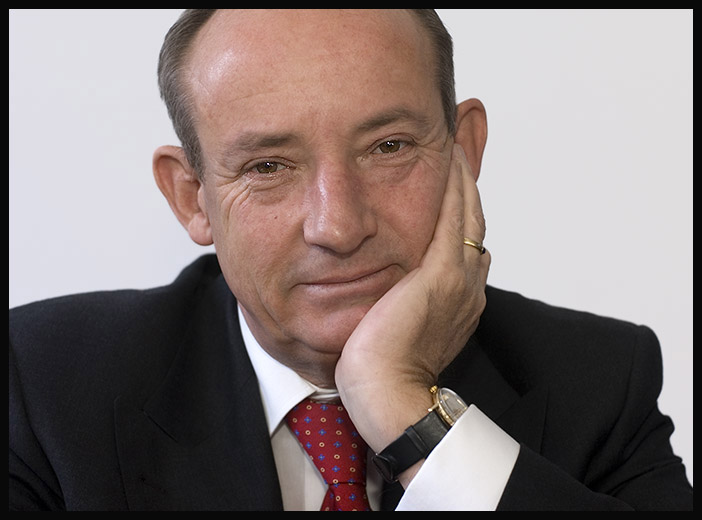
"There was a very strong consensus that the current financial turmoil should not be an excuse to slow down action on climate change," Yvo de Boer, executive secretary for the U.N. Framework Convention on Climate Change, told The Associated Press after the talks.
"Many ministers said that addressing climate change can deliver important economic benefits that are important in the light of the current financial situation as well," de Boer added.
Scientists say the emission of carbon and other greenhouse gases, mostly from fossil fuels, must peak within 10 to 15 years and then drop sharply to avoid potentially catastrophic changes in the climate. More >>>

Tuesday, October 14, 2008

Inconvenient truths about global warming

VENICE -- October 14, 2008 -- I saw a colorful clothing advertisement on my way here. It said "global warming ready," and showed this city's famous San Marco square filled with parrots instead of pigeons. But if global warming proceeds at the current pace, the parrots of a newly tropical Europe will fly by overhead. For Venice could be well under water in future centuries.

Refugees fleeing the invasion of Germanic tribes in the 5th century could not have imagined when they first settled along this enchanted lagoon that their savior, the sea, could become their worst enemy.

Nowhere are the problems more obvious - the fragile lagoon against the background of chimneys spewing greenhouse gases on the mainland. It is not just a problem of industry lowering the water table that is causing Venice to sink. Rising sea levels worldwide will also have to be accounted for. Besides physical barriers to close the lagoon to floods, engineers here are seeking ways to help nature itself regenerate land. More >>>

Saturday, October 11, 2008

An Accurate Picture Of Ice Loss In Greenland

ScienceDaily (Oct. 10, 2008) — Researchers from TU Delft joined forces with the Center for Space Research (CSR) in Austin, Texas, USA, to develop a method for creating an accurate picture of Greenland’s shrinking ice cap. On the strength of this method, it is now estimated that Greenland is accountable for a half millimetre-rise in the global sea level per year.

The research was based on data from the German-American GRACE (Gravity Recovery and Climate Experiment) satellites, two satellites that have been orbiting the earth behind each other since mid-2002. Deviations in the earth’s gravitational field cause fluctuations in the distance between the satellites, which is measured to a precision of a millionth of a metre. As gravity is directly related to mass, these data can be used to plot changes in the earth’s water balance, such as the disappearance of the ice caps.
More >>>

Wednesday, October 8, 2008

NASA Scientist Says Global Warming Danger Amounts to 'Planetary Emergency'

October 8 2008 ; NASA climate scientist James Hansen was among the first to alert the public to the dangers of climate change. He did so at a congressional hearing conducted by then-Senator Tim Wirth.


"In 1988, he stepped to the front of the line of the scientific community to proclaim a human fingerprint on the earth's rising temperature," Wirth said. "It was a brave, a lonely leadership role he played then and he hasn't stopped for one day since."

At a Washington event recalling that hearing, Hansen said the world has long passed dangerous levels for greenhouse gasses in the atmosphere.

"We really have reached a point of a planetary emergency," Hanson said. "And it is because there are tipping points in the climate system which we are very close to and which, if we pass, the dynamics of the system can take over. So the momentum of the system will carry you to very large changes which are out your control." More >>>

Monday, October 6, 2008

Now is the time to tackle global warming - Stern

Tuesday October 7 2008: Lord Stern of Brentford has suggested the credit crunch might provide an opportunity to invest in measures to tackle global warming as a way of stimulating economic growth.

Speaking to the Guardian ahead of a speech to launch a new climate change economics centre at the London School of Economics, the author of the government's influential report on climate change, said there were "two kinds of danger" because of the current fears of recession.

"One [is] people can only concentrate on a limited number of things at the same time, and the second is people will be sensitive to cost increases, and those will have to be managed carefully," he said. "There's a danger: it needs leadership."

But, he said, the current problems could help boost investment in tackling climate change because they have highlighted the dangers of not tackling risks early enough, and could create much more international cooperation. More >>>

Thursday, October 2, 2008

Energizing Investors and Inovators to Think Outside the Grid

10.02.2008 “The issue of our time is the combination of energy security and climate change,” said former Congressman Sherwood Boehlert at “Thinking Outside the Grid: An Aggressive Approach to Climate and Energy,” a September 23, 2008, forum co-sponsored by Wilson Center On the Hill and the Environmental Change and Security Program.

Boehlert noted that the energy security-climate change nexus has received more attention lately, due to record gas prices; successful advertisement campaigns like that of Texas oil magnate-turned-wind farm entrepreneur T. Boone Pickens; and bestselling books like Thomas Friedman’s Hot, Flat, and Crowded: Why We Need a Green Revolution—and How It Can Renew America. More >>>