Showing posts with label extreme weather. Show all posts

Saturday, August 8, 2015

The Economics of Happiness

http://www.filmsforaction.org/watch/the_economics_of_happiness/

Economic globalization has led to a massive expansion in the scale and power of big business and banking. It has also worsened nearly every problem we face: fundamentalism and ethnic conflict; climate chaos and species extinction; financial instability and unemployment.

There are personal costs too. For the majority of people on the planet life is becoming increasingly stressful. We have less time for friends and family and we face mounting pressures at work.

The Economics of Happiness describes a world moving simultaneously in two opposing directions. On the one hand, government and big business continue to promote globalization and the consolidation of corporate power. At the same time, all around the world people are resisting those policies, demanding a re-regulation of trade and finance—and, far from the old institutions of power, they're starting to forge a very different future. Communities are coming together to re-build more human scale, ecological economies based on a new paradigm -- an economics of localization.

We hear from a chorus of voices from six continents including Vandana Shiva, Bill McKibben, David Korten, Michael Shuman, Juliet Schor, Zac Goldsmith and Samdhong Rinpoche - the Prime Minister of Tibet's government in exile. They tell us that climate change and peak oil give us little choice: we need to localize, to bring the economy home. The good news is that as we move in this direction we will begin not only to heal the earth but also to restore our own sense of well-being. The Economics of Happiness restores our faith in humanity and challenges us to believe that it is possible to build a better world.

http://www.filmsforaction.org/watch/the_economics_of_happiness/


Thursday, November 6, 2014

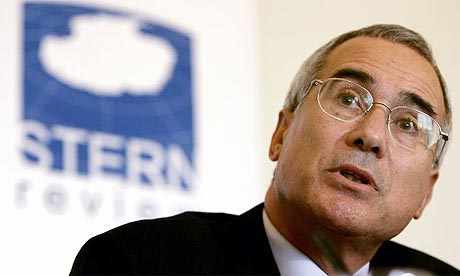
Lord Stern: global warming may create billions of climate refugees

Lord Nicholas Stern, one of the world’s most influential voices on climate economics, does not mince his words when it comes to criticising those who take a narrow view of prosperity and highlighting the devastating consequences of global warming.

Nicholas Stern

"You have to be a complete idiot to think that GDP sums up prosperity," says Stern, who believes we need to develop broader measures of success and combine this with a return to core values if we are to convince people to act to prevent runaway climate change.

Stern, who wrote the landmark 2006 Stern review of the economics of climate change, says if we fail to take heed of the danger signals, we risk temperatures rising this century to levels we haven’t seen for tens of millions of years.

"Hundreds of millions of people, perhaps billions of people would have to move," he warns. "If we’ve learned anything from history that means severe and extended conflict.

"We couldn’t just turn it off. You can’t make a peace treaty with the planet, you can’t negotiate with the laws of physics. You’re in there, you’re stuck. Those are the stakes we’re playing for and that’s why we have to make this second transformation, the climate transformation and move to low carbon economy."

Stern has co-authored the recently published New Climate Economy report, which argues that the world can head off the worst effects of climate change, and enjoy the fruits of continued economic expansion, if it moves quickly to invest in a low-carbon economy.

He says he hopes the study will influence key decision makers because it was written with the support of a coalition of respected politicians, economists, think tanks and institutions, including the World Bank, the International Monetary Fund, the OECD, the International Energy Agency and the UN.

He dismisses the arguments of more radical economists who believe that we need to stop our fixation with growth, arguing that the economy needs to keep expanding if we are to have a hope of eradicating poverty.

"To those who want to knock out growth from objectives, I find they’re close to reprehensible because for me the two defining challenges of this century are overcoming poverty and managing climate change.

"We fail on one, we fail on the other. So I think to say that we should just switch off growth is to miss big aspects of what matters about poverty. And so it worries me. It’s also politically very naive. If you turn it into a pissing contest between growth on the one hand and climate and environment on the other and say you’ve got to choose, you’re setting yourself up for failure."

Stern says investments in renewable energy must be combined with a rethinking of our understanding of prosperity, which he believes will lead to what he terms better growth.

"It means thinking differently about health, about the way we live in our cities and about the strengths of our communities," he says. "It’s not that GDP is idiotic but it’s mostly about the use of labour resources and what it produces. But there are very important parts of this story about prosperity that get missed out."

How does Stern, who is president of the British Academy, believe we can start to measure prosperity that goes beyond GDP?

He says it is vital to start from the perspective of people understanding what they mean by wellbeing and what they value, whether it is family, community, arts or sport.

"You can be reasonably empirical about what moves people and then you go and try to collect data on that," he says. "Once you understand what it is it you’re trying to capture and create indicators, you can then start to talk about policy."

The 68-year-old peer says it’s vital we go back to recognising the importance of Aristotle’s belief in the need to understand what it means to be a virtuous person and to whom we owe a duty of care.

"I’ve been an academic all my life and I look at the evidence of what works and what doesn’t work," he says. "But if you ask yourself what you’re trying to do, that’s spurred by values, by what’s important to you."

For Stern, the heart of his values lies in the importance of family. Speaking immediately after introducing his two-week old granddaughter Rosa on stage at a TEDx talk in New York, he said: "I’m 68 and I am thinking what will Rosa be like when she’s 68? We’re talking about towards the end of this century and what we do now will determine whether the next 100 years is the best of centuries or the worst of centuries."

"Are we going to look our grandchildren in the eye and tell them that we understood the issues, that we recognised the dangers and the opportunities, and still we failed to act?"

Stern believes that it is time for religious leaders, politicians and the media to act more responsibly, pointing in particular to the importance of the Pope’s statement earlier this year that if we destroy creation, creation will destroy us.

Also key to changing hearts and minds is the field of arts, with Stern pointing to Barbara Kingsolver’s book Flight Behaviour, which he says is not only wonderful in describing the human condition but also in questioning our relationship with the environment.

"It’s not just the policy wonks like me we need to try to assemble the evidence and set it out," he says. "You have to do that because emotional argument without rational evidence on cause and effect doesn’t get you all that far. But rational argument about cause and effect alone doesn’t get you there either." More


Wednesday, October 22, 2014

Mismanaging Climate Change

Pakistan’s extreme vulnerability to climate change is not a scientific secret but is, in fact, a logical certainty owing to its geographic location, inclined elevation, as well as demographics.

Former Minister Malik Amin Aslam Khan

The issue directly impacts upon the country’s already volatile water dynamics driven by the northern glaciers and the seasonal monsoon rains and, if not managed properly, could burden our economy to the tune of $6-14 billion per year (United Nations Framework Convention on Climate Change NEEDS study 2010). In response to this challenge, Pakistan’s National Climate Change Policy has laid out a comprehensive ‘to do’ list for the government, which was approved by the government but, unfortunately, has not been acted upon by the authorities. Oblivious to this apathy and inaction, Pakistan continues to face a mammoth challenge to not only climate-proof its future development path, but also take steps to cope with an issue, which is here to stay. These steps include establishing early warning systems, effective flood plain management, improving weather forecasting with cross-border data exchange and enhancing the disaster preparedness, as well as emergency response capabilities to deal with predicted climate-induced natural disasters.

To their credit, previous governments did begin to take concrete institutional building measures, such as establishing a very high-level Prime Minister’s Cabinet Committee on Climate Change, setting up a dedicated Ministry of Climate Change built on the debris of a misguidedly devolved Environment Ministry and creating a focused climate research centre i.e., the Global Change Impact Studies Centre. However, in one stroke of convenient denial, the present government has undone and dismantled all those measures by downgrading the ministry to a division level, drastically cutting the funds for the division, leaving it headless without an appointed minister and also drying up all finances for the climate research centre. It is, thus, not surprising, that the country received a rude wake-up call when, during the recent floods, the forces of nature once again caught it totally off guard and institutionally ill-prepared to deal with a situation, which had been predicted and forewarned time and again by climate experts.

The 2014 flood came in two surges. The first surge occurred due to exceptionally high rainfall in the rivers Jhelum, Chenab, Ravi and their catchments. It is a recorded fact that the Pakistan meteorological office gave clear warnings about this enhanced rainfall activity, which were not heeded to in a timely manner. The result of this negligence was that the Mangla Dam remained filled to the brim, while storm waters gathered upstream and, subsequently, the floodgates were forced open at the worst possible time when water levels were already dangerously peaking downstream. Had the water been incrementally released, as advised, the massive flood surge that eventually occurred could have been effectively prevented. Dams remain a double-edged sword — if used intelligently, they can be the best tool for controlling and regulating floods, but if used improperly, as they were on this occasion, they can quickly convert floods into mega human disasters.

This first human-induced deluge was followed by the second flood surge that occurred due to the unpredictably high ‘cloud-burst’ in Indian-held Kashmir. The information about this second surge was also received hours in advance as the water roared down River Chenab. Again, our own meteorological office issued a timely flood peak warning, but again, the reaction time and response measures of our government were found severely lacking.

The floods were triggered by climate-induced cloud-bursts and monsoonal shifts, but the human tragedy and destruction got multiplied due to poor government planning, human negligence and a criminal mixture of absence and apathy of relevant institutional response mechanisms.

Climate related calamities, including more flooding and an enhanced frequency of freak natural events are, unequivocally, predicted for Pakistan and it is time to take these warnings seriously, and for the government to heed to them by planning to deal with the consequences, limiting the damage and adapting to this shifting scenario. The recent floods, which are surely not the last one, have also rudely exposed the human, economic and environmental costs to be paid for our politically motivated aversion to building large dams, as well as the suicidal trend of encroaching upon flood plains and continuing to challenge the flood water boundaries.

Pakistan lies at the geographic crossroads of melting glaciers, shifting monsoons and enhanced disaster activity. This locational risk cannot be changed, but how we deal with this looming catastrophe can certainly be changed. What it requires is better responsive measures and heeding to technical advice and scientifically based warnings with timely decisions.

The political optics of wading through floodwaters and post disaster bear hugs with destitute and frustrated victims is beginning to lose its vote-gathering lustre. As we haplessly subject millions to avoidable disasters, it is time to face up to reality. Climate-proofing of infrastructure, conserving the yearly deluge of water that is callously flushed into the Arabian Sea and effectively enforced flood plains management needs to get the priority it deserves. The politics of underpasses and overpasses has to give way to the politics of common sense, based on what Pakistan’s real challenges are and what it is predicted to face up to in the near future. Governing with confused priorities and institutional mismanagement will continue to worsen the responses forced upon us as we face up to the unpredictability of climate change. More

Published in The Express Tribune, October 19th, 2014.


Thursday, September 4, 2014

Third International Conference on Small Island Developing States (SIDS)

Third International Conference on Small Island Developing States (SIDS) - ‘The Sustainable Development of SIDS Through Genuine and Durable Partnerships’

1-4 September 2014 | Apia, Samoa

The Third International Conference on SIDS drew to a close today, after a final session of general debate in the morning that continued into the afternoon, followed by a closing plenary.

Moderators reported back from the six partnership dialogues that took place in previous days.

Delegates adopted the SAMOA Pathway outcome document, and adopted a draft resolution expressing thanks to the people and Government of Samoa. Wu Hongbo, Secretary-General of the Conference, highlighted a monitoring and accountability mechanism to review progress of implementation, and assured delegates of continued support from the UN family.

Samoan Prime Minister Tuilaepa Sailele Malielegaoi said the Samoa conference is not the final destination for SIDS development challenges, looking ahead to further international discussions on climate, disaster risk reduction and the post-2015 development agenda. He gaveled the meeting to a close at 4.43 pm.

Following the closing of plenary, the Third International Conference on SIDS was officially closed with a flag-lowering ceremony, accompanied by the Royal Samoa Police Band.

ENB SUMMARY AND ANALYSIS: The Earth Negotiations Bulletin summary and analysis of this conference will be available on this site on Sunday, 7 September 2014.


Melchiade Bukuru, UN Convention To Combat Desertification
Tuiloma Neroni Slade, Pacific Islands Forum

Rawleston Moore, Global Environment Facility Secretariat
Gyan Chandra Acharya, Under-Secretary-General and High Representative for the Least Developed Countries, Landlocked Developing Countries and SIDS
Braulio de Souza Dias, Executive Secretary, UN Convention on Biological Diversity

Franz Drees-Gross, Country Director for Papua New Guinea, Timor-Leste, and the Pacific Islands, World Bank
David Sheppard, Secretariat of the Pacific Region Environment Program, Director General

Partnerships Dialogue: Water and sanitation, food security and waste management

Panel (L-R): Karen Tan, Permanent Representative of Singapore to the UN in New York; Federico Ramos de Armas, Secretary of State for Environment, Spain; Rolph Payet, Minister of Environment and Energy, Seychelles; Wu Hongbo, Under-Secretary General, Economic and Social Affairs and Secretary-General for the Third International Conference on SIDS; Chair Ronald Jean Jumeau, Ambassador for Climate Change and SIDS Issues, Seychelles; Secretariat; Michel Jarraud, Secretary-General, World Meteorological Organization; and Alemneh Dejene, UN Food and Agriculture Organization (FAO)

Karen Tan, Permanent Representative of Singapore to the UN in New York
Federico Ramos de Armas, Secretary of State for Environment, Spain

Chair Ronald Jean Jumeau, Ambassador for Climate Change and SIDS Issues, Seychelles
Rolph Payet, Minister of Environment and Energy, Seychelles

Michel Jarraud, Secretary-General, World Meteorological Organization
Alemneh Dejene, FAO

Closing Plenary

Panel (L-R): Wu Hongbo, Under-Secretary General, DESA and Conference Secretary-General; Tuilaepa Lupesoliai Sailele Malielegaoi, Prime Minister, Samoa; Secretariat; and Milan Meetarbhan, Permanent Representative of Mauritius to the UN, as Rapporteur-General

Lucinda Longcroft, Head of the New York Office, World Intellectual Property Organization
Daniele Violetti, Chief of Staff, UNFCCC Secretariat
Side Event: What’s in it for SIDS? Findings from the IPCC Fifth Assessment Report

This event highlighted findings from the Intergovernmental Panel on Climate Change (IPCC) Fifth Assessment Report (AR5) and what they mean for SIDS. In order to increase understanding of these implications, the Climate and Development Knowledge Network (CDKN) produced a guide to the AR5 for SIDS, which was introduced at the event. The event brought together climate change experts, and senior officials and negotiators from various organizations and regions to discuss the recent findings and the causes and consequences of climate change for SIDS.


Panel (L-R): Ulric Trotz, Deputy Director, Caribbean Community Centre for Climate Change (CCCCC); Elizabeth Carabine, Overseas Development Institute (ODI); Faamoetauloa Lealaiauloto Taito Dr Faale Tumaalii, Minister of Environment and Natural Resources, Samoa; Moderator Kenrick Leslie, Director, CCCCC; Ngedikes Olai Uludong, Chief Negotiator, Alliance for Small Island States (AOSIS); and Evaipomana Tuuholoaki, International Federation of Red Cross and Red Crescent Societies (IFRC)

Faamoetauloa Lealaiauloto Taito Dr Faale Tumaalii, Minister of Environment and Natural Resources, Samoa, said the side event would address the root causes and consequences of climate change, and pointed to the impacts of slow-onset events, a new phenomena for SIDS.
Ulric Trotz, Deputy Director, CCCCC, called attention to the Caribbean Climate Online Risk and Adaptation Tool (CCORAL), said even achieving 350 ppm of CO2 in the atmosphere is generous and we should really be aiming for 260 ppm. He said delaying action on climate change is not an option, and stressed the need to define a vulnerability index more suitable for SIDS.
Evaipomana Tuuholoaki, IFRC, said her organization is: scaling up humanitarian response and preparedness; reducing risk through increased awareness and understanding and using early warning information; and contributing to increasing resilience at the community level. She emphasized that while science is the foundation, the information must be translated so that local communities can understand it.

Ngedikes Olai Uludong, Chief Negotiator, AOSIS, stressed the usefulness of the CDKN guide for SIDS negotiators, pointing to difficulties in understanding thousands of pages of scientific reports. She called for a special financing window for SIDS.
Elizabeth Carabine, ODI, mentioned two key risks for SIDS: loss of livelihoods, coastal settlements, infrastructure, ecosystem services and economic stability; and the interaction of rising sea levels in the 21st century with high water level events threatening low-lying coastal areas. She said adaptation costs are high for SIDS relative to the size of their economies; and that SIDS can benefit from integrated adaptation and mitigation approaches.
Kenrick Leslie, Director, CCCCC, moderated the event, expressing hope that participants would gain a better understanding of what the AR5’s findings mean for SIDS.

Closing Ceremony