This blog contains articles and commentary on Climate Change / Global Warming. These changes will have an affect on the entire planet and all of us who reside therein.
Life as we know it will change drastically. There is also the view that there is a high likelihood of climate change being a precursor of conflits triggered by resource shortges.
Showing posts with label global emergency. Show all posts
Showing posts with label global emergency. Show all posts
After three frigid nor’easters in less than two weeks, even the most devout prophet of climate change could be forgiven for echoing the sentiment that President Trump tweeted a few months ago, to much ridicule, shortly before one of the coldest New Year’s Eves on record: “Perhaps we could use a little bit of that good old Global Warming.” By this point, most people outside the White House understand that climate is not the same as weather—that climate is the forest and weather is the trees. Yet the global climate system is enormously complex, and there is, in fact, a lively scientific debate in progress about the relationship between human-caused climate change (especially in the Arctic) and the increased frequency of extreme cold-weather events across the United States—blizzards, bomb cyclones, and the dreaded wintry mix.
The debate began in late 2011, at a meeting in San Francisco of the American Geophysical Union, when an atmospheric scientist named Jennifer Francis gave a talk that electrified her colleagues. Perhaps, she suggested, the persistent outbreaks of extreme weather that people were experiencing in the Northern Hemisphere were connected to the colossal loss of sea ice in the Arctic—a region that, with increasing greenhouse-gas emissions, has warmed at double the rate of the rest of the planet. Up until that moment, while scientists knew that the Arctic was changing rapidly—since the nineteen-seventies, sea ice, snow cover, and glaciers had all declined dramatically, and the permafrost was starting to thaw—they did not think it had an influence on weather systems in the midlatitudes. Credit for that went entirely to the tropics. Read More
We, the undersigned Buddhist leaders, come together prior to the 21st Session of the Conference of Parties (COP21) to the UN Framework Convention on Climate Change (UNFCCC) in Paris, in order to add our voices to the growing calls for world leaders to cooperate with compassion and wisdom and reach an ambitious and effective climate agreement.
We are at a crucial crossroads where our survival and that of other species is at stake as a result of our actions. There is still time to slow the pace of climate change and limit its impacts, but to do so, the Paris summit will need to put us on a path to phase out fossil fuels. We must ensure the protection of the most vulnerable, through visionary and comprehensive mitigation and adaptation measures.
Our concern is founded on the Buddha’s realization of dependent co-arising, which interconnects all things in the universe. Understanding this interconnected causality and the consequences of our actions are critical steps in reducing our environmental impact. Cultivating the insight of interbeing and compassion, we will be able to act out of love, not fear, to protect our planet. Buddhist leaders have been speaking about this for decades. However, everyday life can easily lead us to forget that our lives are inextricably interwoven with the natural world through every breath we take, the water we drink, and the food we eat. Through our lack of insight, we are destroying the very life support systems that we and all other living beings depend on for survival.
We believe it imperative that the global Buddhist community recognize both our dependence on one another as well as on the natural world. Together, humanity must act on the root causes of this environmental crisis, which is driven by our use of fossil fuels, unsustainable consumption patterns, lack of awareness, and lack of concern about the consequences of our actions.
We strongly support “The Time to Act is Now: A Buddhist Declaration on Climate Change,” which is endorsed by a diverse and global representation of Buddhist leaders and Buddhist sanghas. We also welcome and support the climate change statements of other religious traditions. These include Pope Francis’s encyclical earlier this year, Laudato Si’: On Care for Our Common Home, the Islamic Declaration on Climate Change, as well as the upcoming Hindu Declaration on Climate Change. We are united by our concern to phase out fossil fuels, to reduce our consumption patterns, and the ethical imperative to act against both the causes and the impacts of climate change, especially on the world’s poorest.
To this end, we urge world leaders to generate the political will to close the emissions gap left by country climate pledges and ensure that the global temperature increase remains below 1.5 degrees Celsius, relative to pre-industrial levels. We also ask for a common commitment to scale up climate finance, so as to help developing countries prepare for climate impacts and to help us all transition to a safe, low carbon future.
The good news is that there is a unique opportunity at the Paris climate negotiations to create a turning point. Scientists assure us that limiting the rise in the global average temperature to less than 1.5 degrees Celsius is technologically and economically feasible. Phasing out fossil fuels and moving toward 100 percent renewable and clean energy will not only spur a global, low-carbon transformation, it will also help us to embark on a much-needed path of spiritual renewal. In addition to our spiritual progression, in line with UN recommendations, some of the most effective actions individuals can take are to protect our forests, move toward a plant-based diet, reduce consumption, recycle, switch to renewables, fly less, and take public transport. We can all make a difference.
We call on world leaders to recognize and address our universal responsibility to protect the web of life for the benefit of all, now and for the future.
For these reasons, we call on all Parties in Paris:
To be guided by the moral dimensions of climate change as indicated in Article 3 of the United Nations Framework Convention on Climate Change (UNFCCC).
To agree to phase out fossil fuels and move towards 100 percent renewables and clean energy.
To create the political will to close the emissions gap left by country climate pledges so as to ensure that the global temperature increase remains below 1.5 degrees Celsius, relative to pre-industrial levels.
To make a common commitment to increase finance above the US$100 billion agreed in Copenhagen in 2009, including through the Green Climate Fund (GCF), to help vulnerable developing countries prepare for climate impacts and transition towards a low-carbon economy.
The time to act is now.
Yours sincerely,
His Holiness the Dalai Lama Tenzing Gyatso, 14th Dalai Lama
Zen Master Thich Nhat Hanh, Patriarch of the Plum Village International Community of Engaged Buddhists
His Holiness the 17th Gyalwang Karmapa, Head of the Karma Kagyu
Today’s joint announcement by President Obama and President Xi represents the second time in two years the leaders have met to make significant climate commitments.
Last year’s meeting focused on setting aggressive goals that reflect each country’s unique situation. This year’s meeting moved decisively to implementation commitments intended to deliver these results. The message is clear: the time for talking about climate is over. The two largest economies and emitters must lead in action.
The commitments by the countries are sweeping and perhaps the greatest cause for hope yet in international attempts to address global warming—especially looking forward to COP21 in Paris this upcoming December. Among the outcomes are the creation of the world’s largest carbon market, market reforms within China that will help support accelerated renewables development, redoubled support of the Clean Power Plan initiatives to reduce carbon intensity of the U.S. electricity grid, codes and regulations to improve energy efficiency in buildings and transportation in both countries, and a commitment by both countries to control other important greenhouse gases including methane and HFCs.
Importantly, both countries also committed to ongoing research on necessary global warming solutions, as well as the promise of more than $6 billion in financing to support developing countries in their adoption of similar solutions.
China’s strategy for delivery is an audacious combination of top-level reforms and bottom-up implementation. Specific highlights from the announcement include:
Creation of the world’s largest carbon market: China has committed to use a national cap-and-trade system to efficiently limit and price carbon pollution starting in 2017. The system will cover all the largest emitting sectors in China, including power generation, iron and steel, non-ferrous metals, chemicals, cement, and pulp and paper. This market will build heavily upon the experiences learned from its seven city-level carbon market pilots. Given its expansive scope, this market will likely cover approximately 60 percent of China’s energy-related carbon dioxide emissions, which were roughly 10 billion metric tons last year. More
VATICAN CITY — Pope Francis on Thursday called for a radical transformation of politics, economics and individual lifestyles to confront environmental degradation and climate change, as his much-awaited papal encyclical blended a biting critique of consumerism and irresponsible development with a plea for swift and unified global action.
The vision that Francis outlined in the 184-page encyclical is sweeping in ambition and scope: He described a relentless exploitation and destruction of the environment, which he blamed on apathy, the reckless pursuit of profits, excessive faith in technology, and political shortsightedness. The most vulnerable victims are the world’s poorest people, he declared, who are being dislocated and disregarded.
"Climate change is a global problem with grave implications: environmental, social, economic, political and for the distribution of goods," he wrote. "It represents one of the principal challenges facing humanity in our day."
The first pope from the developing world, Francis, an Argentine, used the encyclical — titled "Laudato Si’," or "Praise Be to You" — to highlight the crisis posed by climate change. He placed most of the blame on fossil fuels and human activity while warning of an "unprecedented destruction of ecosystems, with serious consequence for all of us" if swift action is not taken. Developed, industrialized countries were mostly responsible, he said, and were obligated to help poorer nations confront the crisis.
"Climate change is a global problem with grave implications: environmental, social, economic, political and for the distribution of goods," he wrote. "It represents one of the principal challenges facing humanity in our day." More
Matthieu Ricard is a Buddhist monk, author and photographer. The dialogue with his father, French philosopher Jean-Francois Revel, The Monk and the Philosopher, was a best seller in Europe and was translated into 21 languages. We caught up with him during the Davos World Economic Forum on January 23rd, 2015.
Before you became a Buddhist monk, you were a molecular biologist at the Institut Pasteur in France. You said once that the reason why you gave up that career was because you had met many people from all walks of life, at the top of their fields – and yet many of them did not show similar excellence on the human side. You are here at Davos among the global elite, the most powerful people in the world. How do you see your role here and what impact can you have?
I have to be humble about my role. It is a drop in the ocean and it is freezing outside, that drop might freeze too! It’s my seventh year here, and the Forum is giving me a voice, so I use it freely to speak about cooperation, altruism and about transforming oneself to better serve others.
There are a lot of stereotypes about Davos, such as thousands of people arriving in private jets. But there is also a community of people like Johan Rockström and his colleagues who are totally committed to bring about a better world. Klaus Schwab said in his inaugural speech that this week should be dedicated to care and compassion. The words are in the right direction, but they need to be followed by actions.
And a good part of the population is open to that. We now have much more consideration for future generations. If you have a house you don’t burn it down before leaving it to your children. You try to leave it in good condition.
There are billions and billions of human beings, as well as numerous other living beings that will follow us on this planet and we are shaping their future in a major way. Not to build up their suffering through our inconsiderate actions is the main challenge of our time. Even with a 2 degree increase the planet will be very different from the one we know now.
Today we need an even more intense level of cooperation to face the many challenges that confront us. Each of these challenges has its own temporality and priority. We need to reconcile these different time scales and types of preoccupations: the economy in the short-term, life satisfaction in the mid-term, and environment in the long-term.
Life satisfaction is measured on the scale of a life project, a career, a family, a generation and a lifetime. The evolution of the environment used to be measured in terms of millennia and era, but the pace of environmental change has now considerably accelerated and changed our sense of measurement. The economy and financial world are also evolving at an ever-faster pace.
We need to reconcile these three time scales. Altruism is the vital thread that can link them together and harmonize their requirements.
If we have more consideration for others, we will turn to caring economics, where the financial world is at the service of society and not the opposite. If we have more consideration for others, we will care for the quality of life of those around us, Gross National Happiness, and make sure that their situation improves. Finally, if we have more consideration for future generations, we will not blindly sacrifice the world that we hand down to them in favour of our short-term wants and desires.
At Davos, you attended a session where Johan Rockstrom presented the Planetary Boundaries concept. It is clear that humanity is on an unsustainable course and science is telling us that things are getting much worse, much faster. How can we adjust and re-calibrate for a more sustainable future? Do we need a mindset shift?
The mindset shift is happening, but not quickly enough. Cultural change usually takes a generation. When Rachel Carson’s “Silent Spring” came out 30 years ago, in France, only a few people paid attention. It took a generation for environmental questions to enter mainstream discussion.
We need ways to make the risk palpable, so people can feel it in their flesh. Like if you are told you can’t go to the beach because of excess of UV light coming from the depletion of the ozone layer, that’s something real.
People also need to feel that their concerns are heard by politicians. Many people are overwhelmed when research continues to show that the risk for our planet keeps increasing. They feel powerless. I hope that millions of people will march in the streets before Paris 2015 to show that it’s no longer acceptable that politicians move at such a slow pace to take the necessary measures to mitigate climate change.
Mindfulness meditation is all the rage in international conferences. Here at Davos there are daily sessions. Is this just a fad, or do you see it as a sign of the mindset shift that we are looking for?
This year it is my friend, Jon Kabat-Zinn, a wonderful teacher, who is leading those sessions. The scientists who did the research on meditation, Richard Davidson and Tania Singer are also here. Ten years ago it would have been unthinkable that every single day of the World Economic Forum begins with a meditation session. It turns out that many people are closet meditators.
I personally think that we should not speak simply of “mindfulness” but “caring mindfulness”, to make sure that we don’t end up with mindful snipers and mindful psychopaths.
As for the sessions on the environment, like those Johan Rockstrom and Mattias Klum are conducting, they should all take place in the main hall! It is so important.
Can you talk a bit about the state of debate on climate change in the Buddhist community?
You know, in Tibet, local people have never heard of climate change, but they all know twenty years ago they could cross the rivers on ice with yaks and trucks during three to four months in the winder, and now they can only do so during one or two months.
Countryside people in Nepal also say the Himalayas have become “black”. Now, only the tops above 5000 metres are white with snow. It is so sad. In the Himalayas, there are now so many lakes with no names because they just appeared in the last 30 years as glaciers are melting.
The Dalai Lama speaks of non violence against humans, non-violence against animals and non-violence against the environment. This reflects the Buddhist idea of interdependence. We are all in the same boat. On the Tibetan plateau, until the late 1950s, people would not cut the forests and they would leave the gold in the rivers. They thought that the magnificence of nature needed to be respected. Since then, because of new government policies, 40% of all forests have been cut. Conversely, in Bhutan, natural coverage has increased in 65% of the territory, while fishing and hunting are prohibited.
In essence, we should promote altruism on the level of society through education, through institutions that respect the rights of every individual, and through political and economic systems that allow everyone to flourish without sacrificing the good of future generations. To sum up in one sentence, as Martin Luther King told us: “We must learn to live together as brothers or perish together as fools.” More
A pair of new studies show how various forms of human activity, driven by a flawed economic system and vast consumption, is laying waste to Earth's natural systems
The conclusion that the world's dominant economic model—a globalized form of neoliberal capitalism, largely based on international trade and fueled by extracting and consuming natural resources—is the driving force behind planetary destruction will not come as a shock, but the model's detailed description of how this has worked since the middle of the 20th century makes a more substantial case than many previous attempts. (Photo: NASA)
Humanity's rapacious growth and accelerated energy needs over the last generation—particularly fed by an economic system that demands increasing levels of consumption and inputs of natural resources—are fast driving planetary systems towards their breaking point, according to a new pair of related studies.
"It is difficult to overestimate the scale and speed of change. In a single lifetime humanity has become a geological force at the planetary-scale." —Prof. Will Steffen
Prepared by researchers at the Stockholm Resilience Centre, the first study looks specifically at how "four of nine planetary boundaries have now been crossed as a result of human activity." Published in the journal Nature on Thursday, the 18 researchers involved with compiling evidence for the report—titled 'Planetary Boundaries 2.0'—found that when it comes to climate change, species extinction and biodiversity loss, deforestation and other land-system changes, and altered biogeochemical cycles (such as changes to how key organic compounds like phosphorus and nitrogen are operating in the environment), the degradation that has already take place is driving the Earth System, as a whole, into a new state of imbalance.
"Transgressing a boundary increases the risk that human activities could inadvertently drive the Earth System into a much less hospitable state, damaging efforts to reduce poverty and leading to a deterioration of human well-being in many parts of the world, including wealthy countries," said Professor Will Steffen, a researcher at the Centre and the Australian National University, Canberra, who was lead author for both studies.
In addition to the four boundaries that have already been crossed, the study looked five other ways in which the planetary systems are under assault by human activity. They include: stratospheric ozone depletion; ocean acidification; freshwater use; atmospheric aerosol loading (microscopic particles in the atmosphere that affect climate and living organisms); and the introduction of novel entities into ecosystems (e.g. organic pollutants, radioactive materials, nanomaterials, and micro-plastics).
"I don't think we've broken the planet but we are creating a much more difficult world," Sarah Cornell, another report author, told Reuters.
In this interview with Wired last year, Johan Rockström, executive director of the Stockholm Resilience Centre, described the idea about planetary boundaries in details:
Related to the findings of the first study, the second report examines what it calls the "Great Acceleration" and is an assessment of the speed and influence that specific factors have had in damaging the planetary systems described in Planetary Boundaries 2.0. Using a series of indicators, the study compares the relationship, over time, between 12 'socio-economic factors'—including economic growth (GDP); population; foreign direct investment; energy consumption; and water use—on one side with 12 'Earth system trends'—like the carbon cycle; the nitrogen cycle and biodiversity—on the other.
Using what it calls a "planetary dashboard," the research charts the spread and speed of human activity from the start of the industrial revolution in 1750 to 2010, and the subsequent changes in the Earth System – e.g. greenhouse gas levels, ocean acidification, deforestation and biodiversity deterioration. The analysis found that increased human activity—and "predominantly the global economic system"—has unseated all other factors as the primary driver of change in the Earth System, which the report describes as "the sum of our planet's interacting physical, chemical, biological and human processes." The most striking, i.e. "accelerated," changes to that system have occurred in the last sixty years.
"It’s clear the economic system is driving us towards an unsustainable future and people of my daughter’s generation will find it increasingly hard to survive. History has shown that civilisations have risen, stuck to their core values and then collapsed because they didn’t change. That’s where we are today." —Prof. Will Steffen"It is difficult to overestimate the scale and speed of change. In a single lifetime humanity has become a geological force at the planetary-scale," said Steffen, who also led the Acceleration study.
The conclusion that the world's dominant economic model—a globalized form of neoliberal capitalism, largely based on international trade and fueled by extracting and consuming natural resources—is the driving force behind planetary destruction will not come as a shock, but the model's detailed description of how this has worked since the middle of the 20th century makes a more substantial case than many previous attempts.
"When we first aggregated these datasets, we expected to see major changes but what surprised us was the timing. Almost all graphs show the same pattern. The most dramatic shifts have occurred since 1950. We can say that around 1950 was the start of the Great Acceleration," says Steffen. "After 1950 we can see that major Earth System changes became directly linked to changes largely related to the global economic system. This is a new phenomenon and indicates that humanity has a new responsibility at a global level for the planet."
The paper makes a point to acknowledge that consumption patterns and the rise of what has become known as the Anthropocene Era does not fall equally on the human population and its examination of the economic system which is underpinning planetary destruction is one rife with inequality, in which certain populations consume at vastly higher levels than others.
According to the report, "The new study also concludes that the bulk of economic activity, and so too, for now, the lion's share of consumption, remain largely within the OECD countries, which in 2010 accounted for about 74% of global GDP but only 18% of the global population. This points to the profound scale of global inequality, which distorts the distribution of the benefits of the Great Acceleration and confounds international efforts, for example climate agreements, to deal with its impacts on the Earth System."
A worrying trend, notes the paper, is how a growing global middle class—exemplified by those in the BRICS nations of Brazil, Russia, India, China, and South Africa—is an increasing threat to the planet as the consumer mindset established in the OECD nations, particularly the U.S., spreads.
In an interview with the Guardian, Steffen spoke clearly about the overall impacts of the two new studies as he sounded the alarm over humanity's trajectory. "People say the world is robust and that’s true, there will be life on Earth, but the Earth won’t be robust for us," he said. "Some people say we can adapt due to technology, but that’s a belief system, it’s not based on fact. There is no convincing evidence that a large mammal, with a core body temperature of 37C, will be able to evolve that quickly. Insects can, but humans can’t and that’s a problem."
"It’s clear the economic system is driving us towards an unsustainable future and people of my daughter’s generation will find it increasingly hard to survive. History has shown that civilisations have risen, stuck to their core values and then collapsed because they didn’t change. That’s where we are today."
What increasing amounts of strong evidence shows, he said, is that that there "tipping points" that the human race should simply not "want to cross." More
This work is licensed under a Creative Commons Attribution-Share Alike 3.0 License
Dystopian fiction is hot right now, with countless books and movies featuring decadent oligarchs, brutal police states, ecological collapse, and ordinary citizens biting and clawing just to survive. For bestselling author Naomi Klein, all this gloom is a worrying sign.
“I think what these films tell us is that we’re taking a future of environmental catastrophe for granted,” Klein says in Episode 129 of the Geek’s Guide to the Galaxy podcast. “And that’s the hardest part of my work, actually convincing people that we’re capable of something other than this brutal response to disaster.”
Her new book, This Changes Everything: Capitalism vs. The Climate, argues that only dramatic policy shifts can avert climate catastrophe, and that ordinary people need to speak up and demand emissions caps, public transportation, and a transition to renewable energy. That’s a hard sell politically, which is why dubious measures like geoengineering and cap-and-trade have been proposed instead.
“It seems easier, more realistic, to dim the sun than to put up solar panels on every home in the United States,” says Klein. “And that says a lot about us, and what we think is possible, and what we think is realistic.”
But things are starting to change, with indigenous groups winning lawsuits to block drilling on their land, local communities coming together to ban fracking and establish solar energy grids, and a growing divestment campaign seeking to shame and isolate the fossil fuel industry. Many of these movements are being led by young activists like Anjali Appadurai, who gave a speech in 2010 pointing out that the United Nations has been fruitlessly debating climate change action since before she was born.
“Young people have a critical role to play because they’ll be dealing with the worst impacts of climate change,” says Klein. “And when young people find their moral voice in this crisis, it’s transformative.”
Listen to our complete interview with Naomi Klein in Episode 129 of the Geek’s Guide to the Galaxy podcast (above), and check out some highlights from the discussion below.
Naomi Klein on how the wealthy are preparing for climate change:
“There are a lot of examples of ways that companies are preparing. The most insidious is the way that oil companies—who have been funding climate change denial—are simultaneously exploring all the wonderful extraction opportunities there are because the arctic ice is melting, so they obviously know it’s happening. … After Superstorm Sandy, there was a big uptick in the way that luxury developers in New York and elsewhere started to market themselves as being ‘disaster proof’—having their own generators, having their own ‘moats’ in a way, having their own storm barriers, and basically saying, ‘When the apocalypse comes, you’ll be safe.’ … In the aftermath of Hurricane Katrina, there was a company that was launched in Florida called HelpJet. … HelpJet was a private disaster rescue operation that literally had the slogan, ‘We’ll turn your disaster into a luxury vacation.’”
Naomi Klein on geoengineering:
“In general the geoengineering world is populated by very overconfident, overwhelmingly male figures who don’t make me feel at all reassured that they have learned the lessons of large-scale technological failure. When I went to this one conference that was hosted by the Royal Society in England, the Fukushima disaster had just started, and in fact a photographer I was working with—a videographer—had just come back from Fukushima and was completely shell-shocked. And I was surprised it didn’t come up the whole time we were meeting, because it seemed relevant to me. Yeah, we humans screw up. BP had been two years earlier. I have been profoundly shaped as a journalist by covering the BP disaster, the derivatives failure, seeing what’s happened in Fukushima. I’m sorry, but I think the smartest guys in the room screw up a lot. And the kind of hubris that I’ve seen expressed from the ‘geo-clique,’ as they’ve been called, makes me not want to scale up the risks that we’re taking.”
Naomi Klein on our relationship with nature:
“If you go back and look at the way fossil fuels were marketed in the 1700s, when coal was first commercialized with the Watt steam engine, the great promise of coal was that it liberated humans from nature, that you no longer had to worry about when the wind blew to sail your ship, and you no longer had to build your factory next to a waterfall or rushing rapids in order to power your water wheel. You were in charge, that was the promise of coal. It was the promise of man transcending the natural world. And that was, it turns out, a lie. We never transcended nature, and that I think is what is so challenging about climate change, not just to capitalism but to our core civilizational myth. Because this is nature going, ‘You thought you were in charge? Actually all that coal you’ve been burning all these years has been building up in the atmosphere and trapping heat, and now comes the response.’ … Renewable energy puts us back in dialog with nature. We have to think about when the wind blows, we have to think about where the sun shines, we cannot pretend that place and space don’t matter. We are back in the world.”
Naomi Klein on science fiction:
“This boom in cli-fi literature is exciting, but I think it can become dangerous if it isn’t seen as a warning, but just seen as inevitable. I think Margaret Atwood—not to be too Canadian about it—but I think Margaret Atwood’s In the Year of the Flood and that whole trilogy, that whole climate trilogy, is an example of the kind of narrative that really does serve as clarion warning, as opposed to just sort of hopeless ‘we’re on this road, we can’t get off.’ And it’s hard to define what makes something more of a warning than just affirming that sense of the inevitable. I loved Ursula Le Guin‘s acceptance speech at the Booker awards this year. I’m a huge Ursula Le Guin fan, and I think she’s one of the few science fiction writers that has pulled off utopian fiction well. She’s done both. But when she accepted the award she sort of accepted on behalf of the genre, and talked about how important it is to have and nurture voices from people who can imagine different worlds.”
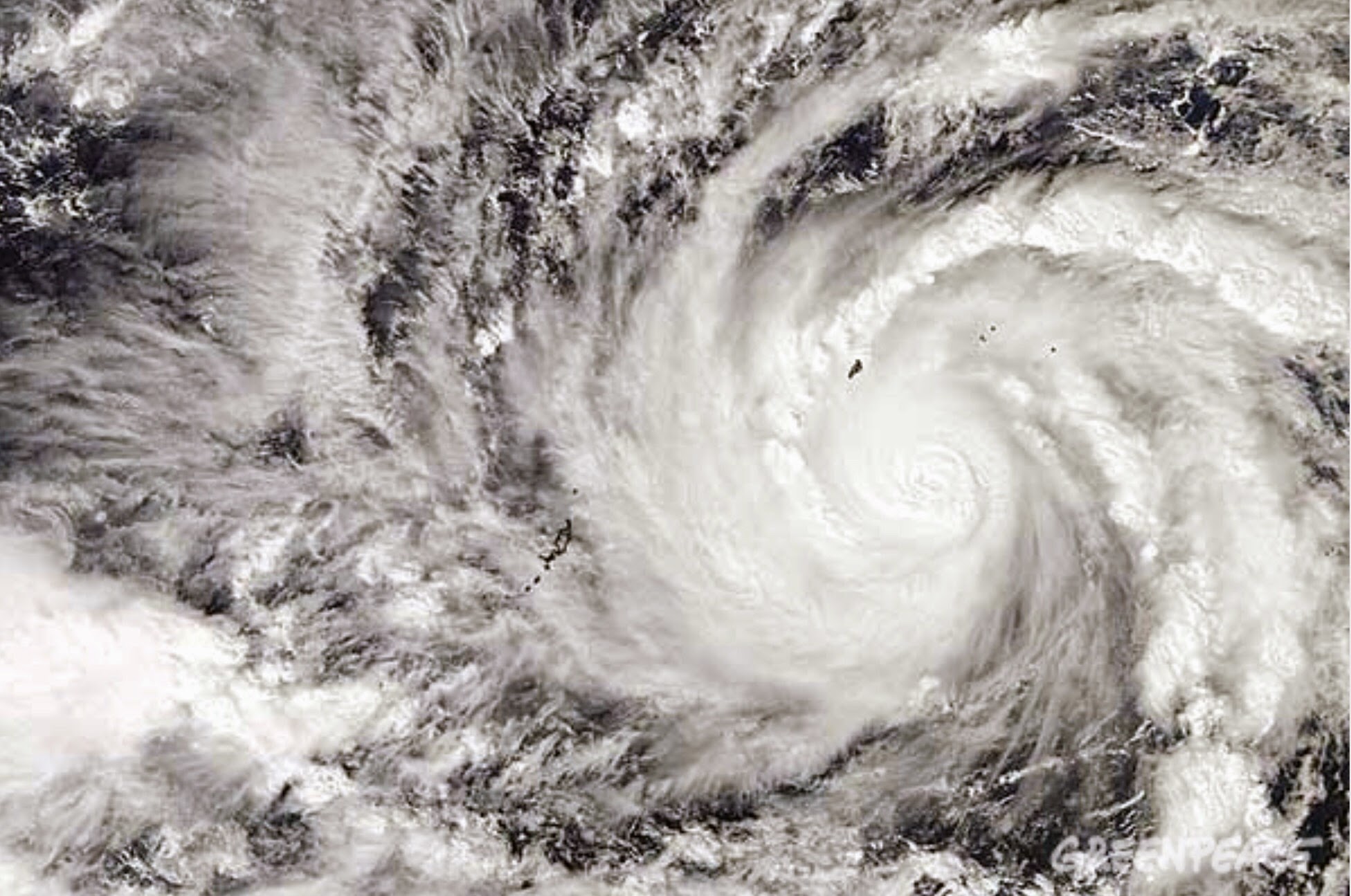
As Typhoon Hagupit hits the Philippines, one of the biggest peacetime evacuations in history has been launched to prevent a repeat of the massive loss of life which devastated communities when Super Typhoon Haiyan hit the same area just over a year ago.
Typhoon Hagupit
“One of the biggest evacuations in peacetime” strikes a sickening chord. Is this peacetime or are we at war with nature?
I was about to head to Lima, when I got a call to come to the Philippines to support our office and its work around Typhoon Hagupit (which means lash). In Lima another round of the UN climate talks are underway to negotiate a global treaty to prevent catastrophic climate change. A truce of sorts with nature.
But these negotiations have been going on far too long, with insufficient urgency and too much behind the scenes, and not so much behind the scenes, interference from the fossil fuel lobby.
This year, like last year and the year before these negotiations take place against a devastating backdrop of a so-called ‘extreme weather event’, something that climate scientists have been warning us about if we don’t take urgent action.
Tragically, we are not taking urgent action. Nature does not negotiate, it responds to our intransigence. For the people of the Philippines, and in many other parts of the world, climate change is already a catastrophe.
Only one year ago, Super Typhoon Haiyan killed thousands, destroyed communities and caused billions of dollars in damage. Many survivors who are still displaced have this week had to evacuate the tents they have been living in as Typhoon Hagupit carves a path across the country as I write.
It’s too early to assess the impact so far—we are all hoping early indications will spare the Philippines of the same pain that was experienced after Haiyan.
Here in Manila, we prepare to travel to the impacted areas in the wake of Typhoon Hagupit, or Ruby, as it has been named. We will offer what minor assistance we can.
We will stand in solidarity with the Filipino people and we will call out those who are responsible for climate change, those who are responsible for the devastation and who should be helping pay for the clean up and for adaptation to a world in which our weather is an increasing source of mass destruction.
With heavy hearts we prepare to bear witness. We challenge those in Lima to turn their attention from the lethargy and process of the negotiations and pay attention to what is happening in the real world.
We call on them to understand that climate change is not a future threat to be negotiated but a clear and present danger that requires urgent action now!
Each year, the people of the Philippines learn the hard way what inaction on emissions mean. They might be slightly better prepared and more resilient, but they are also rightly more aghast that each year—at the same time—the climate meetings seem to continue in a vacuum, not prepared to take meaningful action, not able to respond to the urgency of our time and not holding accountable the Big Polluters that are causing the climate to change with ferocious pace.
Before leaving for Manila I also received a message from Yeb Saño, climate commissioner for the Philippines: “I hope you can join us as we bear witness to the impact of this new super typhoon. Your help would be very valuable in delivering a message to Lima loud and clear.”
Yeb was the Filipino chief negotiator for three years at the UN climate talks and recently visited the Arctic on a Greenpeace ship to witness the Arctic sea ice minimum. Two years ago in Doha, as Typhoon Pablo took the lives of many he broke through the normally reserved language of dispassionate diplomacy that dominates UN climate treaty talks:
“Please … let 2012 be remembered as the year the world found the courage to … take responsibility for the future we want. I ask of all of us here, if not us, then who? If not now, then when? If not here, then where?”
I am joining Greenpeace Philippines and Yeb to visit the worst hit areas, document the devastation and send a clear message from climate change ground zero to Lima and the rest of the world that the ones that are responsible for the majority of emissions will be held accountable by the communities that are suffering the impacts of extreme weather events linked to climate change.
We will call on the heads of the fossil fuel companies who are culpable for the unfolding tragedy to examine their consciences and accept their historic responsibility. They say the truth is the first casualty of war, in this war against nature, the truth of climate science is unquestionable.
Please join us. Please add your voice by signing our petition calling on Big Polluters to be held legally and morally accountable for climate damages. After signing the petition you will be redirected to a site where you can make a donation to the relief efforts of partner organizations. More
World Is Locked into ~1.5°C Warming & Risks Are Rising, New Climate Report Finds
Latin America and the Caribbean
In Latin America and the Caribbean, the report warns of longer droughts, extreme weather, and increasing ocean acidification. In the tropical Andes, rising temperatures will reduce the annual build-up of glacier ice and the spring meltwater that some 50 million people in the low-land farms and cities rely on. Heat and drought stress will substantially increase the risk of large-scale forest loss, affecting Amazon ecosystems and biodiversity, as well as the forests’ ability to store carbon dioxide.
Rising temperatures also affect food security. The oceans, which have absorbed about 30 percent of all human-caused carbon dioxide so far, will continue to acidify and warm, damaging coral ecosystems where sea life thrives and sending fish migrating to cooler waters. The result for the Caribbean could be the loss of up to 50 percent of its current catch volume.
Middle East and North Africa
People in the Middle East and North Africa have been adapting to extreme heat for centuries, but the report warns of unprecedented impact as temperatures continue to rise. Extreme heat will spread across more of the land for longer periods of time, making some regions unlivable and reducing growing areas for agriculture, the report warns. Cities will feel an increasing heat island effect, so that by 4°C warming – possibly as early as the 2080s without action to slow climate change – most capital cities in the Middle East could face four months of exceedingly hot days every year Rising temperatures will put intense pressure on crops and already scarce water resources, potentially increasing migration and the risk of conflict. Climate change is a threat multiplier here – and elsewhere.
Eastern Europe and Central Asia
In Eastern Europe and Central Asia, the report shows how the impact of climate change will vary region to region. Melting glaciers and warming temperatures will shift the growing season and the flow of glacier-fed rivers further into spring in Central Asia, while in the Balkans in Eastern Europe, worsening drought conditions will put crops at risk. Rising temperatures also increase the thawing of permafrost, which releases methane, a potent greenhouse gas many times more powerful than carbon dioxide at trapping heat. By mid-century, if temperatures continue to rise toward 2°C, the release of methane from thawing permafrost is likely to increase 20 to 30 percent in Russia, creating a feedback loop that will drive climate change.
Working to Lower the Risk
"The good news is that there is a growing consensus on what it will take to make changes to the unsustainable path we are currently on," President Kim said. "Action on climate change does not have to come at the expense of economic growth. At the World Bank, we are investing in energy efficiency and renewable energy to help countries lower their emissions while growing their economies, and in clean transportation that can put fast-growing cities onto more sustainable growth paths. We are also working with governments to design policies that support clean growth, including developing efficiency standards, reducing fossil fuel subsidies, and pricing carbon. It’s clear that the public sector cannot solve the climate challenge alone – private investment and smart business choices are crucial, but business leaders tell us they need governments to provide clear, consistent policy direction that reflects the true costs of emissions. We now screen our projects in 77 countries for climate risk and for opportunities for climate action. We are helping countries find opportunities in climate action and developing financial instruments to increase funding that can help them grow clean and build resilience.
"Our response to the challenge of climate change will define the legacy of our generation," President Kim said. "The stakes have never been higher." More
"Every inhabitant of this planet must contemplate the day when this planet may no longer be habitable." Thus spoke President Kennedy in a 1961 address to the United Nations.
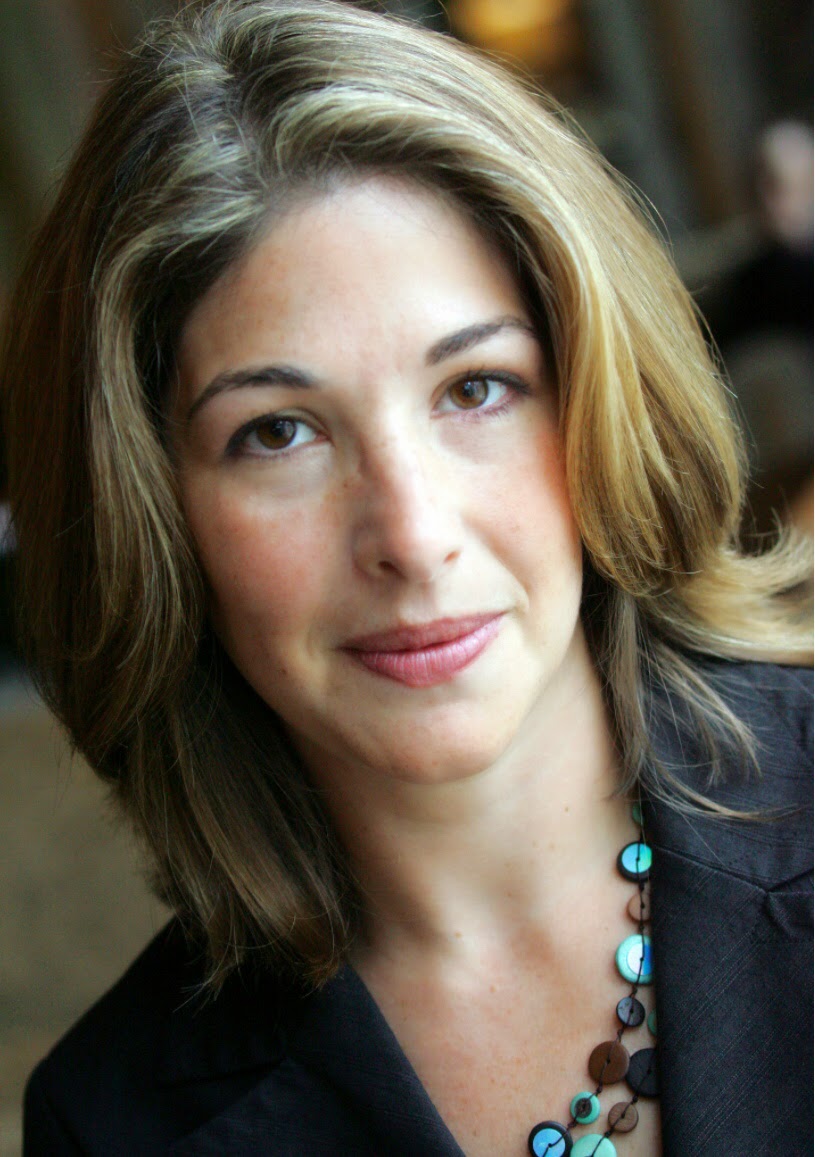
Naomi Klein
The threat he warned of was not climate chaos — barely a blip on anybody’s radar at the time — but the hydrogen bomb. The nuclear threat had a volatile urgency and visual clarity that the sprawling, hydra-headed menace of today’s climate calamity cannot match. How can we rouse citizens and governments to act for concerted change? Will it take, as Naomi Klein insists, nothing less than a Marshall Plan for Earth?
"This Changes Everything: Capitalism vs. the Climate" is a book of such ambition and consequence that it is almost unreviewable. Klein’s fans will recognize her method from her prior books, "No Logo: Taking Aim at the Brand Bullies" (1999) and "The Shock Doctrine: The Rise of Disaster Capitalism" (2007), which, with her latest, form an antiglobalization trilogy. Her strategy is to take a scourge — brand-driven hyperconsumption, corporate exploitation of disaster-struck communities, or "the fiction of perpetual growth on a finite planet" — trace its origins, then chart a course of liberation. In each book she arrives at some semihopeful place, where activists are reaffirming embattled civic values.
To call "This Changes Everything" environmental is to limit Klein’s considerable agenda. "There is still time to avoid catastrophic warming," she contends, "but not within the rules of capitalism as they are currently constructed. Which is surely the best argument there has ever been for changing those rules." On the green left, many share Klein’s sentiments. George Monbiot, a columnist for The Guardian, recently lamented that even though "the claims of market fundamentalism have been disproven as dramatically as those of state communism, somehow this zombie ideology staggers on." Klein, Monbiot and Bill McKibben all insist that we cannot avert the ecological disaster that confronts us without loosening the grip of that superannuated zombie ideology.
That philosophy — neoliberalism — promotes a high-consumption, carbon-hungry system. Neoliberalism has encouraged mega-mergers, trade agreements hostile to environmental and labor regulations, and global hypermobility, enabling a corporation like Exxon to make, as McKibben has noted, "more money last year than any company in the history of money." Their outsize power mangles the democratic process. Yet the carbon giants continue to reap $600 billion in annual subsidies from public coffers, not to speak of a greater subsidy: the right, in Klein’s words, to treat the atmosphere as a "waste dump."
So much for the invisible hand. As the science fiction writer Kim Stanley Robinson observed, when it comes to the environment, the invisible hand never picks up the check.
Klein diagnoses impressively what hasn’t worked. No more claptrap about fracked gas as a bridge to renewables. Enough already of the international summit meetings that produce sirocco-quality hot air, and nonbinding agreements that bind us all to more emissions. Klein dismantles the boondoggle that is cap and trade. She skewers grandiose command-and-control schemes to re-engineer the planet’s climate. No point, when a hubristic mind-set has gotten us into this mess, to pile on further hubris. She reserves a special scorn for the partnerships between Big Green organizations and Immense Carbon, peddled as win-win for everyone, but which haven’t slowed emissions. Such partnerships remind us that when the lamb and the lion lie down together, only one of them gets eaten.
In democracies driven by lobbyists, donors and plutocrats, the giant polluters are going to win while the rest of us, in various degrees of passivity and complicity, will watch the planet die. "Any attempt to rise to the climate challenge will be fruitless unless it is understood as part of a much broader battle of worldviews," Klein writes. "Our economic system and our planetary system are now at war."
Klein reminds us that neoliberalism was once an upstart counterrevolution. Through an epic case of bad timing, the Reagan-Thatcher revolution, the rise of the anti-regulatory World Trade Organization, and the cult of privatizing and globalizing everything coincided with the rising public authority of climate science. In 1988, James Hansen, director of NASA’s Goddard Institute, delivered historic testimony at Congressional hearings, declaring that the science was 99 percent unequivocal: The world was warming and we needed to act collectively to reduce emissions. Just one year earlier, Margaret Thatcher famously declared: "There is no such thing as society. There are individual men and women and there are families." In the battle since, between a collective strategy for forging an inhabitable long-term future and the antisocial, hyper-corporatized, hyper-carbonized pursuit of short-term growth at any cost, well, there has been only one clear winner.
But counterrevolutions are reversible. Klein devotes much of her book to propitious signs that this can happen — indeed is happening. The global climate justice movement is spreading. Since the mid-1990s, environmental protests have been growing in China at 29 percent per year. Where national leaders have faltered, local governments are forging ahead. Hundreds of German cities and towns have voted to buy back their energy grids from corporations. About two-thirds of Britons favor renationalizing energy and rail.
The divestment movement against Big Carbon is gathering force. While it will never bankrupt the mega-corporations, it can reveal unethical practices while triggering a debate about values that recognizes that such practices are nested in economic systems that encourage, inhibit or even prohibit them.
The voices Klein gathers from across the world achieve a choral force. We hear a Montana goat rancher describe how an improbable alliance against Big Coal between local Native American tribes and settler descendants awakened in the latter a different worldview of time and change and possibility. We hear participants in Idle No More, the First Nations movement that has swept across Canada and beyond, contrast the "extractivist mind-set" with systems "designed to promote more life."
One quibble: What’s with the subtitle? "Capitalism vs. the Climate" sounds like a P.R. person’s idea of a marquee cage fight, but it belies the sophistication and hopefulness of Klein’s argument. As is sometimes said, it is easier to imagine the end of the world than to imagine the end of capitalism. Klein’s adversary is neoliberalism — the extreme capitalism that has birthed our era of extreme extraction. Klein is smart and pragmatic enough to shun the never-never land of capitalism’s global overthrow. What she does, brilliantly, is provide a historically refined exposé of "capitalism’s drift toward monopoly," of "corporate interests intent on capturing and radically shrinking the public sphere," and of "the disaster capitalists who use crises to end-run around democracy."
To change economic norms and ethical perceptions in tandem is even more formidable than the technological battle to adapt to the heavy weather coming down the tubes. Yet "This Changes Everything" is, improbably, Klein’s most optimistic book. She braids together the science, psychology, geopolitics, economics, ethics and activism that shape the climate question. The result is the most momentous and contentious environmental book since "Silent Spring." More
Lord Nicholas Stern, one of the world’s most influential voices on climate economics, does not mince his words when it comes to criticising those who take a narrow view of prosperity and highlighting the devastating consequences of global warming.
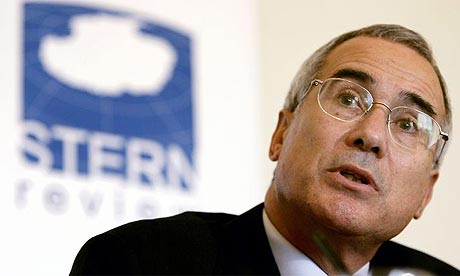
Nicholas Stern
"You have to be a complete idiot to think that GDP sums up prosperity," says Stern, who believes we need to develop broader measures of success and combine this with a return to core values if we are to convince people to act to prevent runaway climate change.
Stern, who wrote the landmark 2006 Stern review of the economics of climate change, says if we fail to take heed of the danger signals, we risk temperatures rising this century to levels we haven’t seen for tens of millions of years.
"Hundreds of millions of people, perhaps billions of people would have to move," he warns. "If we’ve learned anything from history that means severe and extended conflict.
"We couldn’t just turn it off. You can’t make a peace treaty with the planet, you can’t negotiate with the laws of physics. You’re in there, you’re stuck. Those are the stakes we’re playing for and that’s why we have to make this second transformation, the climate transformation and move to low carbon economy."
Stern has co-authored the recently published New Climate Economy report, which argues that the world can head off the worst effects of climate change, and enjoy the fruits of continued economic expansion, if it moves quickly to invest in a low-carbon economy.
He says he hopes the study will influence key decision makers because it was written with the support of a coalition of respected politicians, economists, think tanks and institutions, including the World Bank, the International Monetary Fund, the OECD, the International Energy Agency and the UN.
He dismisses the arguments of more radical economists who believe that we need to stop our fixation with growth, arguing that the economy needs to keep expanding if we are to have a hope of eradicating poverty.
"To those who want to knock out growth from objectives, I find they’re close to reprehensible because for me the two defining challenges of this century are overcoming poverty and managing climate change.
"We fail on one, we fail on the other. So I think to say that we should just switch off growth is to miss big aspects of what matters about poverty. And so it worries me. It’s also politically very naive. If you turn it into a pissing contest between growth on the one hand and climate and environment on the other and say you’ve got to choose, you’re setting yourself up for failure."
Stern says investments in renewable energy must be combined with a rethinking of our understanding of prosperity, which he believes will lead to what he terms better growth.
"It means thinking differently about health, about the way we live in our cities and about the strengths of our communities," he says. "It’s not that GDP is idiotic but it’s mostly about the use of labour resources and what it produces. But there are very important parts of this story about prosperity that get missed out."
How does Stern, who is president of the British Academy, believe we can start to measure prosperity that goes beyond GDP?
He says it is vital to start from the perspective of people understanding what they mean by wellbeing and what they value, whether it is family, community, arts or sport.
"You can be reasonably empirical about what moves people and then you go and try to collect data on that," he says. "Once you understand what it is it you’re trying to capture and create indicators, you can then start to talk about policy."
The 68-year-old peer says it’s vital we go back to recognising the importance of Aristotle’s belief in the need to understand what it means to be a virtuous person and to whom we owe a duty of care.
"I’ve been an academic all my life and I look at the evidence of what works and what doesn’t work," he says. "But if you ask yourself what you’re trying to do, that’s spurred by values, by what’s important to you."
For Stern, the heart of his values lies in the importance of family. Speaking immediately after introducing his two-week old granddaughter Rosa on stage at a TEDx talk in New York, he said: "I’m 68 and I am thinking what will Rosa be like when she’s 68? We’re talking about towards the end of this century and what we do now will determine whether the next 100 years is the best of centuries or the worst of centuries."
"Are we going to look our grandchildren in the eye and tell them that we understood the issues, that we recognised the dangers and the opportunities, and still we failed to act?"
Stern believes that it is time for religious leaders, politicians and the media to act more responsibly, pointing in particular to the importance of the Pope’s statement earlier this year that if we destroy creation, creation will destroy us.
Also key to changing hearts and minds is the field of arts, with Stern pointing to Barbara Kingsolver’s book Flight Behaviour, which he says is not only wonderful in describing the human condition but also in questioning our relationship with the environment.
"It’s not just the policy wonks like me we need to try to assemble the evidence and set it out," he says. "You have to do that because emotional argument without rational evidence on cause and effect doesn’t get you all that far. But rational argument about cause and effect alone doesn’t get you there either." More
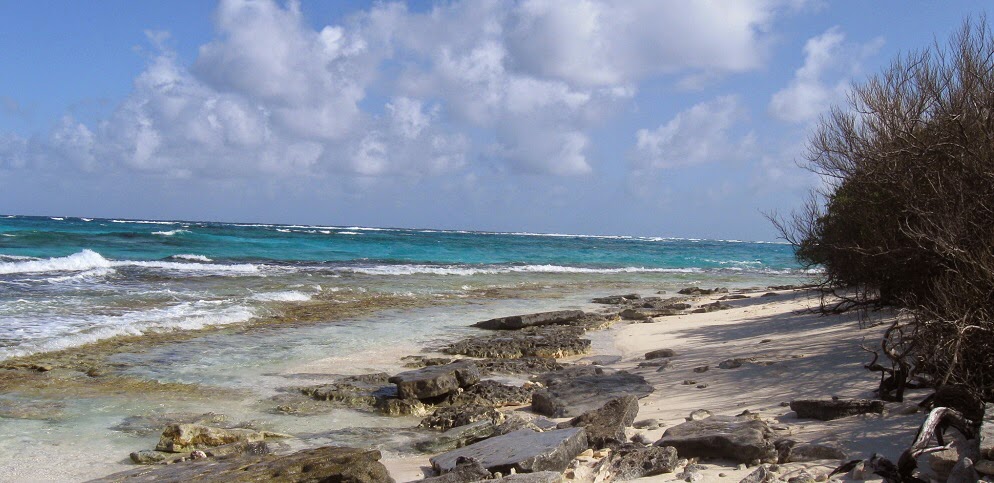
The Caribbean’s response to Climate Change is grounded in a firm regional commitment, policy and strategy. Our three foundation documents – The Liliendaal Declaration (July 2009), The Regional Framework for Achieving Development Resilient to Climate Change (July 2009) and its Implementation Plan (March 2012) – are the basis for climate action in the region.
The Fifth Assessment Report (AR5) of the United Nations Intergovernmental Panel on Climate Change (IPCC) underscores the importance, scientific rigour and utility of these landmark documents. The IPCC’s latest assessment confirms the Caribbean Community’s longstanding call to limit global temperature rise to 1.5 degrees celsius as outlined in the Liliendaal Declaration. At the Nations Nation Framework Convention on Climate Change (UNFCCC) Conference of the Parties (COP) Meeting in 2009, which took place in Copenhagen, Denmark, the Caribbean Community indicated to the world community that a global temperature rise above 1.50C would seriously affect the survival of the community.
In 2010 at the UNFCCC COP Meeting in Cancun, governments agreed that emissions ought to be kept at a level that would ensure global temperature increases would be limited to below 20C. At that time, the Alliance of Small Island States (AOSIS), which includes the Caribbean, re-iterated that any rise in temperature above 1.50C would seriously affect their survival and compromise their development agenda. The United Nations Human Development Report (2008) and the State of the World Report (2009) of The Worldwatch Institute supports this position and have identified 20C as the threshold above which irreversible and dangerous Climate Change will become unavoidable.
Accordingly, the Caribbean welcomes the IPCC’s Fifth Assessment Report prepared by over 2000 eminent scientists. It verifies observations in the Caribbean that temperatures are rising, extreme weather events are occurring more frequently, sea levels are rising, and there are more incidences of coral bleaching. These climatic changes will further exacerbate the limited availability of fresh water, agricultural productivity, result in more erosion and inundation, and increase the migration of fish from the Caribbean to cooler waters and more hospitable habitats. The cumulative effect is reduced food security, malnutrition, and productivity, thus increasing the challenges to achieving poverty reduction and socio-economic development.
The report notes that greenhouse gases emissions, the cause of Climate Change, continues to rise at an ever increasing rate. Unless this trend is arrested and rectified by 2050, global temperatures could rise by at least 4°C by 2100. This would be catastrophic for the Caribbean. However, the report is not all gloom and doom. More than half of the new energy plants for electricity are from renewable resources, a trend that must accelerate substantially if the goal of limiting global warming to below 2°C by 2100 is to remain feasible.
The IPCC AR5 Report should therefore serve as a further wake up call to our region that we cannot continue on a business as usual trajectory. It is an imperative that Climate Change be integrated in every aspect of the region’s development agenda, as well as its short, medium and long-term planning. The region must also continue to aggressively engage its partners at the bilateral and multilateral levels to reduce their emissions. The best form of adaptation is reduction in emissions level.
Dr Kenrick Leslie
The IPCC will adopt the Synthesis Report of the AR5 in Copenhagen, Denmark in late October 2014. Caribbean negotiators are already preparing to ensure that the most important information from the report are captured in the Synthesis Report.
See the highlights of the Caribbean Launch of the UN IPCC AR5 Report in this video:
Learn more about the implications of the IPCC AR5 Report via www.caribbeanclimate.bz and @CaribbeanClimate.


 ©